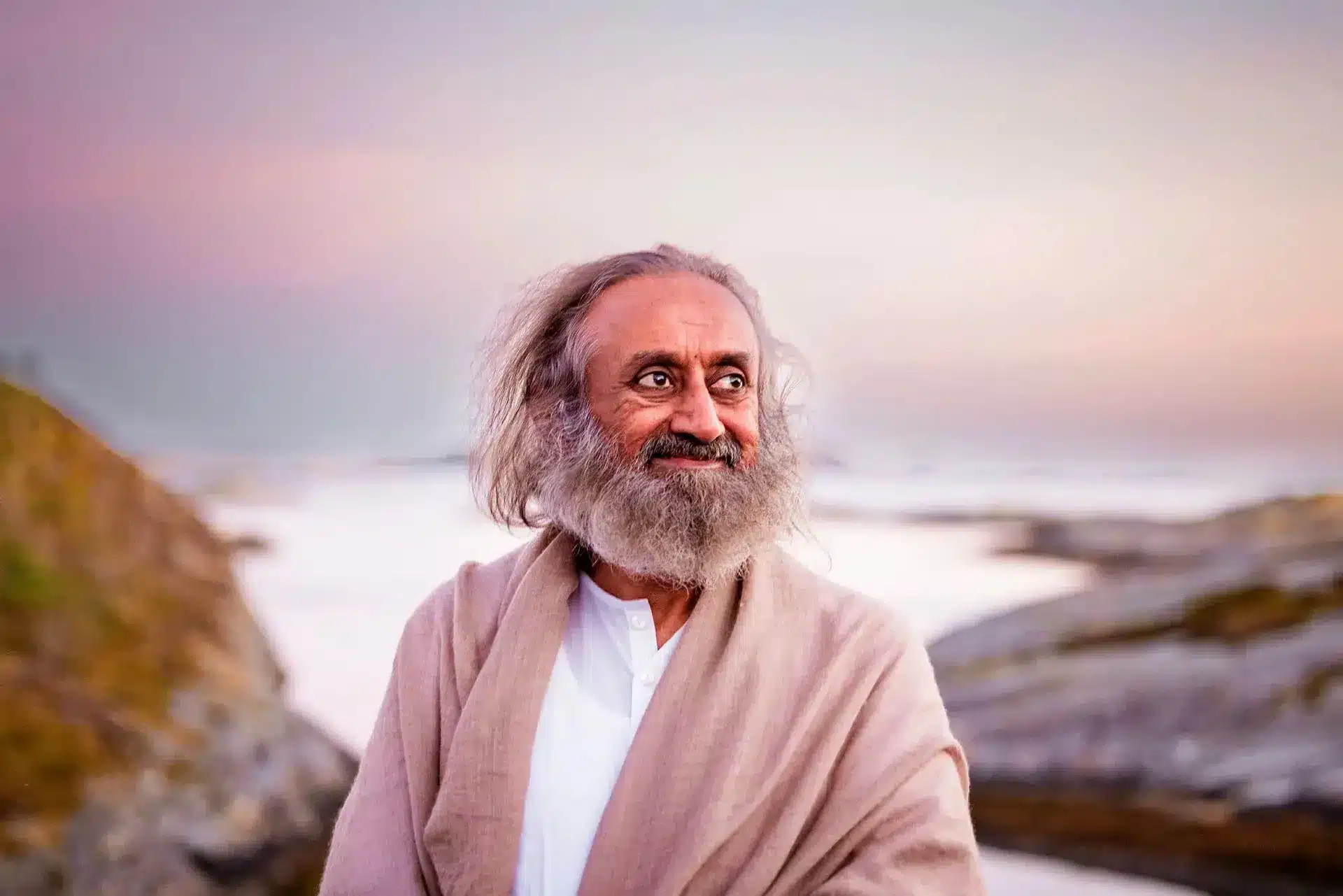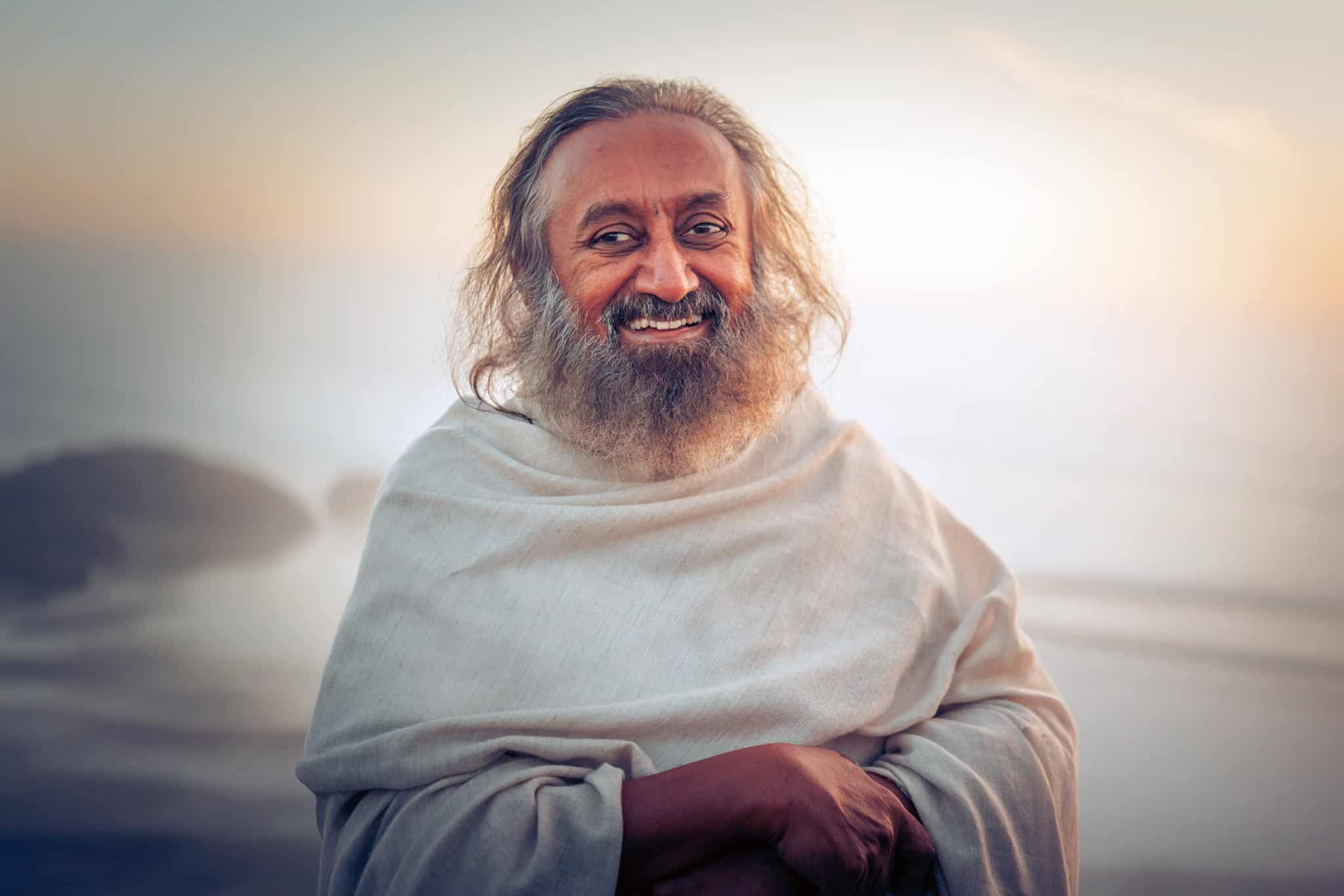

Sri Sri Ravi Shankar was born on May 13, 1956, in a small town in Karnataka, a state in southern India rich with spiritual heritage. Even as a child, he stood apart—not through rebellion, but through an almost preternatural curiosity about existence itself. While other children played, he gravitated toward conversations about the nature of reality and human experience, questions that would become the cornerstone of his life's work.
His spiritual education began in earnest under Maharishi Mahesh Yogi, the meditation teacher who brought Transcendental Meditation to the West. This apprenticeship provided more than technique; it offered a living transmission of Vedic wisdom and planted seeds that would later blossom into his own distinctive teaching methodology. During these formative years, Shankar moved through various spiritual traditions with the ease of someone seeking not to collect practices, but to understand their common essence.
The year 1981 marked a turning point. At twenty-five, Sri Sri Ravi Shankar founded the Art of Living Foundation, an organization that would eventually reach millions across continents. The impulse wasn't grandiose—it emerged from a simple observation: that modern life, with all its progress, had somehow intensified human suffering rather than alleviated it. Stress, disconnection, and inner turmoil had become universal conditions, transcending geography and culture.
What distinguished his approach was its accessibility. Rather than demanding renunciation or years of austere practice, he offered techniques that could be woven into ordinary life. The foundation's programs centered on breathing exercises, meditation, and yoga—ancient tools recontextualized for contemporary seekers. This wasn't dilution but translation, making profound practices available to people who would never sit in an ashram but desperately needed what those traditions offered.
At the heart of Shankar's work lies pranayama—the conscious regulation of breath. His signature technique, taught through Art of Living courses worldwide, uses rhythmic breathing patterns to release stored tension and restore nervous system balance. It's deceptively simple, which is precisely the point. He has consistently argued that transformation need not be complicated, that the body itself holds keys to mental and emotional freedom.
His teachings draw deeply from Vedanta philosophy and broader Vedic tradition, yet they resist sectarian boundaries. He speaks as comfortably about compassion in Buddhist terms as he does about devotion in Hindu contexts, synthesizing these streams into something practical rather than academic. The emphasis remains relentlessly experiential—less about believing correct doctrines than about discovering inner peace through direct practice.
This approach has manifested in numerous programs: workshops on stress relief, teacher training courses that create new instructors, retreats that offer intensive immersion, and public talks that address everything from personal well-being to social harmony. His work extends beyond individual transformation to encompass community healing, with initiatives addressing conflict resolution and humanitarian relief in troubled regions.
Sri Sri Ravi Shankar has authored multiple books, though his primary medium remains the spoken word. His dharma talks—delivered in venues ranging from intimate gatherings to stadium-sized audiences—carry a conversational quality, meeting listeners where they are rather than demanding they rise to esoteric heights. There's warmth in his communication style, an accessibility that has helped bridge the gap between ancient wisdom and modern skepticism.
The numbers tell part of the story: a global organization operating across continents, millions who have completed Art of Living programs, a steady if modest following even on digital platforms like Spotify where his guided meditations reach a few thousand regular listeners. But numbers alone don't capture his cultural significance. He has become a figure who makes spiritual practice seem possible for ordinary people—the corporate executive, the overwhelmed parent, the college student navigating anxiety.
In an era of increasing mental health crises and widespread burnout, Sri Sri Ravi Shankar's work addresses urgent needs. He matters not because he offers exotic wisdom, but because he's made that wisdom functionally useful. His students aren't predominantly renunciates but people navigating regular jobs, relationships, and responsibilities who've found in his teachings practical tools for sanity.
His influence spans diverse populations—from India's villages to Silicon Valley's tech campuses, from South American communities to European cities. This reach reflects both his message's universality and his skillful cultural translation. He speaks about mindfulness and self-awareness in language that resonates across belief systems, never demanding adherence to particular religious frameworks while remaining rooted in his own tradition's depth.
Today, the Art of Living Foundation continues expanding its programs while Shankar himself maintains an active teaching schedule. His work has evolved from purely individual practice to encompass broader social engagement, addressing conflict resolution and humanitarian concerns alongside personal transformation. The lineage he carries forward—from ancient Vedic seers through his own teachers to contemporary students—remains alive not as museum artifact but as living practice.
What endures in Sri Sri Ravi Shankar's legacy is this: the insistence that inner peace is not a luxury but a necessity, and that it's achievable through simple, consistent practice. In a world that constantly asks us to do more, be more, achieve more, he offers permission to simply breathe—and in that breathing, to find what was already whole.