EnduranceFinder
All Races
Every discipline, every distance
Marathons
26.2 miles of glory
Triathlons
Swim, bike, run
Cycling
Gran fondos & road races
Trail Running
Off-road & mountain races
Ultras
Beyond the marathon distance
Virtual Races
Race from anywhere
Popular Destinations
New YorkBostonChicagoLondonTokyoCape Town
Glossary
Endurance terms & definitions
Elite Athletes
Pro athlete profiles
Training Tips
Plans, workouts & coaching
Race Guides
Course previews & strategy
Gear Reviews
Shoes, bikes & race-day kit
Athlete Stories
Community race reports
Wisdom
Words from endurance legends
AI Discovery
How AI powers your experience
Blog
Latest from EnduranceFinder

“The marathon can humble you.”

— Bill Rodgers

Language
Saved events
All RacesEvery discipline, every distance
Marathons26.2 miles of glory
TriathlonsSwim, bike, run
CyclingGran fondos & road races
Trail RunningOff-road & mountain races
UltrasBeyond the marathon distance
Virtual RacesRace from anywhere
Popular Destinations
New YorkBostonChicagoLondonTokyoCape Town
GlossaryEndurance terms & definitions
Elite AthletesPro athlete profiles
Training TipsPlans, workouts & coaching
Race GuidesCourse previews & strategy
Gear ReviewsShoes, bikes & race-day kit
Athlete StoriesCommunity race reports
WisdomWords from endurance legends
AI DiscoveryHow AI powers your experience
BlogLatest from EnduranceFinder
ConnexionS'inscrireWhy EnduranceFinder?
  • Browse All Races
  • Marathons
  • Half Marathons
  • Triathlons
  • Cycling
  • Ultras
  • Trail Running
  • Swimming
  • Obstacle Races
  • All Categories →
  • Boston
  • Chicago
  • New York City
  • San Francisco
  • Los Angeles
  • Denver / Boulder
  • Austin
  • Seattle
  • Berlin
  • London
  • Kona
  • Chamonix
  • Tokyo
  • Amsterdam
  • Toutes les villes →
  • For Race Directors
  • For Timing Companies
  • For Running Clubs
  • For Cycling Organizations
  • For Triathlon Clubs
  • For Trail Race Organizers
  • For Charity Races
  • For OCR & Adventure Races
  • For Swim & Open Water
  • AI Platform
  • Pricing
  • Case Studies
  • Récupération des paniers abandonnés
  • Tarification dynamique intelligente
  • Catégories de billets
  • Événements récurrents
  • Custom Questions
  • Système d'affiliation
  • Liste d'attente / Notifier
  • Scanner de billets
  • Widget intégrable
  • Diffusion d'événements
  • Integrations
  • Toutes les fonctionnalités →
  • About EnduranceFinder
  • Blog
  • AI Discovery
  • Training Guides
  • Race Guides
  • Help Center
  • Contact Us
  • Careers
  • Press
  • Conditions d'utilisation
  • Politique de confidentialité

Races

  • Browse All Races
  • Marathons
  • Half Marathons
  • Triathlons
  • Cycling
  • Ultras
  • Trail Running
  • Swimming
  • Obstacle Races
  • All Categories →

Destinations

  • Boston
  • Chicago
  • New York City
  • San Francisco
  • Los Angeles
  • Denver / Boulder
  • Austin
  • Seattle
  • Berlin
  • London
  • Kona
  • Chamonix
  • Tokyo
  • Amsterdam
  • Toutes les villes →

Pour Race directors

  • For Race Directors
  • For Timing Companies
  • For Running Clubs
  • For Cycling Organizations
  • For Triathlon Clubs
  • For Trail Race Organizers
  • For Charity Races
  • For OCR & Adventure Races
  • For Swim & Open Water
  • AI Platform
  • Pricing
  • Case Studies

Fonctionnalités

  • Récupération des paniers abandonnés
  • Tarification dynamique intelligente
  • Catégories de billets
  • Événements récurrents
  • Custom Questions
  • Système d'affiliation
  • Liste d'attente / Notifier
  • Scanner de billets
  • Widget intégrable
  • Diffusion d'événements
  • Integrations
  • Toutes les fonctionnalités →

Entreprise

  • About EnduranceFinder
  • Blog
  • AI Discovery
  • Training Guides
  • Race Guides
  • Help Center
  • Contact Us
  • Careers
  • Press
  • Conditions d'utilisation
  • Politique de confidentialité
EnduranceFinder
© 2026 EnduranceFinder. Tous droits réservés.
Back to Nastya Saraswati
Where to Start with Nastya Saraswati: A Beginner's Guide
For Beginners

Where to Start with Nastya Saraswati: A Beginner's Guide

The problem with discovering Nastya Saraswati is that there's almost nothing to start with—and that's exactly why she matters.

Nastya Saraswati
Nastya Saraswati
Jul 18, 2026
3 min de lecture
Lecture · 6 sections

Where to Start with Nastya Saraswati: A Beginner's Guide

The problem with discovering Nastya Saraswati is that there's almost nothing to start with—and that's exactly why she matters.

The Single Best Entry Point

Your only real option is tracking down her appearances on Dil Hai Hindustani from 2017. These televised performances, aired on Star Plus before millions of Indian viewers, remain the most accessible documentation of what makes Saraswati remarkable. Search for clips from the competition rounds where she made it to the finals. You'll see a Russian-trained violinist standing before judges Badshah, Shalmali Kholgade, and Shekhar Ravjiani, negotiating the gap between two musical universes in real time.

These aren't polished studio recordings. They're high-pressure performances that force her to make her synthesis legible to a mainstream audience. That constraint is useful for newcomers. You see the technique—the slides, the microtonal ornaments borrowed from sarangi playing, the bel canto phrasing applied to Hindustani forms—without needing a degree in ethnomusicology to appreciate what's happening.

What to Expect on First Encounter

Saraswati's violin doesn't sound like either tradition it draws from. It's not the crystalline precision of European chamber music, and it's not quite the vocal-imitative fluidity of classical Indian string instruments. It occupies a third space: a Western instrument being coaxed into gamakas and drone-based improvisation, techniques it wasn't designed for. Her vocal work—shifting between Sanskrit devotional phrases, Hindi film idioms, and Russian textures—deepens that sense of productive displacement.

First-timers often report feeling slightly disoriented. The music resists easy categorization, which means you can't fall back on familiar listening habits. That's intentional. Saraswati is mapping borderlands, not claiming territory.

Common Misunderstandings

Beginners frequently mistake this for fusion in the banal sense—a little bit of this, a little bit of that, everything smoothed into world music pablum. Saraswati's work is more rigorous than that. She's trained in both the Russian classical violin tradition and Hindustani forms. The synthesis isn't cosmetic; it's structural. She's not adding Indian "flavor" to Western technique or vice versa. She's asking whether a violin can genuinely think in raga terms, whether European bowing can internalize the physics of a gamaka.

Another misreading: treating her as primarily a spiritual or devotional artist because of the kirtan influences and the stage name referencing Saraswati, the Hindu goddess of knowledge and arts. The devotional material is present, but it's one element in a broader investigation of how instruments carry cultural memory and whether that memory can be rewritten.

When This Work Lands Hardest

Saraswati's music tends to hit people during periods of voluntary or involuntary displacement. It resonates with anyone negotiating multiple cultural inheritances, living between languages, or feeling unmoored from a single tradition. The work also finds its audience among musicians tired of genre purism—those who've internalized one vocabulary deeply enough to wonder what happens when you genuinely converse with another.

It's music for threshold states: migration, transition, the discomfort of not quite belonging anywhere and the freedom that discomfort eventually affords.

A One-Week Starter Plan

Day 1-2: Find and watch three different Dil Hai Hindustani performances. Notice how the instrument changes under her hands across different ragas or song structures.

Day 3: Research the technical terms you keep encountering: gamaka, bel canto, sarangi, gamakas. Understand what she's attempting technically, not just aesthetically.

Day 4-5: Listen to traditional Hindustani violin (try N. Rajam or L. Subramaniam) and Russian classical repertoire back-to-back. Map the distance Saraswati is crossing.

Day 6: Seek out her collaborations with tabla players or electronic producers if any surface recordings exist. See how the synthesis holds under different accompaniment.

Day 7: Return to the first performance you watched. You'll hear it differently now—less exotic, more structural. The real work begins here.

Nastya Saraswati
AboutNastya Saraswati

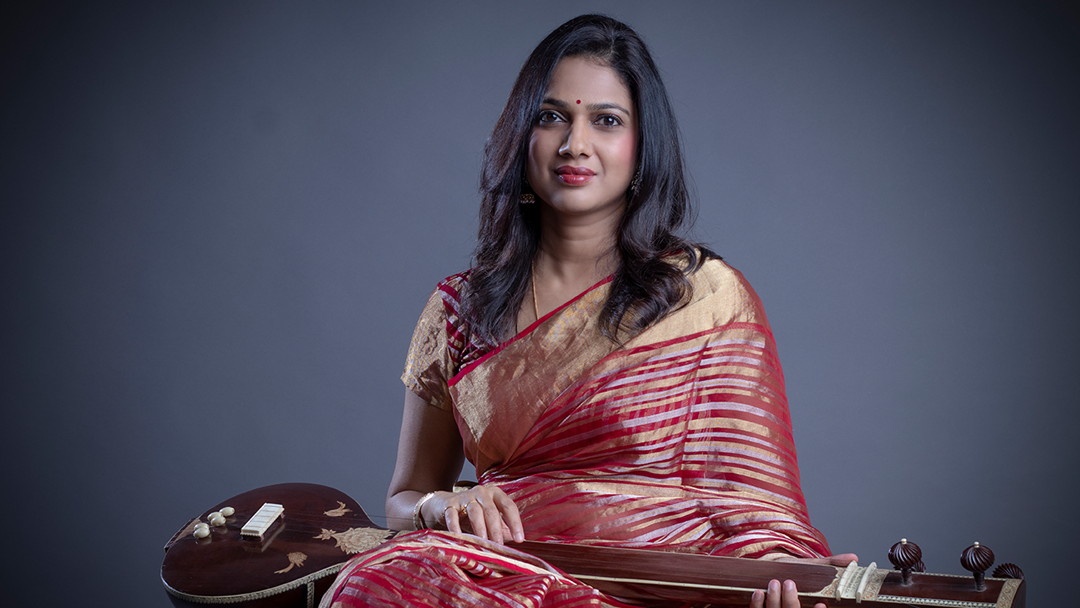
Nastya Saraswati is a violinist and vocalist who splits her time between Mumbai and St. Petersburg, fusing Indian classical traditions with her Russian conservatory training. She r…

Voir le profil

Continuer la lecture

More about Nastya Saraswati

Voir tout
Who Is Nastya Saraswati? Life, Work, and Legacy
Article

Who Is Nastya Saraswati? Life, Work, and Legacy

The Music of Nastya Saraswati: Sound, Sacred Texture, and Lineage
Article

The Music of Nastya Saraswati: Sound, Sacred Texture, and Lineage

Essential Nastya Saraswati Albums: A Listening Guide
Article

Essential Nastya Saraswati Albums: A Listening Guide

Continue d’explorer

Poursuis ton chemin

Plus de sagesse et de rassemblements dans tout l’annuaire BrightStar.

Plus d’articles

Parcours toute la bibliothèque d’enseignements, d’entretiens et de guides.

Retour à tous les articles →

Enseignants et artistes

Découvre les lignées, les musiciens et les guides du monde conscient.

Explorer les artistes →

Trouver un événement

Kirtan, retraites, bains sonores, breathwork, festivals — bientôt près de chez toi.

Parcourir les événements →