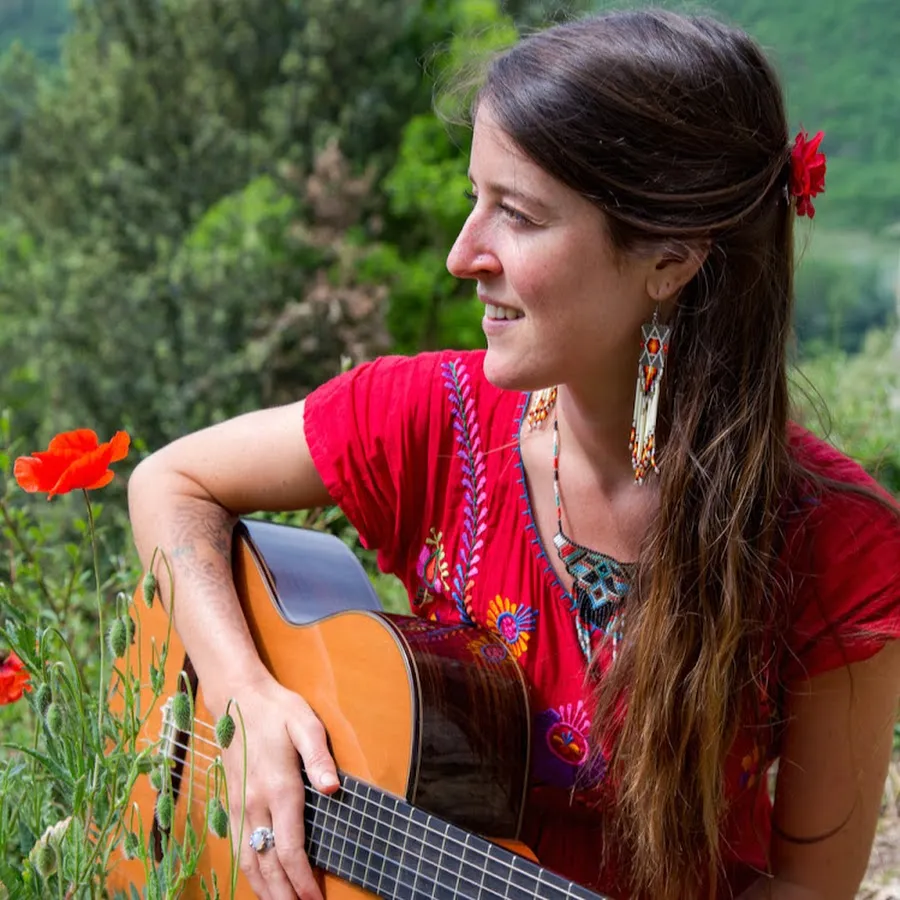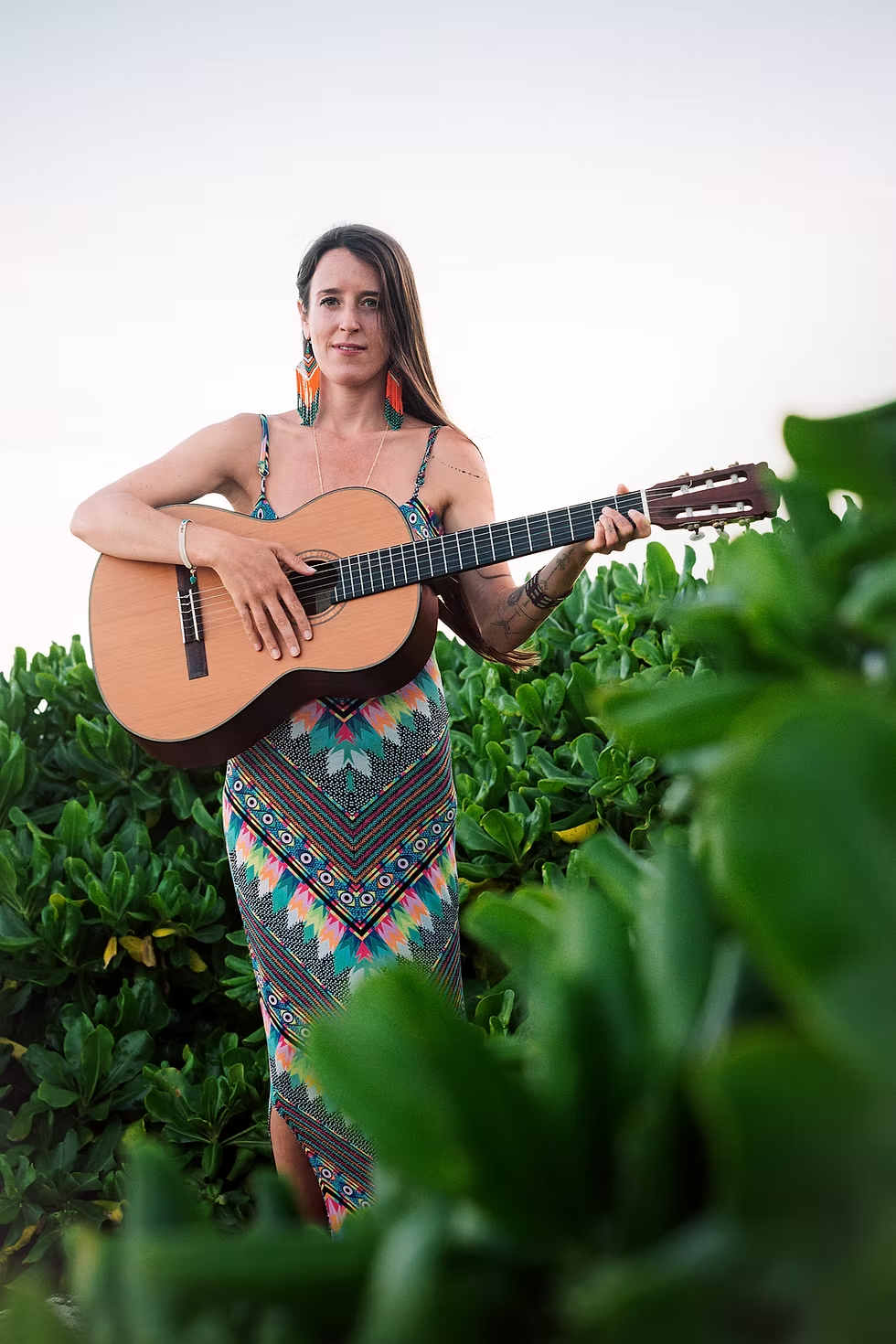

Ishka arrives on February 20, 2026, as a single with one track. It is a small release, but a telling one for Ayla Schafer, a multilingual "world folk" singer-songwriter and ceremonial musician who lives on Dartmoor and is sometimes called a "Voice of the Earth." Her songs, by her own account, carry memory, remembrance and power. A single is a different kind of statement from an album. It is one song, offered whole, with no sequence to hide inside.
Her path helps frame it. A turning point came in 2010, when she travelled through South America. The years away shaped her writing, and she learned from various indigenous traditions about the healing power of song. She began performing at sixteen and gained experience across the UK festival scene. Ishka is the latest chapter in that long apprenticeship in voice and place.
The release details do not list instrumentation, collaborators or a label, so this guide won't pretend to know what is plucked, bowed or struck. What her wider body of work offers is a map of what to listen for.
Her music weaves world folk and what she calls medicinal song, with a poetic repertoire sung in Spanish, English and Proto-Celtic, the reconstructed ancestral language of the Bronze Age. Listen first to the voice and the language it chooses. Is the singing in a tongue you understand, or one you receive purely as sound? Proto-Celtic is reconstructed, so even a fluent listener meets it as something half-remembered. That quality suits music about remembrance.
Then listen to pacing and mood. Her stated aims are to carry "the beauty, shadow and rawness of human experience" and to invite presence. Expect a song built for attention rather than for background use. Notice where it leaves space, and where the voice sounds unguarded rather than polished.
There is only one: "Ishka" itself. Because it stands alone, the title track has to do everything an album would, which is to establish a world, a voice and a mood in a single sitting.
What to listen for is how the song opens, since a single has no preamble. Note the first sung phrase and its language, and how the voice sits against whatever accompaniment surrounds it. Then track how the song handles its own length. Does it build, circle or settle? Music rooted in ceremony often favors return over development, and a single can show that clearly. Whatever it does, it lands or fails on whether it makes you feel present in the room where it was sung.
Schafer's own description places her in world folk and ceremonial song. Her work draws on earth consciousness, ancestral wisdom and the song traditions she encountered in South America. This guide names no lineage or teacher for her, because the record doesn't supply one.
The neighbors are easy to hear. Listeners who love devotional music, kirtan, ambient and folk-based healing song will find common ground in the emphasis on voice, repetition's cousin (return), and the idea that a song can do something to its listener. What sets her apart is the combination: a Dartmoor setting, a Bronze Age language and South American experience sit together in one voice. That makes Ishka feel less like a genre entry and more like a personal map of belonging.
This single is for the listener who wants song that holds memory. It suits someone in a threshold moment, such as grief, a move, a new stage of parenthood or a return to the land, when quiet and rootedness matter more than novelty. It also suits those drawn to ceremony and gathering circles who want something to carry home and play alone.
It is likely less rewarding for anyone seeking rhythmic drive or a quick hook. Her stated invitation is toward presence, and presence takes time.
Give it one uninterrupted play, alone, with nothing else competing for your attention. Headphones help, because a voice carrying this much intention rewards close hearing: breath, the edges of words, the tail of each phrase. Evening is a natural fit, ideally with low light and your phone out of reach.
On the first pass, don't try to translate. Let the sounds of Spanish, English or Proto-Celtic arrive as texture and feeling. On a second pass, look up the lyrics if they are available and listen again for how meaning changes the shape of the song.
If you have a practice of your own, such as a few minutes of stillness, a walk or a candle, play the song at its edge. A single is the right size for that. It is one song, one sitting, and enough time to notice what it stirs.