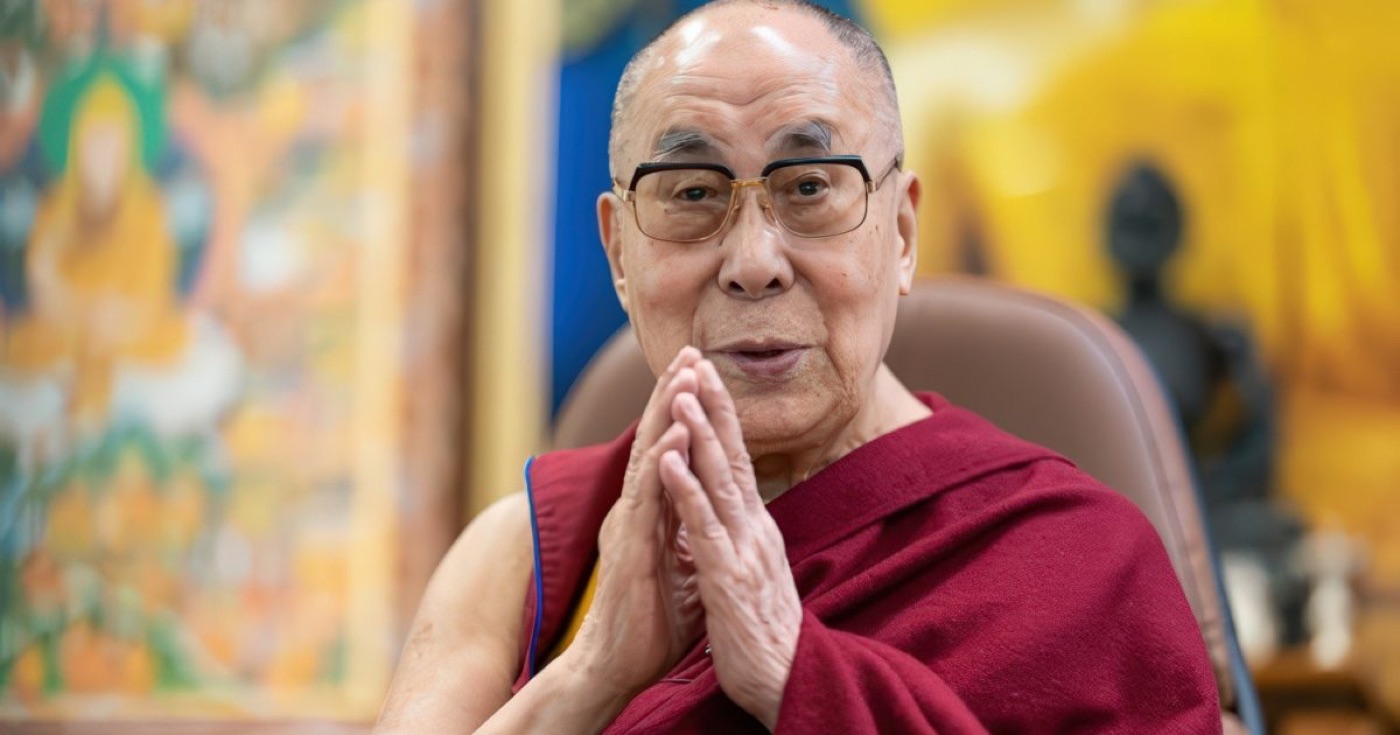

The best entry point to His Holiness the 14th Dalai Lama's teaching is not what most people expect. Forget the gentle platitudes you've seen on Instagram. Start with understanding that the Dalai Lama is fundamentally a scholar in the Nalanda tradition—a rigorous, millennium-old lineage that treats Buddhist philosophy as something to be debated, analyzed, and proven through logic, not merely believed.
Begin with any substantial public teaching where His Holiness addresses emptiness (śūnyatā) and the nature of mind. Look for sessions where he's teaching to a general audience but refuses to water down the core philosophical content. These teachings reveal immediately what makes him distinct: his insistence that liberation comes through understanding, not faith alone. You'll encounter references to the great Indian masters—Nāgārjuna, Śāntideva, Dharmakīrti—whose analytical methods form the backbone of Tibetan Buddhist philosophy. Pay attention when he discusses how to investigate the self through direct inquiry. This is the heart of the Nalanda approach.
After your initial exposure, move to teachings specifically on logic and reason in Buddhist practice. The Dalai Lama stands apart from most contemporary Buddhist teachers precisely because he doesn't prioritize meditation techniques or devotional practices. Instead, he emphasizes the classical Indian methods of systematic analysis and debate as pathways to understanding emptiness and selflessness.
Next, explore his work bridging Buddhist philosophy and modern science. His four-volume series Science and Philosophy represents decades of dialogue between contemplative and empirical traditions. This reveals how seriously he takes the Nalanda commitment to empirical inquiry—the idea that beliefs should be tested against experience and discarded if they conflict with evidence.
Then investigate teachings on the fourteen commentarial masters whose work defines the Nalanda curriculum. Understanding his intellectual lineage clarifies why his approach feels more philosophical than what many Western seekers expect from "Buddhism."
Your first experience will likely feel challenging. The Dalai Lama doesn't offer quick fixes or simple meditation techniques. Expect philosophical density. Expect references to debates that occurred in India fifteen centuries ago. Expect to hear that your commonsense notion of self—the "I" that seems so obviously real—needs to be systematically deconstructed through analysis, not dissolved through relaxation techniques.
The presentation often feels academic because it is. This is monastery curriculum made accessible, not pop spirituality.
The most common mistake beginners make is approaching the Dalai Lama as a source of feel-good wisdom or basic mindfulness instruction. While he certainly teaches compassion, his framework is the rigorous investigation of reality's ultimate nature through classical Indian logic.
Another misunderstanding: assuming all Buddhist teachers offer essentially the same thing. The Dalai Lama represents a specific philosophical tradition that prizes intellectual analysis. If you want gentle guided meditations, look elsewhere. If you want to understand how Buddhist scholars have used logic and debate to investigate consciousness and emptiness for 1,500 years, you're in the right place.
Don't confuse his kindly demeanor for philosophical softness. The Nalanda tradition is uncompromising in its analytical demands.
These teachings tend to resonate most powerfully when intellectual approaches to life's questions start feeling necessary rather than optional. This often happens during periods of loss or identity crisis, when your conventional sense of self becomes unstable. The analytical tools for investigating selflessness suddenly feel relevant rather than abstract.
The work also lands hard for people trained in scientific or philosophical thinking who've found other spiritual teachings insufficiently rigorous. The Nalanda emphasis on reason and empirical verification provides a bridge.
Days 1-2: Watch one complete teaching session on emptiness and the nature of mind. Take notes on unfamiliar concepts.
Day 3: Research the Nalanda tradition and its sixteen foundational masters. Understand the intellectual lineage you're encountering.
Day 4: Study how the Dalai Lama distinguishes conventional and ultimate reality. This distinction underlies everything.
Days 5-6: Explore his work on Buddhism and science. Notice the emphasis on testable claims and empirical verification.
Day 7: Attempt the basic analytical meditation on selflessness he describes—the direct investigation of what the "I" actually refers to.
This week won't make you an expert. It will show you whether this rigorously philosophical approach to liberation interests you enough to continue.