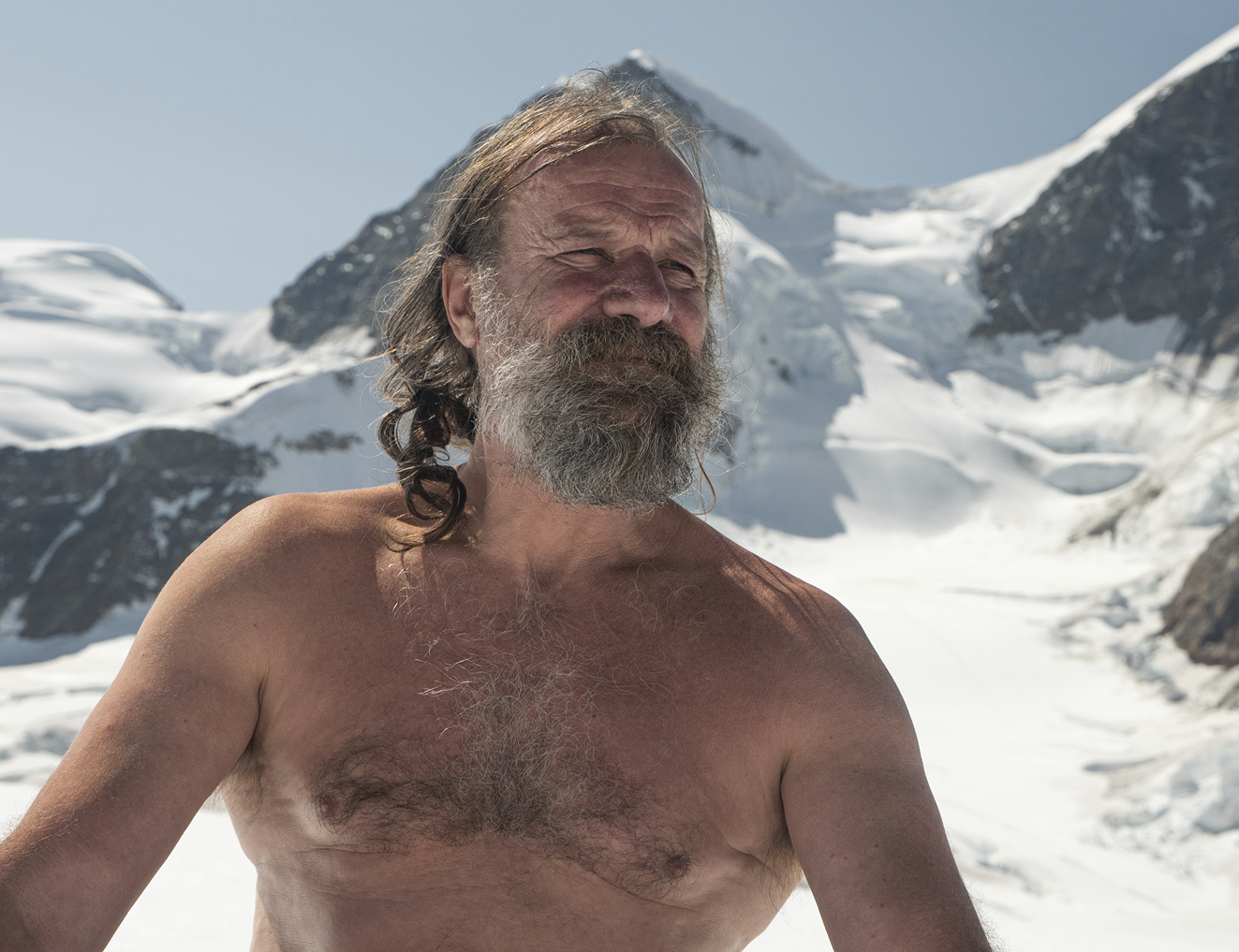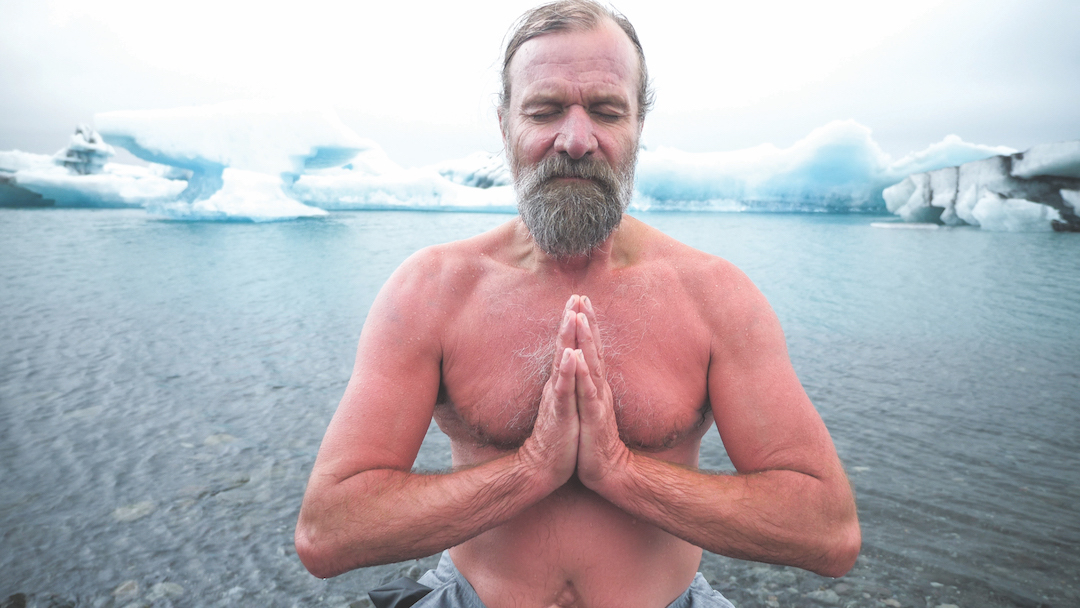

Wim Hof teaches from inside an ice bath. Not metaphorically—literally. His sessions often begin with him submerged in freezing water, breathing steadily, demonstrating what he insists the human body can endure when mind and physiology align. Whether conducting a workshop in person or leading an online course, Hof's teaching carries the atmosphere of a controlled experiment crossed with a motivational rally. There is little preamble. He explains the breathing pattern—controlled hyperventilation followed by breath retention—then leads participants through it in real time. The cold comes next: ice baths for those at retreats, cold showers for those at home. The structure is consistent, repetitive, designed for immersion rather than contemplation.
A session with Hof does not unfold gently. The breath cycles are intense, pushing carbon dioxide levels down and oxygen up in ways that can produce tingling, lightheadedness, even euphoria. He guides participants through rounds of deep inhalations and exhalations, then asks them to hold their breath far longer than they believe possible. The instruction is direct, the pacing brisk. Hof himself often demonstrates, his body a living argument for the method's efficacy. He does not ask students to believe; he asks them to try, to feel, to witness their own capacity expand in real time.
Hof returns again and again to the idea of untapped potential. His central claim is that modern life has disconnected people from their bodies' innate power—the ability to influence the autonomic nervous system, to regulate stress, to generate heat internally. He speaks often of the immune system, circulation, energy levels, framing his method as a return to something primal and lost. The cold is not punishment but teacher; the breath is not esoteric but physiological. He cites scientific research that has examined his techniques, positioning himself at the intersection of ancient practice and contemporary validation.
Another theme: resilience born from hardship. Hof's own story—the loss of his wife, his turn toward extreme self-experimentation—threads through his teaching. He does not dwell on tragedy, but it shadows his insistence that suffering can be transformed, that the body's limits are negotiable. The message is one of empowerment, sometimes bordering on the evangelical: you are capable of more than you know.
Hof does not traffic much in open-ended inquiry. His teaching is prescriptive rather than exploratory. The implicit question he places before students is not "What does your breath reveal?" but "Can you do this?" The challenge is concrete: hold your breath for two minutes, stay in the ice for three. He pushes students to confront physical discomfort directly, to notice the mind's resistance and override it with technique. The questions are less existential than functional: What happens when you stay? What changes when you breathe?
Hof's delivery is animated, enthusiastic, punctuated with bursts of laughter and exclamations. He is charismatic in an unpolished way—more motivational coach than meditation teacher. There is little silence in his sessions; he talks through the breath cycles, offering encouragement, urging students past their mental barriers. Stories appear, drawn from his own experiences of endurance—climbing Kilimanjaro in shorts, running marathons barefoot in snow—but they function as proof of concept rather than parable.
Humor is present but not subtle. Hof's energy is infectious, his confidence absolute. He does not use scripture or invoke spiritual frameworks extensively, though his method draws implicitly from practices like pranayama. The aesthetic is more laboratory than temple, more athletic than devotional.
The Wim Hof Method attracts those seeking tangible, measurable results: better health, increased energy, stress relief. It appeals to the athletically inclined, the biohacker, the person skeptical of spirituality but open to physiology. Those who thrive on challenge and enjoy pushing physical boundaries often find the method compelling. The scientific framing provides a foothold for the empirically minded.
It may not land for those seeking subtlety, introspection, or a contemplative approach to embodiment. The method's intensity and Hof's relentless enthusiasm can feel overwhelming. Students looking for silence, space, or a gentler relationship with the body might find the approach too forceful, too performance-oriented. The emphasis on endurance and extremity does not suit everyone.
Hof operates in a liminal space between wellness culture and ancient practice. His techniques echo elements found in yoga and pranayama traditions, where breath control has long been used to influence consciousness and physiology. The use of cold exposure has precedents in various cultures, though Hof's particular synthesis is his own. He positions himself less as a lineage holder and more as a pioneer, someone who has rediscovered what the body can do and made it accessible, reproducible, and scientifically testable. Whether this constitutes a genuine teaching tradition or an effective personal brand remains a live question.