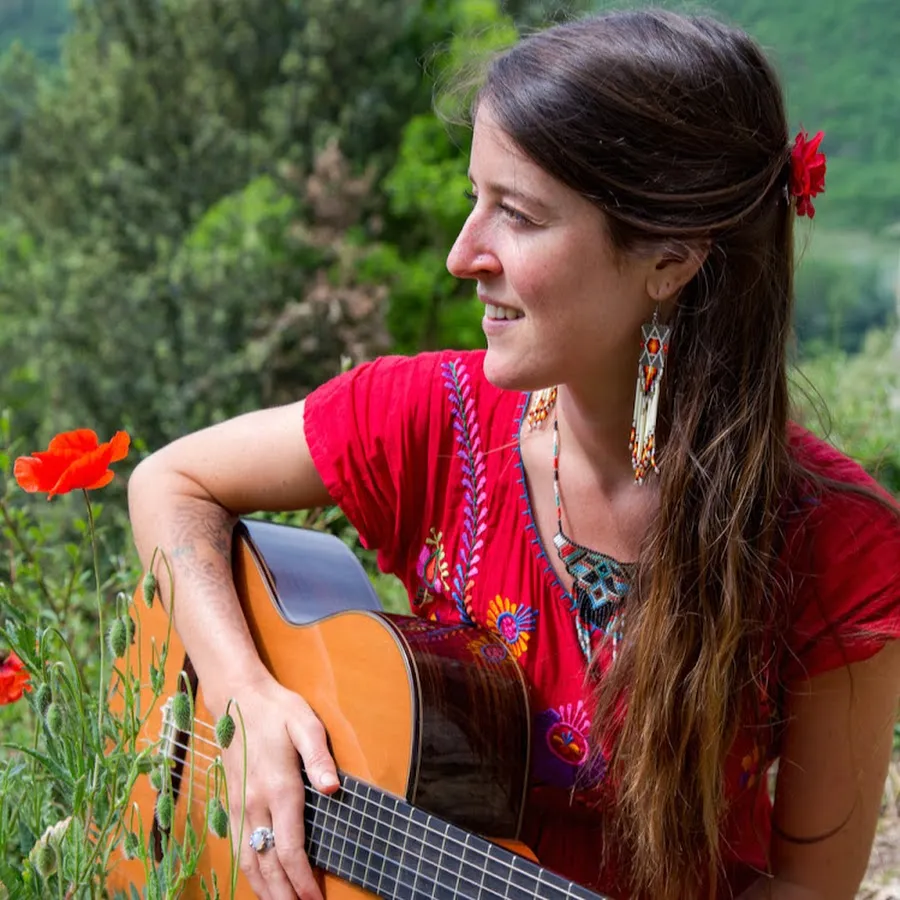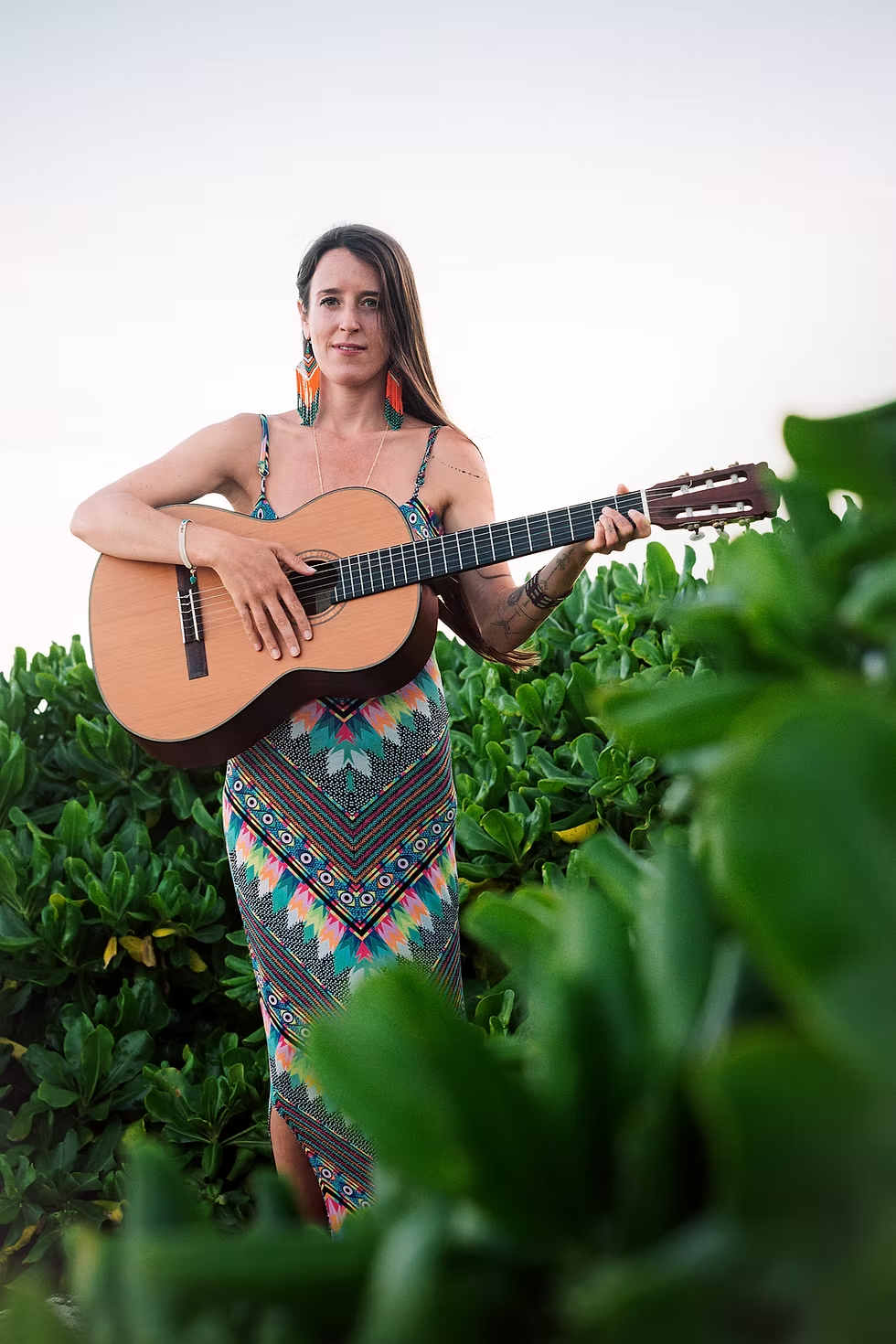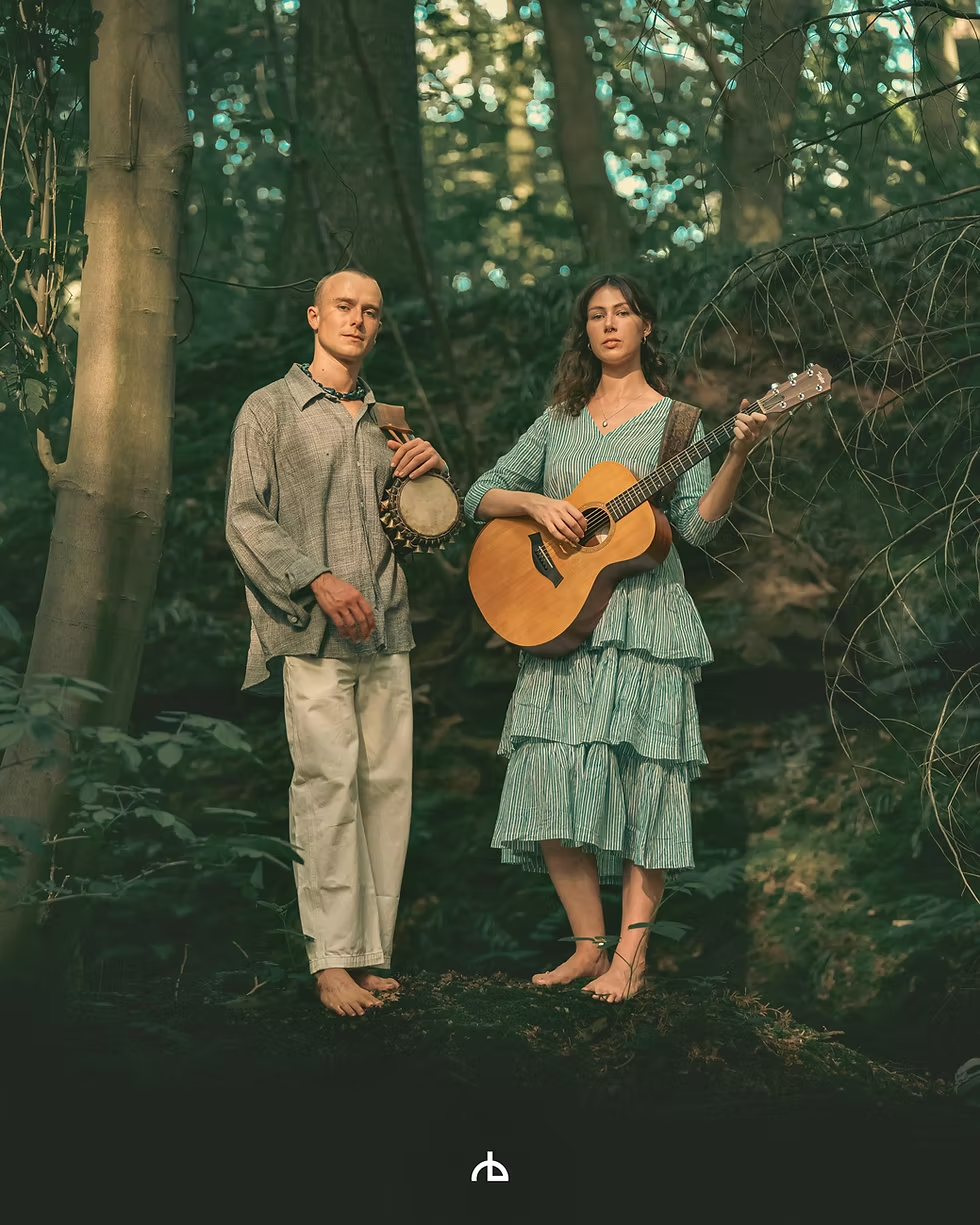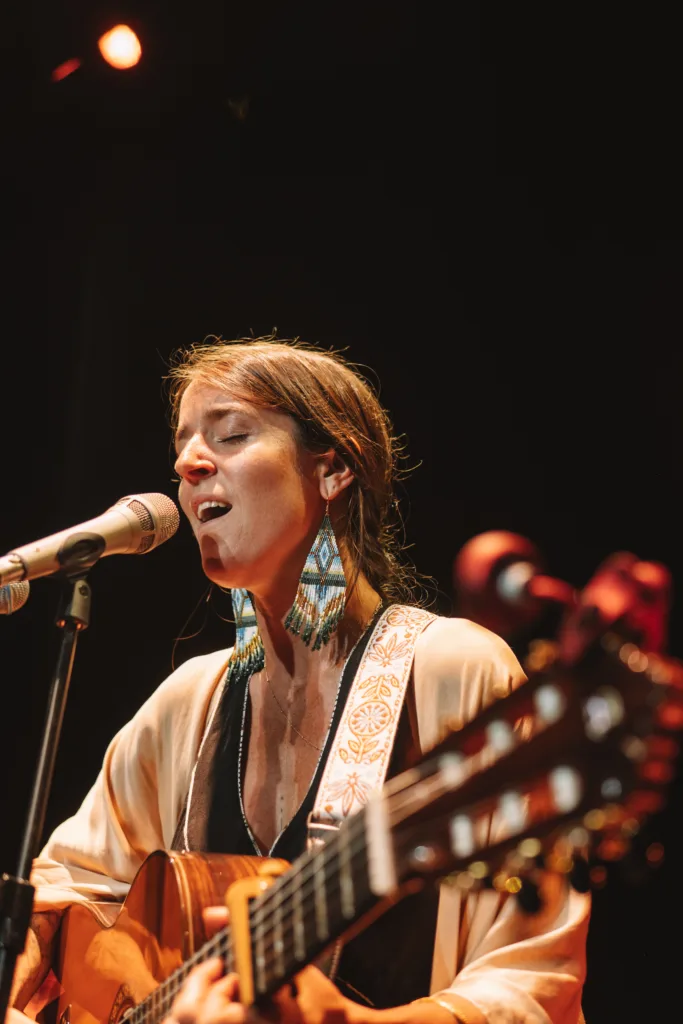

Ayla Schafer is a multilingual "world folk" singer-songwriter and ceremonial musician, described as a "Voice of the Earth." She sings in Spanish, English and Proto-Celtic, the reconstructed ancestral language of the Bronze Age. She is also a mother of two and lives among the ancient wild lands of Dartmoor, a landscape that suits a body of work concerned with memory, ancestry and presence.
Her songs are often described as medicinal, and they carry a sense of remembrance. They invite listeners to reconnect with themselves, with the earth, and with what she and her listeners call the quiet power of presence. With more than 370,000 followers on Spotify, she reaches a sizeable audience for work that is neither mainstream folk nor easily filed under a single label.
The documented record of her early life is brief. She began performing at sixteen and gained experience across the UK festival scene, a circuit that rewards directness and the ability to hold a field of strangers with little more than a voice and a song. Her work was later noted for its strength and clarity, a quality that Folk Radio singled out.
During this period she was part of the folk-soul duo Susie Ro and Ayla. She has also collaborated with Brit Award winner Ben Howard, an association that places her within the broader landscape of contemporary British folk.
In 2010 she travelled through South America, and the years she spent away from home reshaped her writing. She explored the inner landscape and learned from various indigenous traditions about the healing power of song. It is a familiar kind of journey, but its effects on her work were lasting. Her compositions now hold what her biography calls the beauty, shadow and rawness of human experience, alongside a commitment to earth consciousness and ancestral wisdom.
The Spanish in her repertoire is one trace of that period. The turn toward Proto-Celtic suggests a later movement back toward the ancestral roots of the lands she now calls home.
Schafer's central contribution is the treatment of the voice as a tool for healing, release and self-knowledge, not only for performance. Her songs hold space for grief and strength together, and she is as concerned with how a song is received as with how it is made.
That conviction runs through the second strand of her work: teaching and facilitation. She offers workshops, retreats, women's circles, one-on-one coaching and ceremonies, including Song of the Soul and Womb Song. She is a qualified Womb Awakening teacher, trained with The Fountain of Life, and has also trained in The Voice as a Healing Instrument with The Brothers Koren. These are the training credentials her biography names, and they ground her facilitation in structured study alongside her own experience.
Her recordings include Dive into Water, Ima Adama, Silent Voices and Mâtîrja (Ancestral Mothers). The last features Tara Brading and Carolyn Hillyer, and its title points to the lineage of women and ancestors that animates much of her work.
The writing is poetic, and the music weaves world folk with what she describes as medicinal song. Higher Plains Music called her work "some of the most beautiful world folk I've heard all year." The praise points to a quality that runs through her catalogue: the songs are accessible and warm, yet they do not shy away from shadow.
Today Schafer's work moves between the recording studio and the circle. Her life on Dartmoor, as a mother and as a singer, shapes the rhythm of what she offers. Her songs and her ceremonial work come from the same impulse, which is to use sound as a way back to oneself and to the earth.
Because the available record does not detail her current projects or upcoming releases, it is best to say only what is clear: she continues to write, record, perform and facilitate, and her workshops, retreats, circles, coaching and ceremonies remain central to her practice.
Schafer speaks to people who come to music looking for more than entertainment. Her audience includes listeners drawn to world folk and conscious music, and participants in women's circles and voice workshops who want to find their own singing voice, often for the first time. Her work is especially relevant to those seeking to reconnect with ancestral memory and the natural world without losing the intimacy of a well-made song.
Her use of Proto-Celtic is a distinctive part of this. Singing in a reconstructed Bronze Age language is an imaginative act, a way of reaching toward a past that can only be partly known. Alongside Spanish, a language she met on her travels, and English, her songs form a map of influence and inheritance.
In a field where sacred and devotional music can slide into formula, Schafer stands out for treating song as both craft and practice. Her work asks listeners to take their time, to sit with difficulty, and to hear their own voices as worth using. That sustained invitation, offered through recordings, ceremonies and the long, patient work of teaching, is the heart of her legacy so far.