
Each Life Sacred is a single, released on 14 November 2025, with one track carrying the album's name. A guide to a one-song release is closer to a guide to a single act of listening, so this one stays with what can be said honestly about the piece and the artist behind it.
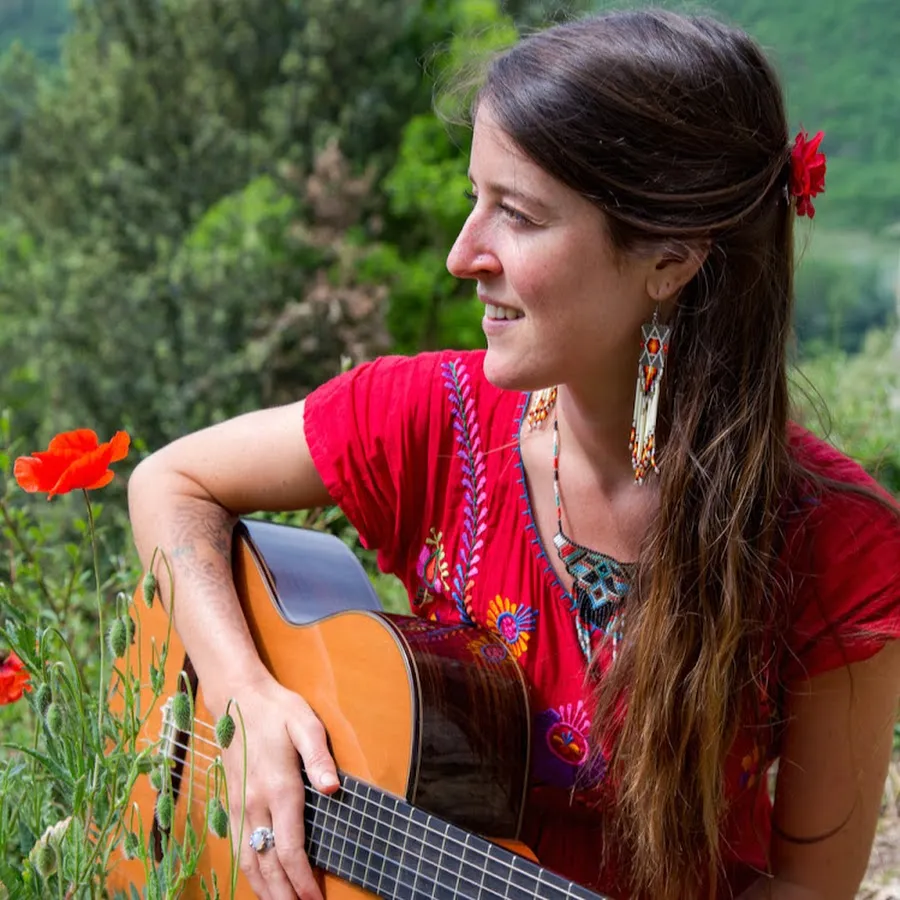
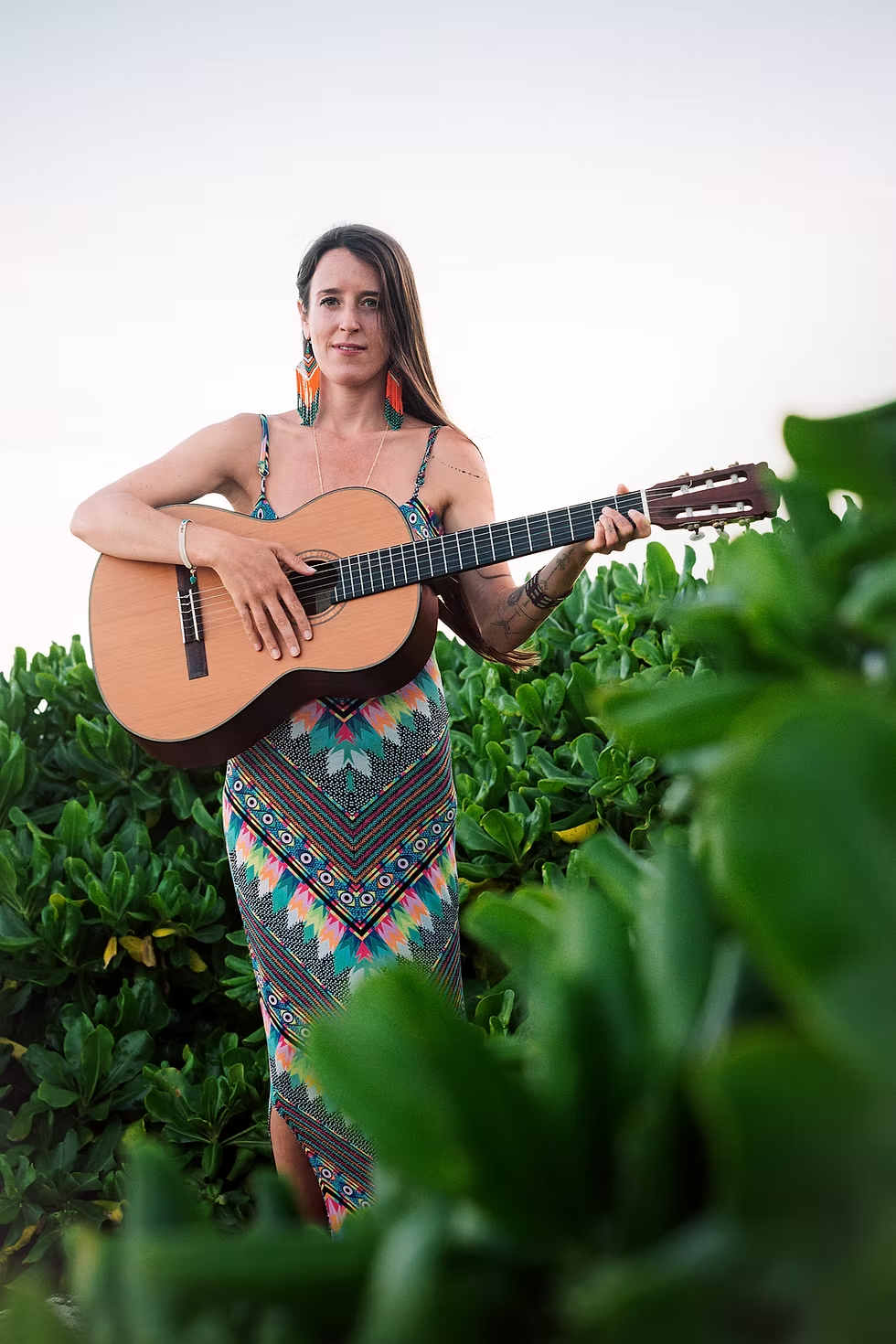
Ayla Schafer is a multilingual world folk singer-songwriter and ceremonial musician, described as a "Voice of the Earth." She lives on Dartmoor, is a mother of two, and began performing at sixteen, building experience across the UK festival scene. A pivotal chapter came in 2010, when she travelled through South America. The years away shaped her writing, and she learned from various indigenous traditions about the healing power of song.
Against that background, a 2025 single titled Each Life Sacred reads as a distillation. Her bio frames her songs as carriers of memory, remembrance and power, and the title states a principle those songs seem to circle: reverence extended to every living thing. It is a compact statement from an artist whose work usually unfolds in a wider repertoire of Spanish, English and Proto-Celtic songs.
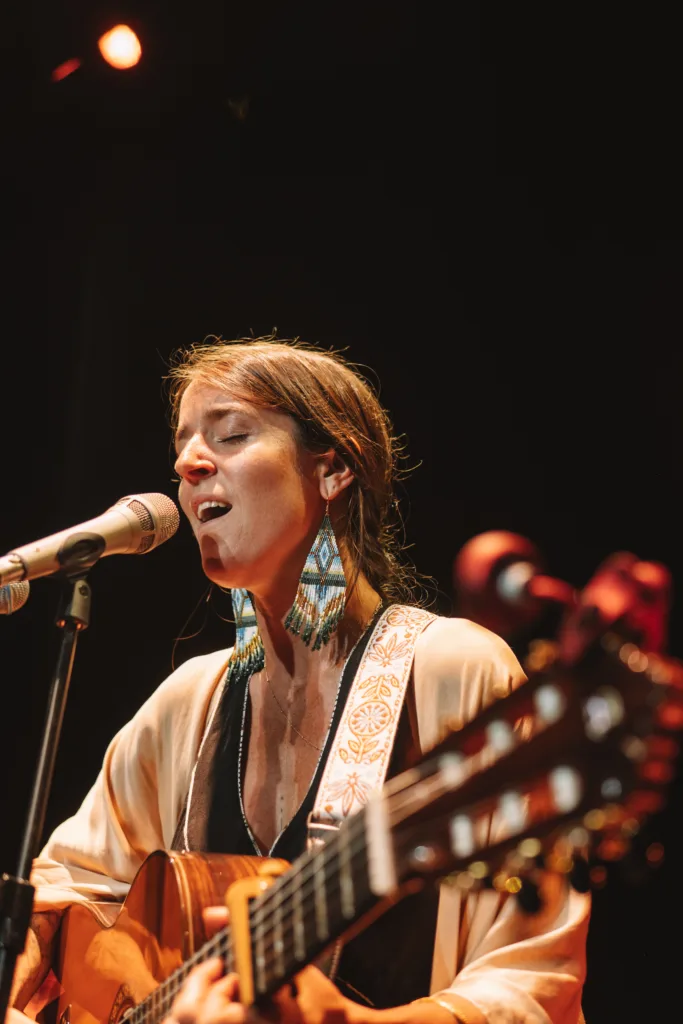
The central feature of Schafer's work is the voice, and her bio places it in the foreground: poetic repertoire, sung across languages, woven from world folk and what she calls medicinal song. Expect a voice used as a vehicle for presence rather than display. The bio speaks of "the beauty, shadow and rawness of human experience," which suggests a register that can be tender and unvarnished in the same breath.
I can't responsibly itemise the arrangement, since no instrumentation or collaborators are documented for this release. What you can bring to it is the artist's stated intent: songs that invite listeners to reconnect with themselves, the earth and what her bio calls "the quiet power of presence." Pacing and mood are best judged by ear, but that intent points toward a listen that rewards stillness over momentum.
"Each Life Sacred"
There is only one track, and it is the whole release. What makes it worth your attention is the pairing of title and practice. Schafer comes from a ceremonial context, where a song is something to be offered rather than merely performed. Her bio emphasises remembrance and earth consciousness, and a piece titled this way invites you to hear it as a statement of care, one that is simple to say and demanding to live by.
Listen for how the language, whether English or another of her songwriting languages, carries the weight of the phrase. Notice whether the song asks something of you or simply holds the idea open. A single track lets you hear one gesture fully, without the shuffle of a longer record.
Schafer's own description is world folk and medicinal song, informed by what she learned from indigenous traditions during her South American travels, alongside a commitment to ancestral wisdom. Her use of Proto-Celtic, a reconstructed Bronze Age language, ties her to the deep past of the land she lives on.
It would be a stretch to file this single under bhakti or kirtan, since nothing in her biography assigns her to those lineages. A better frame is contemporary ceremonial folk: music made for gathering, remembrance and reconnection, which can sit comfortably near devotional and ambient listening while staying its own thing. Come to it as a song with sacred intent rather than as a genre exercise.
This single will resonate most with listeners who already turn to music for grounding: people drawn to earth-centred spirituality, ceremony, yoga and breathwork spaces, or folk traditions that treat song as medicine. It will also speak to anyone in a moment of remembrance or transition, such as grief, parenthood, a return to the land, or a reassessment of how they treat the living world. Listeners who want a quick hook or a driving beat may find it asks for more patience than they expected. Those who want a song to stay with will find that it does.
Give it a quiet window, ideally in the evening, with nothing else competing for attention. Headphones help if you want the voice close, and a room with soft light and no notifications works just as well. Listen once without doing anything else. Then play it again with a question in mind, such as what in your day has felt sacred, or what you have overlooked.
If you work with ritual, whether a candle, a few minutes of breathing, or time outdoors, let the song open or close that practice instead of running underneath it. Because it is a single, replay costs almost nothing. Let a second and third listen show you what the first one skipped past.
The release is on Spotify: https://open.spotify.com/album/4HUEYaN0GnSLXjLsNIf07L