
Standing at the starting line of your first endurance event is transformative. But before you pin on that race bib, you face a crucial decision that will shape your training, your lifestyle, and your entire athletic identity: which endurance discipline should you pursue? Trail running, road racing, and triathlon each offer unique challenges, communities, and rewards. The choice isn't just about what sport you'll do—it's about who you'll become as an athlete.
I've been fortunate enough to experience all three disciplines extensively. I've navigated technical single-track at altitude, chased Boston qualifying times on asphalt, and survived the organized chaos of triathlon transitions. Each discipline has taught me different lessons about resilience, preparation, and what my body and mind can truly accomplish. The good news? There's no wrong choice. The better news? Understanding the distinct characteristics of each discipline will help you make the right choice for your goals, personality, and lifestyle.
This guide draws from years of racing experience and coaching athletes across all three disciplines. Whether you're a complete beginner to endurance sports or an experienced runner considering branching out, understanding these differences will help you find your perfect endurance home—or perhaps discover that you're destined to be a multi-sport athlete.

Trail Running: Where Adventure Meets Endurance
Trail running strips away the predictability of road racing and replaces it with ever-changing terrain, elevation profiles that humble even the fittest athletes, and scenery that makes you forget you're suffering. Unlike road running's metronome-like rhythm, trail running demands constant adaptation—navigating roots, rocks, stream crossings, and steep climbs that often require hiking. The sport has exploded in popularity over the past decade, evolving from a niche pursuit into a global movement with events ranging from accessible 10K trail races to hundred-mile mountain epics.
What makes trail running special is the intimate connection with nature and the supportive community culture. Trail runners tend to be less focused on PRs and more interested in the experience itself. Aid stations become social gatherings, and the general etiquette on trails emphasizes camaraderie over competition. You'll find yourself high-fiving fellow runners on narrow single-track and sharing beta about upcoming technical sections. The mental game differs significantly from road racing—instead of battling monotony, you're solving the constant puzzle of foot placement, energy management on extreme elevation changes, and navigation.

Training for trail running requires building specific strengths that road running doesn't develop. You need stronger ankles, more resilient stabilizer muscles, and different pacing strategies. A 10-minute-per-mile trail pace might represent the same effort as a 7-minute road pace depending on the terrain. Most trail runners incorporate hiking into their training, recognizing that power hiking steep climbs is often more efficient than trying to maintain a running cadence. Vertical gain becomes as important as distance—10 miles with 3,000 feet of climbing is vastly different from a flat 10 miles.
Gear requirements for trail running sit between road racing's minimalism and triathlon's equipment arms race. Quality trail shoes with aggressive lugs are essential, typically running $120-160. Most trail runners invest in a hydration vest ($80-150) for longer efforts, trekking poles for technical mountain races ($100-200), and weather-appropriate layers since trails often venture into exposed or high-altitude environments. Total initial investment usually ranges from $300-500. The accessibility factor is high—if you live near any parks or natural areas, you have access to trails, though the sport does favor those with mountains or significant trail systems nearby.
Road Racing: The Pure Pursuit of Speed
Road racing represents endurance sports in its most distilled form: you against the clock, with nowhere to hide and nothing to blame but your preparation and execution. From 5Ks to marathons, road racing offers the most measurable, comparable athletic pursuit in endurance sports. Every course is certified, every mile is marked, and your performance can be precisely benchmarked against your past self and the broader running community. This transparency is both road racing's greatest appeal and its most intimidating aspect—there's a beautiful honesty to toeing the line knowing exactly what you need to execute.
The road racing community is massive and incredibly diverse. Events like the ALPFA X ASICS LA Marathon in Los Angeles bring together everyone from elite runners chasing Olympic Trials standards to charity runners completing their first 26.2 miles. Races like the Run for Mental Health 5K/10K/13.1 in Camden, New Jersey, demonstrate how road racing serves multiple purposes—athletic challenge, fundraising platform, and community gathering. The infrastructure supporting road racing is unmatched: coaching resources, training plans, pace calculators, and racing opportunities exist for every level and distance. You can race every weekend if you choose, or carefully target two or three goal races per year.
Training for road racing is wonderfully straightforward but demands consistency and intelligent progression. A typical marathon training plan requires 4-6 runs per week over 16-20 weeks, building from 20-25 miles per week to 40-55 miles at peak, depending on your goals and experience. The workouts follow proven patterns: easy runs for aerobic base, tempo runs for lactate threshold development, interval sessions for VO2 max improvement, and long runs for endurance. The structure and predictability appeal to analytical minds—you can see exactly how each workout contributes to your goal. However, this same repetitive nature can lead to mental burnout and overuse injuries if you don't build in variety and recovery.
Road racing is the most accessible and affordable endurance discipline. A solid pair of road running shoes ($120-160) and weather-appropriate running clothes ($100-200) cover the essentials. Add a GPS watch ($200-500) for training, and you're fully equipped for under $600. Many successful road racers get by with even less—a basic watch and good shoes will take you to your first marathon finish line. Race entry fees typically range from $30-50 for 5Ks to $150-250 for major marathons, making the sport economically accessible. The low barrier to entry explains why road racing remains the gateway discipline for most endurance athletes.
Triathlon: The Ultimate Multisport Challenge
Triathlon occupies a unique space in endurance sports—it's simultaneously more forgiving and more demanding than single-sport disciplines. By distributing stress across swimming, cycling, and running, triathlon can be easier on your body than high-mileage marathon training. However, the logistical complexity, equipment requirements, and skill development across three sports create challenges that make your first triathlon genuinely intimidating. The sport attracts type-A personalities who thrive on optimization, complexity, and the satisfaction of mastering multiple skills simultaneously.
The iconic IRONMAN brand has made triathlon aspirational for endurance athletes worldwide. Events like IRONMAN New Zealand and IRONMAN 70.3 New Zealand in Taupō represent bucket-list challenges that test athletes over distances that sound absurd until you accomplish them: 2.4-mile swim, 112-mile bike, and 26.2-mile run for a full IRONMAN, or half those distances for a 70.3. But triathlon accessibility starts well below these epic distances—sprint triathlons (typically 750m swim, 20K bike, 5K run) offer achievable entry points for athletes with moderate fitness. The sport's structure provides a natural progression: sprint to Olympic distance to 70.3 to full IRONMAN.
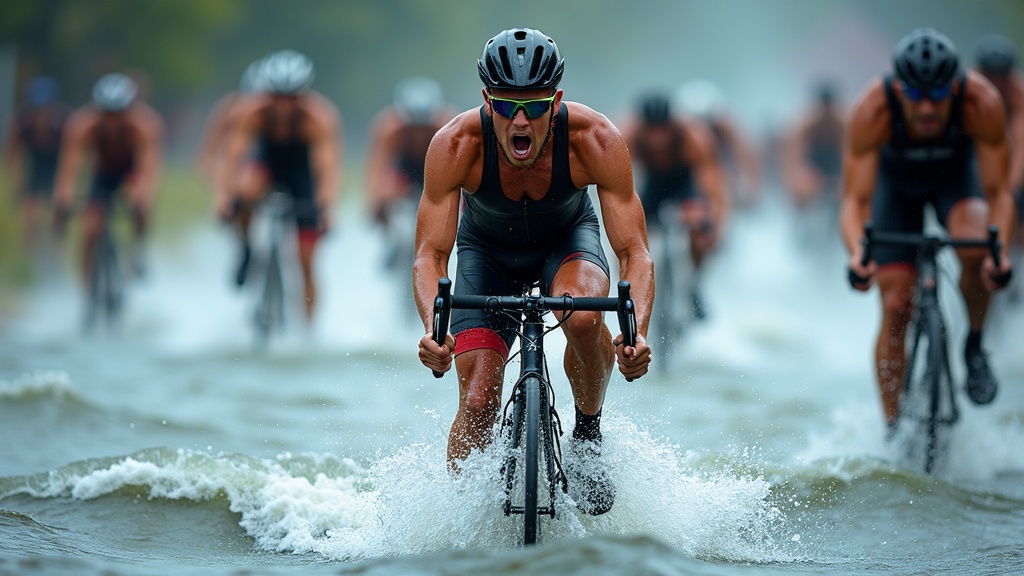
Training for triathlon means managing three distinct skill sets and orchestrating them into a coherent training week. A typical Olympic distance training plan requires 8-12 hours per week across 6-8 workouts, while IRONMAN preparation can demand 15-20 hours weekly at peak training. You'll swim 2-4 times weekly (technique-focused initially, endurance-building later), bike 2-4 times (long endurance rides plus interval work), and run 2-4 times (treating running as the discipline where you're already fatigued). The mental complexity of balancing three sports, managing transition practice, and preventing overtraining across multiple movement patterns creates challenges that single-sport athletes never face.
The equipment barrier in triathlon is significant and often surprising to newcomers. A basic triathlon setup includes: swimsuit, goggles, and wetsuit ($300-500), a road bike ($1,000-3,000 for entry-level to mid-range), cycling shoes and pedals ($150-300), helmet ($100-200), bike accessories and maintenance tools ($200-400), triathlon-specific clothing ($150-300), and running shoes ($120-160). You can start with what you have—any bike will work for your first sprint tri—but the sport naturally leads toward equipment optimization and upgrades. Total initial investment typically ranges from $2,000-5,000, with serious age-groupers often spending considerably more. This financial barrier makes triathlon less accessible than trail or road running, though many athletes argue the variety justifies the investment.
The Discipline Comparison: By the Numbers
| Factor | Trail Running | Road Racing | Triathlon |
|---|---|---|---|
| Training Hours/Week | 6-12 hours | 4-10 hours | 8-20 hours |
| Initial Gear Investment | $300-500 | $200-600 | $2,000-5,000 |
| Injury Risk | Moderate (acute injuries from falls, but varied terrain reduces overuse) | Moderate-High (repetitive stress injuries common) | Low-Moderate (stress distributed across three sports) |
| Beginner Accessibility | Moderate (requires trail access and comfort with technical terrain) | High (can start anywhere, anytime) | Moderate (swim skill barrier, equipment costs) |
| Social/Community Factor | Very High (collaborative culture, trail running groups) | High (massive community, many clubs) | Moderate-High (active clubs, but training often solo) |
| Typical Race Distance | 10K-50K most common; ultras 50K-100+ miles | 5K-Marathon most common | Sprint to IRONMAN (1-17+ hours) |
| Mental Challenge Rating | High (navigation, constant adaptation, isolation) | Very High (nowhere to hide, mental monotony) | Very High (skill management, transition strategy, endurance) |
"I've learned that each discipline teaches you different lessons. Running teaches you to suffer. Cycling teaches you patience. Swimming teaches you humility. Triathlon teaches you that you're capable of far more than you imagined."
— Chrissie Wellington, 4-time IRONMAN World Champion
Which Discipline Is Right for You?
Your personality, goals, and lifestyle circumstances should guide your choice. Here's how different athlete profiles align with each discipline:
- Choose Trail Running if: You crave adventure and variety, feel energized by nature, enjoy hiking and exploring, prefer collaborative competition over cutthroat racing, have access to trails or mountains, want to see incredible places through racing, or find road running monotonous
- Choose Road Racing if: You're motivated by measurable improvement and PRs, thrive on structure and clear training protocols, want maximum racing opportunities and flexibility, need the most budget-friendly option, prefer straightforward training without technical skill development, enjoy the energy of large race fields, or want to build pure running speed and endurance
- Choose Triathlon if: You love variety and resist training monotony, enjoy gear and equipment optimization, have swimming access (pool or open water), can commit to higher training volume, want lower injury risk through cross-training, are drawn to the complexity of mastering multiple sports, have budget flexibility for equipment investment, or seek the ultimate endurance challenge
Steps to Choose and Prepare for Your First Race
Once you've identified the discipline that resonates with your goals and personality, follow this systematic approach to prepare for your inaugural race:
- Assess your current fitness baseline: Can you comfortably run 3 miles? Swim 400 meters continuously? This honest assessment determines your realistic starting point and training timeline
- Select an appropriate first-race distance: For trail running, target a 10K or 10-miler. For road racing, choose a 5K or 10K before attempting longer distances. For triathlon, start with a sprint distance. Give yourself 12-16 weeks to prepare
- Invest in proper footwear first: Visit a specialty running store for gait analysis and shoe fitting. Proper shoes prevent injury and make training more enjoyable. Everything else can wait
- Find a training plan or coach: Don't wing it. Following a structured plan prevents overtraining, ensures progressive overload, and builds confidence. Many excellent free plans exist online for all disciplines and experience levels
- Join a local club or training group: The social accountability, knowledge sharing, and community support will dramatically improve your experience and success rate. Training partners make hard workouts manageable and long workouts pass quickly
- Practice race-specific skills: For trail running, train on similar terrain. For road racing, practice goal pace. For triathlon, rehearse transitions and brick workouts (bike-to-run). Race day shouldn't introduce new challenges
- Register for your race early: Financial commitment creates accountability. Use EnduranceFinder to discover events across all three disciplines that match your timeline, location, and goals
- Develop your nutrition and hydration strategy: Start experimenting during training with what you'll use on race day. Gut issues ruin more races than inadequate fitness
Your Endurance Journey Starts With the Right Choice
The beautiful truth about choosing your endurance discipline is that you're not locked into a single path forever. Many successful athletes start with road racing, discover trail running for adventure, or eventually test themselves in triathlon. Others find their perfect match immediately and spend decades deepening their expertise in one discipline. Some become true multi-sport athletes, racing everything from 5Ks to ultramarathons to IRONMAN events, drawing unique lessons from each.
What matters most isn't choosing the "right" discipline—it's choosing the one that will actually get you out the door consistently, the one that excites you enough to embrace hard training, and the one that aligns with your life circumstances and resources. The endurance sports community welcomes you regardless of which starting point you choose.
Ready to take the next step? Visit EnduranceFinder to explore upcoming trail running events, road races like the ALPFA X ASICS LA Marathon or Run for Mental Health series, and triathlon challenges including IRONMAN 70.3 New Zealand. Filter by location, distance, and date to find your perfect first race. The starting line awaits—your only job is to show up prepared and trust the training. The rest will take care of itself.