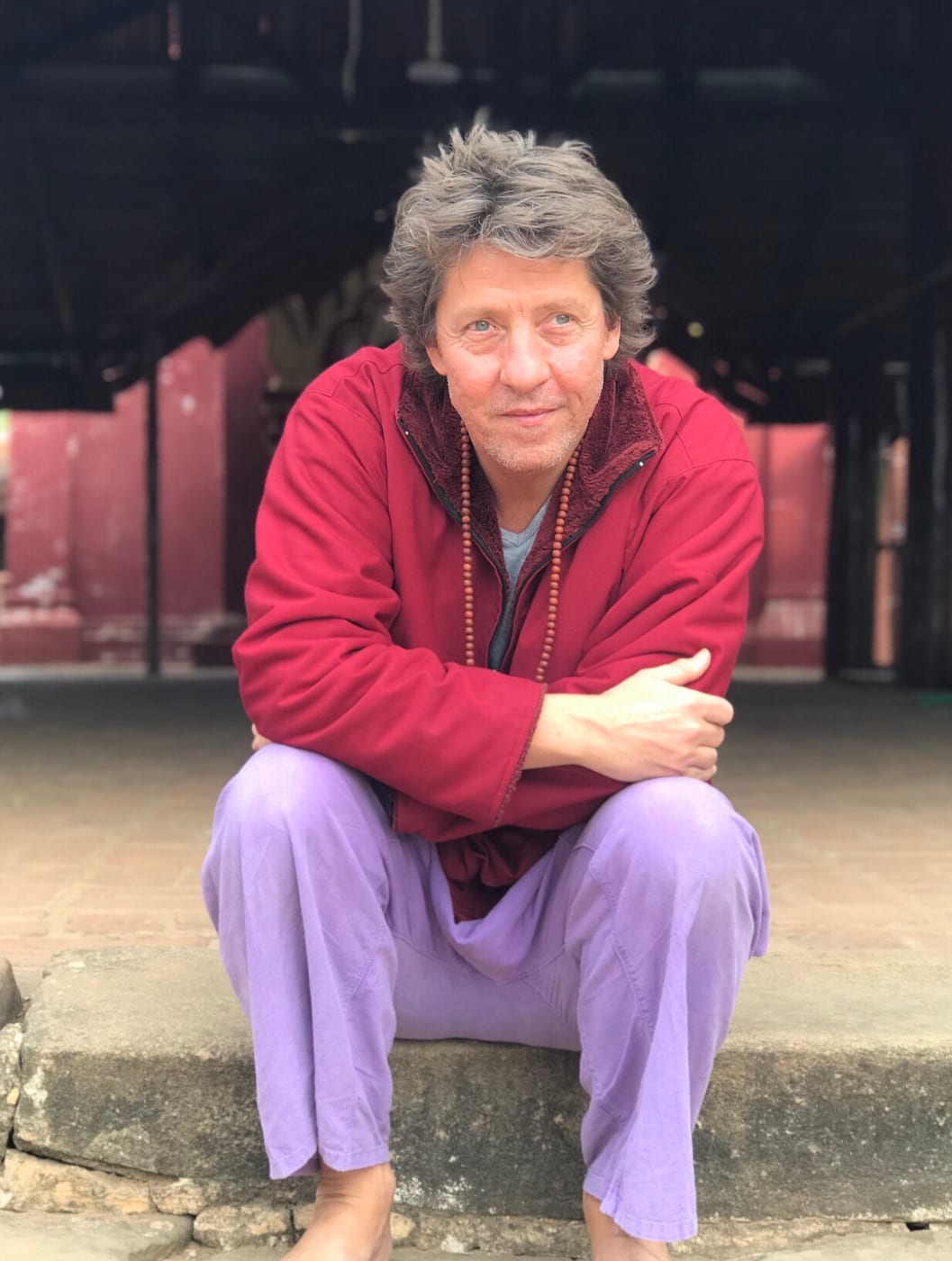
Burgs founded The Art of Meditation and has hosted retreats for over 25 years. That longevity shows in how the teaching is built. It is a graded curriculum, not a single technique repackaged for different audiences, and it expects the student to stay for a while.
The entry point is The Stillness Programme, a self-paced introduction to the fundamentals. From there the path runs through The Art of Meditation, which covers concentration and mindfulness, and on to Healing Meditation. A separate programme addresses anxiety. The courses combine guided meditations with reading and audio materials, so much of the work happens alone, at the student's own pace.
Live contact comes through retreats in the UK and northern Portugal, some held mostly in silence. Sessions are described as clear and methodical, with instruction in technique often tied to the obstacles practitioners actually meet. The tone is serious without being austere. His Patreon community adds live sessions where students can ask questions, giving the remote teaching a conversational side. Beyond that, the teaching is available through a podcast, an audio library, books, and an autobiography.
The organisation's central claim is that meditation is not a science but a profound journey into the deepest aspects of what it is to be alive. Someone who masters their own mind, in its words, moves joyfully through life and makes an "art of just being." That framing sets the teaching against the language of measurable outcomes and optimisation that dominates much mindfulness instruction.
A second theme is the body and energy. His Internal Alchemy work is energetic self-cultivation drawing on chi kung, breathwork, and specific meditations. It sits alongside vipassana insight practice and healing meditation, so the syllabus covers a wide range: attention training, insight, and body-based practice.
The third is craft. Burgs has written about healing his own brain after a traumatic injury, and he found art, calligraphy, and other crafts a real help alongside meditation in settling an overactive nervous system. He has since brought such crafts into his retreat programmes, including a Tibetan thangka art and meditation retreat co-hosted with the painter Carmen Mensink.
The material doesn't hand over formal koans, so any list of questions is an inference from the themes. Three seem fair. What does it mean to master your own mind, as opposed to managing your moods? What is left of practice if you remove the promise of results? And what changes when attention goes into something slow and physical, like drawing a line with a brush, rather than only into the breath?
The injury story adds a harder question about whether stillness is something you achieve or something you make room for, and craft is one way he suggests making that room.
The available material says little about humor, and it would be a mistake to invent a comic persona. What it does show is a voice built on instruction and personal account. Story enters mainly through his own recovery, which grounds the healing material in experience, not theory. Silence is structural: some retreats are held mostly in silence, and the guided recordings leave room for it as well. The bio cites no scripture, so the teaching should be understood through its practices, not through textual exegesis.
The approach suits people who want a long, layered path. Beginners can start at The Stillness Programme without prior experience, while longer-term practitioners can move into vipassana, healing work, and Internal Alchemy. It also suits people who are wary of mindfulness sold as a productivity tool, and those drawn to the idea that practice is closer to an art than a technique. Anyone whose nervous system needs something more tactile than sitting may find the craft element useful. The self-paced format rewards people who can keep up a routine without an instructor in the room.
Someone after a quick fix or a ten-minute daily habit will find little to hold onto, since the teaching is oriented toward sustained practice. The breadth is a risk too. A student who wants one simple method may find concentration, insight, healing meditation, and energy work more than they asked for. Those who want meditation framed in strictly clinical or evidence-based terms will probably be put off by the explicit refusal to treat it as a science. The energy-cultivation material, built on chi kung and breathwork, will also sit awkwardly with anyone who wants the practice limited to attention and stress reduction. Finally, the self-paced courses leave the student largely alone with the material, which suits some temperaments and frustrates others.
The bio places Burgs in the broad family of contemplative and self-cultivation practice. It names vipassana insight practice, concentration and mindfulness work, and chi kung and breathwork, but it names no specific teacher, lineage, or school behind them, and this profile assigns none. What can be said is that he draws on these methods and arranges them into a progressive course of study under his own guidance, with his own injury and recovery shaping how he teaches them.