EnduranceFinder
All Races
Every discipline, every distance
Marathons
26.2 miles of glory
Triathlons
Swim, bike, run
Cycling
Gran fondos & road races
Trail Running
Off-road & mountain races
Ultras
Beyond the marathon distance
Virtual Races
Race from anywhere
Popular Destinations
New YorkBostonChicagoLondonTokyoCape Town
Glossary
Endurance terms & definitions
Elite Athletes
Pro athlete profiles
Training Tips
Plans, workouts & coaching
Race Guides
Course previews & strategy
Gear Reviews
Shoes, bikes & race-day kit
Athlete Stories
Community race reports
Wisdom
Words from endurance legends
AI Discovery
How AI powers your experience
Blog
Latest from EnduranceFinder

“Somebody may beat me, but they are going to have to bleed to do it.”

— Steve Prefontaine

All RacesEvery discipline, every distance
Marathons26.2 miles of glory
TriathlonsSwim, bike, run
CyclingGran fondos & road races
Trail RunningOff-road & mountain races
UltrasBeyond the marathon distance
Virtual RacesRace from anywhere
Popular Destinations
New YorkBostonChicagoLondonTokyoCape Town
GlossaryEndurance terms & definitions
Elite AthletesPro athlete profiles
Training TipsPlans, workouts & coaching
Race GuidesCourse previews & strategy
Gear ReviewsShoes, bikes & race-day kit
Athlete StoriesCommunity race reports
WisdomWords from endurance legends
AI DiscoveryHow AI powers your experience
BlogLatest from EnduranceFinder
ConnexionS'inscrireWhy EnduranceFinder?
  • Browse All Races
  • Marathons
  • Half Marathons
  • Triathlons
  • Cycling
  • Ultras
  • Trail Running
  • Swimming
  • Obstacle Races
  • All Categories →
  • Boston
  • Chicago
  • New York City
  • San Francisco
  • Los Angeles
  • Denver / Boulder
  • Austin
  • Seattle
  • Berlin
  • London
  • Toutes les villes →
  • For Race Directors
  • For Timing Companies
  • For Running Clubs
  • For Cycling Organizations
  • For Triathlon Clubs
  • For Trail Race Organizers
  • For Charity Races
  • For OCR & Adventure Races
  • For Swim & Open Water
  • AI Platform
  • Pricing
  • Case Studies
  • Récupération des paniers abandonnés
  • Tarification dynamique intelligente
  • Catégories de billets
  • Événements récurrents
  • Custom Questions
  • Système d'affiliation
  • Liste d'attente / Notifier
  • Scanner de billets
  • Widget intégrable
  • Event Syndication
  • Integrations
  • Toutes les fonctionnalités →
  • About EnduranceFinder
  • Blog
  • AI Discovery
  • Training Guides
  • Race Guides
  • Help Center
  • Contact Us
  • Careers
  • Press
  • Conditions d'utilisation
  • Politique de confidentialité

Races

  • Browse All Races
  • Marathons
  • Half Marathons
  • Triathlons
  • Cycling
  • Ultras
  • Trail Running
  • Swimming
  • Obstacle Races
  • All Categories →

Destinations

  • Boston
  • Chicago
  • New York City
  • San Francisco
  • Los Angeles
  • Denver / Boulder
  • Austin
  • Seattle
  • Berlin
  • London
  • Toutes les villes →

Pour Race directors

  • For Race Directors
  • For Timing Companies
  • For Running Clubs
  • For Cycling Organizations
  • For Triathlon Clubs
  • For Trail Race Organizers
  • For Charity Races
  • For OCR & Adventure Races
  • For Swim & Open Water
  • AI Platform
  • Pricing
  • Case Studies

Fonctionnalités

  • Récupération des paniers abandonnés
  • Tarification dynamique intelligente
  • Catégories de billets
  • Événements récurrents
  • Custom Questions
  • Système d'affiliation
  • Liste d'attente / Notifier
  • Scanner de billets
  • Widget intégrable
  • Event Syndication
  • Integrations
  • Toutes les fonctionnalités →

Entreprise

  • About EnduranceFinder
  • Blog
  • AI Discovery
  • Training Guides
  • Race Guides
  • Help Center
  • Contact Us
  • Careers
  • Press
  • Conditions d'utilisation
  • Politique de confidentialité
EnduranceFinder
© 2026 EnduranceFinder. Tous droits réservés.
Inspire

Psychedelic States of Consciousness: NaturalDimensions of the Mind

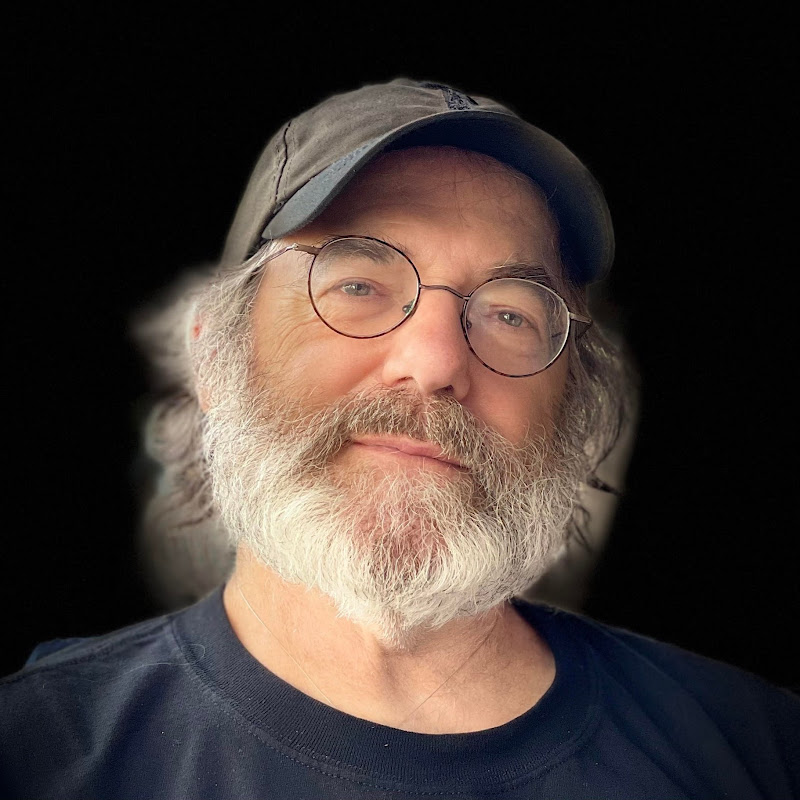
Paul Stamets
Paul Stamets
Mar 13, 2023
5 min read
Watch · 5

TLDR: In this talk, a mycologist challenges the misconceptions surrounding psychedelic substances and argues that altered states of consciousness—including dreams—are natural neurobiological phenomena that humans and animals experience regularly. Rather than aberrations or markers of insanity, these states represent dimensions of perception that have shaped human evolution and cognition.

Read · 5 sections

How Did the Myth of Psychedelic Insanity Begin?

During the speaker's early years, cultural and governmental narratives framed psychedelic use as a direct pathway to mental illness. The claim was stark and unequivocal: take LSD five or six times, and you would become certifiably insane. This propaganda was widely accepted and shaped the beliefs of an entire generation, including the speaker himself. He absorbed these warnings as fact, allowing fear-based messaging to drive his understanding of what these substances actually do to the brain (0:01–0:10).

This mischaracterization persisted for decades, creating a cultural divide between those substances deemed acceptable (alcohol, pharmaceutical medications) and those labeled dangerous (LSD, psilocybin). The distinction was not based on neurological evidence but on legal and social policy. What the speaker would later discover is that the propaganda was fundamentally flawed—not because psychedelics are completely safe, but because they don't produce the outcome the propaganda claimed.

Are Altered States of Consciousness Unnatural?

The speaker presents a counterargument grounded in biology: altered states of consciousness are not aberrations but rather a natural feature of animal neurology. The evidence begins with observation. Anyone who has owned a dog or cat has witnessed them dreaming—their eyes moving rapidly, their paws twitching, their bodies responding to an internal neurological process that resembles wakefulness but occurs in sleep (0:21–0:28).

If animals dream, and humans are animals, then humans must also enter altered states of consciousness as a routine, nightly occurrence. The speaker identifies this clearly: "We all enter into the psychedelic space every night when we fall asleep we dream" (0:31–0:36). This reframing is crucial. The psychedelic experience is not alien to human neurology—it is continuous with the dreaming state that virtually every human being experiences.

The implication is significant: if dreams are normal and natural, and if dreams represent a altered state of consciousness qualitatively similar to psychedelic states, then the pathologization of psychedelics becomes inconsistent with basic neurobiology. Both dreams and psychedelic experiences involve:

  • Altered perception of time and space
  • Vivid visual and sensory experiences
  • Reduced engagement with ordinary logical processing
  • Access to unconscious or subconscious material

What Does Exploring Consciousness Reveal About Human Evolution?

The speaker was born in 1955, and from early childhood, he was drawn to instruments that revealed hidden dimensions of reality. A microscope revealed the microscopic world. Binoculars brought distant objects into focus. A telescope opened the cosmos. Each tool expanded his perception of what was possible to see—what dimensions of reality existed beyond ordinary human sensation (0:51–0:65).

He notes: "I went wow there's so many different dimensions" (0:63–0:65). This childlike wonder at the multiplicity of perceptual worlds foreshadowed his later work. When he later encountered mushrooms, he recognized them not as invaders to consciousness but as tools—much like the microscope or telescope—that reveal dimensions of consciousness and perception that are always present but ordinarily inaccessible.

Looking at evolution itself, the speaker implies that the capacity for altered states of consciousness is not a bug in the human nervous system but a feature that has been preserved and refined across millions of years of evolutionary history. Why would animals evolve the capacity to dream—to enter regular altered states—if those states served no adaptive function? The speaker suggests that "we explore other states of consciousness as a natural state of our being" (0:45–0:50), implying that this capacity is foundational to how human cognition and perception work.

How Does Understanding Consciousness Change Your Perspective?

The speaker admits he was "born confused still am" (0:43), acknowledging that consciousness itself remains mysterious and paradoxical. Yet this confusion is not a flaw—it is a recognition of the genuine complexity of the mind and perception. Rather than accepting propaganda or dogmatic claims in either direction (that psychedelics are purely dangerous or purely beneficial), the speaker models intellectual humility in the face of altered states of consciousness.

The shift is from pathologization to naturalization. If altered states are natural, then the relevant questions change. Instead of "Are psychedelics dangerous?" (a yes/no that implied they were inherently aberrant), the questions become: "What conditions and set and setting allow for beneficial exploration of consciousness? What capacities do altered states reveal? How do they relate to creativity, problem-solving, and healing? What evolutionary advantages might they confer?"

This reframing opens a more empirical, less moralized space for inquiry into the nature of consciousness itself.

Where to go from here

For those interested in deeper exploration: The speaker's body of work on mycology and consciousness, alongside figures like Rick Doblin (co-creator of this "Psychedelic Puppet Show" project), continues to investigate the intersection of fungal biology and human neurology. Readers may explore research from organizations like MAPS (the Multidisciplinary Association for Psychedelic Studies), which conducts clinical research into how altered states can be used therapeutically. The shift from propaganda to science requires both skepticism of received narratives and openness to evidence—the same intellectual stance the speaker models here.


Transcript

[0:01] I bought into the propaganda and I

[0:04] really believed that if you took LST

[0:06] five or six times you were certifiably

[0:08] insane that that's all it takes

[0:10] definitely ascertained that that's true

[0:21] breaking news we are all animals all

[0:25] animals dream

[0:26] and I'm sure those of you who have pets

[0:28] you've seen dogs and they're dreaming

[0:31] well so do we so we all enter into the

[0:33] Psychedelic space every night when we

[0:36] fall asleep we dream

[0:38] and so I was born in 1955.

[0:43] born confused still am

[0:45] but I think we explore other states of

[0:48] Consciousness as a natural state of our

[0:50] being

[0:51] so when I was a child I discovered a

[0:54] microscope

[0:56] then I discovered

[0:59] binoculars and then I got fascinated

[1:01] with a telescope

[1:03] I went wow there's so many different

[1:05] dimensions and looking at evolution

[1:11] this is what my brain used to look like

[1:12] my skull and then I found mushrooms

[1:16] and then suddenly here I am today

Paul Stamets
AuthorPaul Stamets

Watch more from Paul Stamets on YouTube.

View profileWebsite
Explore Topics
Psychedelic-consciousnessAltered-statesConsciousness-biologyDreamingPerception

Got Questions?

Frequently Asked Questions

No—altered states of consciousness are natural features of animal neurology. Humans and animals dream every night, entering a state qualitatively similar to psychedelic consciousness. The claim that psychedelics cause insanity is propaganda unsupported by neurobiological evidence.
Both dreams and psychedelic states are altered states of consciousness involving vivid perception, altered time/space, and access to unconscious material. Since dreaming is a normal nightly occurrence for all animals, psychedelic states represent a natural dimension of consciousness rather than an aberration.
The capacity for altered states—like dreaming—has been preserved across millions of years of evolution, suggesting it serves adaptive functions. This implies altered states are a feature, not a bug, in how human cognition and perception develop.
Cultural and governmental narratives in the 20th century claimed psychedelics caused insanity, but this was policy-driven rather than evidence-based. The distinction between acceptable and dangerous substances was legal and social, not neurological.
It means recognizing that humans naturally access multiple states of consciousness—waking, dreaming, and potentially others. Rather than treating altered states as pathological, this perspective frames them as dimensions of perception that reveal capacities already present in human neurology.

Continue Reading

More on Inspire

View All
The 10 Best Upcoming Endurance Races to Register for in Spring 2026
Training

The 10 Best Upcoming Endurance Races to Register for in Spring 2026

Discover the top 10 endurance races worth registering for this spring 2026, featuring obstacle challenges, expert insights, and complete rac…

1 min read
Trail Running vs Road Racing vs Triathlon: How to Choose Your Endurance Discipline
Race-guides

Trail Running vs Road Racing vs Triathlon: How to Choose Your Endurance Discipline

Trail running, road racing, or triathlon? Discover which endurance discipline matches your goals, personality, and lifestyle with this compr…

1 min read
Where to Race This Year: The Ultimate State-by-State Guide to Endurance Events
Race-guides

Where to Race This Year: The Ultimate State-by-State Guide to Endurance Events

Discover the best states and regions for endurance racing. From California's triathlons to New Zealand's IRONMAN courses, find your perfect …

1 min read
How EnduranceFinder Connects 500,000 Athletes With Your Race — Without Paid Advertising
Training

How EnduranceFinder Connects 500,000 Athletes With Your Race — Without Paid Advertising

Most race directors spend thousands on digital advertising to fill registration spots. EnduranceFinder's discovery platform puts your race i…

1 min read

Keep exploring

Continue your journey

More wisdom and gatherings from across the BrightStar directory.

More Articles

Browse the full library of teachings, interviews, and guides.

Back to all articles →

Teachers & Artists

Explore the lineages, musicians, and guides of the conscious world.

Explore artists →

Find an Event

Kirtan, retreats, sound baths, breathwork, festivals — happening soon.

Browse events →
Never miss a raceCreate Free Account
Organize a race?Try the Demo