EnduranceFinder
All Races
Every discipline, every distance
Marathons
26.2 miles of glory
Triathlons
Swim, bike, run
Cycling
Gran fondos & road races
Trail Running
Off-road & mountain races
Ultras
Beyond the marathon distance
Virtual Races
Race from anywhere
Popular Destinations
New YorkBostonChicagoLondonTokyoCape Town
Glossary
Endurance terms & definitions
Elite Athletes
Pro athlete profiles
Training Tips
Plans, workouts & coaching
Race Guides
Course previews & strategy
Gear Reviews
Shoes, bikes & race-day kit
Athlete Stories
Community race reports
Wisdom
Words from endurance legends
AI Discovery
How AI powers your experience
Blog
Latest from EnduranceFinder

“Somebody may beat me, but they are going to have to bleed to do it.”

— Steve Prefontaine

All RacesEvery discipline, every distance
Marathons26.2 miles of glory
TriathlonsSwim, bike, run
CyclingGran fondos & road races
Trail RunningOff-road & mountain races
UltrasBeyond the marathon distance
Virtual RacesRace from anywhere
Popular Destinations
New YorkBostonChicagoLondonTokyoCape Town
GlossaryEndurance terms & definitions
Elite AthletesPro athlete profiles
Training TipsPlans, workouts & coaching
Race GuidesCourse previews & strategy
Gear ReviewsShoes, bikes & race-day kit
Athlete StoriesCommunity race reports
WisdomWords from endurance legends
AI DiscoveryHow AI powers your experience
BlogLatest from EnduranceFinder
AccediRegistratiWhy EnduranceFinder?
  • Browse All Races
  • Marathons
  • Half Marathons
  • Triathlons
  • Cycling
  • Ultras
  • Trail Running
  • Swimming
  • Obstacle Races
  • All Categories →
  • Boston
  • Chicago
  • New York City
  • San Francisco
  • Los Angeles
  • Denver / Boulder
  • Austin
  • Seattle
  • Berlin
  • London
  • Tutte le città →
  • For Race Directors
  • For Timing Companies
  • For Running Clubs
  • For Cycling Organizations
  • For Triathlon Clubs
  • For Trail Race Organizers
  • For Charity Races
  • For OCR & Adventure Races
  • For Swim & Open Water
  • AI Platform
  • Pricing
  • Case Studies
  • Recupero carrelli abbandonati
  • Prezzi dinamici intelligenti
  • Categorie di biglietti
  • Eventi ricorrenti
  • Custom Questions
  • Sistema affiliati
  • Lista d'attesa / Notifica
  • Scanner biglietti
  • Widget incorporabile
  • Event Syndication
  • Integrations
  • Tutte le funzionalità →
  • About EnduranceFinder
  • Blog
  • AI Discovery
  • Training Guides
  • Race Guides
  • Help Center
  • Contact Us
  • Careers
  • Press
  • Termini di servizio
  • Informativa sulla privacy

Races

  • Browse All Races
  • Marathons
  • Half Marathons
  • Triathlons
  • Cycling
  • Ultras
  • Trail Running
  • Swimming
  • Obstacle Races
  • All Categories →

Destinazioni

  • Boston
  • Chicago
  • New York City
  • San Francisco
  • Los Angeles
  • Denver / Boulder
  • Austin
  • Seattle
  • Berlin
  • London
  • Tutte le città →

Per Race directors

  • For Race Directors
  • For Timing Companies
  • For Running Clubs
  • For Cycling Organizations
  • For Triathlon Clubs
  • For Trail Race Organizers
  • For Charity Races
  • For OCR & Adventure Races
  • For Swim & Open Water
  • AI Platform
  • Pricing
  • Case Studies

Funzionalità

  • Recupero carrelli abbandonati
  • Prezzi dinamici intelligenti
  • Categorie di biglietti
  • Eventi ricorrenti
  • Custom Questions
  • Sistema affiliati
  • Lista d'attesa / Notifica
  • Scanner biglietti
  • Widget incorporabile
  • Event Syndication
  • Integrations
  • Tutte le funzionalità →

Azienda

  • About EnduranceFinder
  • Blog
  • AI Discovery
  • Training Guides
  • Race Guides
  • Help Center
  • Contact Us
  • Careers
  • Press
  • Termini di servizio
  • Informativa sulla privacy
EnduranceFinder
© 2026 EnduranceFinder. Tutti i diritti riservati.
Inspiration

Celtic Folk Song Hazel Eyes:Scottish Imagery & Emotional Depth

Sabrina Jordan
Sabrina Jordan
Feb 4, 2026
7 min read
Watch · 8

TLDR: "Hazel Eyes" is a contemporary Celtic folk song that uses richly specific Scottish landscape imagery—Isle Skye, Glen of Lyon, Cliffs of Moher—to describe the colors and emotional significance of a lover's gaze. The song builds its central metaphor around hazel eyes themselves, comparing their hues to natural phenomena (heron wings, whiskey, seawater, mud after rain) while exploring themes of being "astray" and found, grounding abstract devotion in concrete sensory detail drawn from the Scottish Highlands and Irish coastline.

Read · 7 sections

How Does a Song Build Metaphor Through Natural Landscape?

At its core, "Hazel Eyes" constructs meaning by mapping emotional experience onto geographical specificity. Rather than describing the lover's eyes directly in conventional terms, the song anchors each color observation to a named Scottish or Irish place. This approach—used in traditional Celtic folk music—creates what feels like a personal geography of attraction, as if the speaker's emotional map is literally drawn from the land itself.

The opening verse establishes the pattern immediately. The eyes are "blue as the wings of a heron in the night," then "like the rising of the tides on the shores of Isle Skye." This dual comparison works in layers: first, a natural creature (the heron); second, a natural phenomenon (tides); third, a named location (Isle Skye) that carries its own cultural resonance for Celtic listeners. The specificity matters. Isle Skye is not generic landscape—it is a particular island off the Scottish coast with literary and historical weight. By attaching the beloved's eyes to that place, the song suggests that this love is not abstract but rooted, particular, as real as a shoreline.

What Do the Specific Color Comparisons Reveal?

The song plays with the complexity of hazel—a color that shifts between green, brown, and golden depending on light. Rather than settle on one description, "Hazel Eyes" pursues this chromatic instability by offering multiple metaphors for eyes that genuinely change appearance:

  • Green hues: "They gleam evergreen, winds a-whistling in the pines" and "like a castle-crawling vine"—associating the eyes with living vegetation, growth, and persistent vitality.
  • Brown hues: "Rich as the mud after rain upon the ground" and "a whisky hue of brown, braided river by running wild"—grounding the gaze in earth, fertility, and flowing water.
  • Darkness and light shifts: "Bright as the light setting fire to the north" (the Northern Lights imagery), then "Long is the day when the moon obscures the sun, 'Tis the darkness they become, till the dawn upon the fjord"—suggesting eyes that hold depth, mystery, and the capacity to appear different as emotional or temporal conditions change.

What emerges is not a fixed image but a lived experience of gazing at someone whose appearance seems to change, suggesting either the actual optical property of hazel eyes or the psychological truth that when we love someone, we see them differently depending on light, mood, and moment. The song honors that perceptual fluidity rather than trying to pin the beloved's appearance down.

Why Does the Song Repeat "I Fell Astray"?

The emotional throughline of "Hazel Eyes" hinges on the repeated phrase "I fell astray, but in you, I have found." This refrain appears in multiple forms across the song, each time completing a different thought about what the beloved represents to the speaker. In the first verse, the completion is: "I fell astray, but in you, I have found that I am ever bound to your hazel eyes." In the second verse: "I fell astray, but I am bone & blood, and I am bound by love to your hazel eyes."

The variation matters. The first version emphasizes discovery and binding; the second emphasizes embodiment ("bone & blood") as the basis of that binding. Together, they suggest a narrative of someone who was lost or displaced, who found grounding not in a place or ideology but in the direct sensory fact of another person's presence. The gaze—symbolized by the hazel eyes—becomes the point of reorientation.

This theme connects to a long tradition in Celtic and Scottish folk music, where wandering, exile, and return are central motifs. The speaker has been "astray"—adrift, far from home—but discovers that home is not ultimately a fixed geographical location. Instead, it is this person, their eyes, their presence. The beloved becomes a portable anchor, a way of belonging that transcends place while remaining rooted in the sensory particularity of appearance and touch.

What Is the Role of Scottish and Irish Geography in the Song's Emotional Architecture?

The song names specific locations: Isle Skye, Glen of Lyon, the Cliffs of Moher (in Ireland), and references to fjords suggest Scandinavian or Far Northern imagery. These are not random. Each location carries cultural meaning within Celtic and folk traditions:

  • Isle of Skye: Known for dramatic landscapes, mist, isolation, and literary associations (featured in works of Scottish Romanticism). Tying the eyes to Skye's shores invokes both beauty and a certain aloneness.
  • Glen of Lyon: A remote, verdant valley in the Scottish Highlands, associated with historical significance and natural grandeur. The "grassy Glen of Lyon" suggests fertility and hidden depths.
  • Cliffs of Moher: The iconic Irish coastal formation, visually commanding and often used in art and song to represent the sublime—something beautiful and slightly terrifying in its grandeur. Describing eyes as "deep as the sea where the ocean meets the shore" at these cliffs ties the beloved's gaze to something vast and immovable.

This geographical specificity serves a deeper function: it universalizes the personal experience by anchoring it to landscapes that many Celtic people recognize, making the love song feel like it belongs to a shared cultural experience. At the same time, it particularizes the universal experience of loving someone by refusing to abstract away into generic language. The song does not say "your eyes are beautiful"—it says they are like the specific waters of the Cliffs of Moher, at a specific moment of day, in a specific emotional register.

How Does the Song Use Light and Darkness Imagery?

In the second verse, the song introduces temporal and luminous shifts: "Bright as the light setting fire to the north, rising high beyond the morn, laying shadows on the floor." This Northern Lights imagery suggests eyes that emit light, that transform the landscape around them. Then the song moves into darkness: "Long is the day when the moon obscures the sun, 'Tis the darkness they become, till the dawn upon the fjord."

These lines suggest that the beloved's eyes (or the emotional experience of loving them) contain both brightness and shadow. There may be days when the relationship feels obscured, when clarity is lost, when the beloved seems distant or unknowable. But the song promises that "till the dawn upon the fjord" suggests eventual return to clarity, to light. The love is robust enough to contain periods of darkness—this is not a naive love song but one that acknowledges emotional cyclicity.

What Is the Production Context?

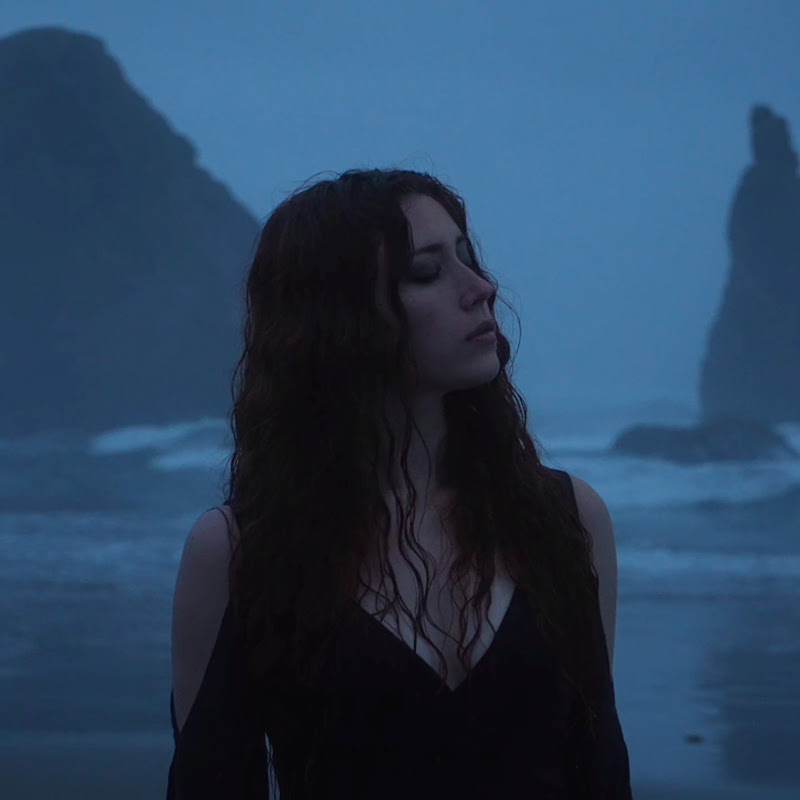
The song was written and produced by Sabrina Jordan in collaboration with Andrew Fitzpatrick, with arrangements that include guitar (Alec Lehrman) and fiddle (DSharp). The fiddle is particularly significant in Celtic folk music, lending the song authenticity to the tradition while the contemporary production keeps it from feeling archival. The song is released as a visualizer—a moving image accompaniment—rather than a traditional music video, suggesting an emphasis on the music itself and visual imagery rather than narrative performance.

Where to Go From Here

If you are drawn to "Hazel Eyes," you might explore other contemporary Celtic folk songs that use landscape as metaphor for emotional experience—artists like Julie Fowlis, Lankum, or Julie Driscoll have worked in similar territory. You might also consider how your own experience of loving someone involves mapping emotions onto geography, whether through place names, familiar landscapes, or sensory associations. Finally, the song invites listeners to notice the actual color-shifting properties of hazel eyes and to think about how perception changes with light, time, and emotional state—a way of honoring the complexity of seeing another person clearly.


Transcript

[0:05] Blue as the wings [music and singing] of

[0:07] a heron in the night. Like the rising of

[0:11] the tides [music] on the shores of vile

[0:13] sky. They gleam at the green [singing]

[0:16] winds a whistling in the pines. Like a

[0:19] castle crawling vine. Like [singing] the

[0:21] grassy gl of lime. And rich [music] as

[0:25] the mud after rain upon [singing] the

[0:27] ground. There a whiskey hue of brown

[0:30] braided river [singing] running wild. I

[0:34] fell astray, but in you I have found

[0:38] that I am never bound [singing]

[0:41] to your haste

[0:44] alive.

[0:50] [music]

[0:56] [music]

[1:02] >> [music]

[1:07] >> Deep as the sea, [music] where the

[1:09] [singing] ocean meets the shore, where I

[1:11] met them once before, on [singing] the

[1:14] emerald [music] cliffs of Moore. Bright

[1:17] as the light setting fire to the north,

[1:20] rising high beyond the morning, laying

[1:23] shadows [music and singing] on the

[1:24] floor. Long is the day when the moon

[1:28] obscures the sun. T the darkness they

[1:31] [singing] become [music] till the dawn

[1:33] upon the fjord. I fell astray but I am

[1:38] born in blood and I [singing] am bound

[1:42] by love to your haze

[1:46] alive.

[1:53] >> [music]

[1:59] [music]

[2:04] [music]

[2:07] >> I fell astray, [singing]

[2:10] but in you I have found

[2:14] that I am never bound to your haze

[2:20] alive.

Sabrina Jordan
AuthorSabrina Jordan

Watch more from Sabrina Jordan on YouTube.

View profileWebsite
Explore Topics
Celtic-folkScottish-musicLove-songLandscape-metaphorHazel-eyes

Got Questions?

Frequently Asked Questions

The song uses Scottish and Irish landscapes as extended metaphors for describing a lover's hazel eyes and the speaker's experience of being found through love after feeling lost. Each color and quality of the eyes is compared to specific places like Isle Skye and the Cliffs of Moher, making an abstract emotion concrete and rooted in geography.
Naming places like Isle Skye, Glen of Lyon, and the Cliffs of Moher grounds the love story in a shared cultural landscape that resonates with Celtic and Scottish audiences. It also suggests that the speaker's emotional anchor is not abstract but tied to the particular geography of home and belonging, reinforcing the theme of being 'found' after being 'astray.'
The song celebrates the actual chromatic complexity of hazel eyes—how they shift between green, brown, and golden depending on light. By offering multiple color metaphors throughout, the song suggests that the beloved's appearance changes with mood and time, honoring perceptual fluidity rather than trying to pin the eyes down to one fixed description.
This refrain suggests the speaker was lost, displaced, or wandering, and found grounding not in a place but in another person's presence. It reflects a Celtic folk music tradition where exile and return are central themes, making the beloved themselves into a portable home or anchor.
Celtic folk traditions often anchor personal and emotional experience to named geographical locations, which carry cultural resonance and historical weight. This technique universalizes individual emotion while particularizing it—making a love song feel both personal and culturally rooted.
The Northern Lights ('setting fire to the north') suggest eyes that emit or reflect light, transforming the landscape around them. This imagery emphasizes the beloved's transformative presence while also preparing for the subsequent verses about darkness, suggesting the relationship contains both brightness and shadow.

Continue Reading

More on Inspiration

View All
The 10 Best Upcoming Endurance Races to Register for in Spring 2026
Training

The 10 Best Upcoming Endurance Races to Register for in Spring 2026

Discover the top 10 endurance races worth registering for this spring 2026, featuring obstacle challenges, expert insights, and complete rac…

1 min read
Trail Running vs Road Racing vs Triathlon: How to Choose Your Endurance Discipline
Race-guides

Trail Running vs Road Racing vs Triathlon: How to Choose Your Endurance Discipline

Trail running, road racing, or triathlon? Discover which endurance discipline matches your goals, personality, and lifestyle with this compr…

1 min read
Where to Race This Year: The Ultimate State-by-State Guide to Endurance Events
Race-guides

Where to Race This Year: The Ultimate State-by-State Guide to Endurance Events

Discover the best states and regions for endurance racing. From California's triathlons to New Zealand's IRONMAN courses, find your perfect …

1 min read
How EnduranceFinder Connects 500,000 Athletes With Your Race — Without Paid Advertising
Training

How EnduranceFinder Connects 500,000 Athletes With Your Race — Without Paid Advertising

Most race directors spend thousands on digital advertising to fill registration spots. EnduranceFinder's discovery platform puts your race i…

1 min read

Keep exploring

Continue your journey

More wisdom and gatherings from across the BrightStar directory.

More Articles

Browse the full library of teachings, interviews, and guides.

Back to all articles →

Teachers & Artists

Explore the lineages, musicians, and guides of the conscious world.

Explore artists →

Find an Event

Kirtan, retreats, sound baths, breathwork, festivals — happening soon.

Browse events →
Never miss a raceCreate Free Account
Organize a race?Try the Demo