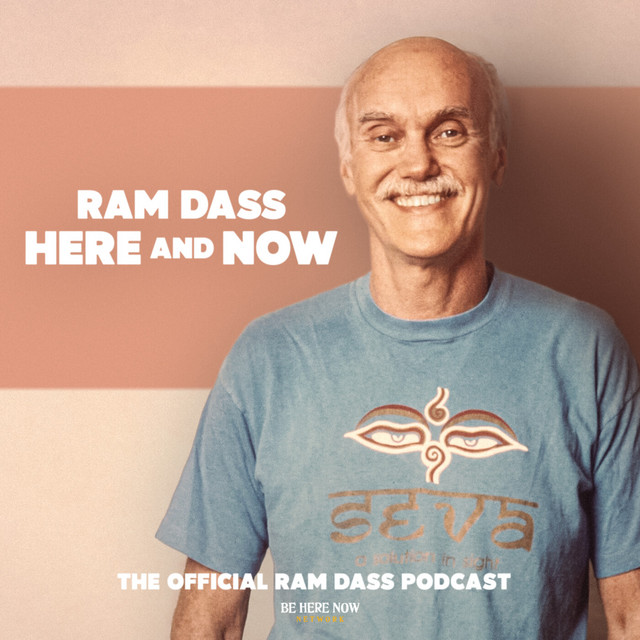

What if everything we've been taught about death is wrong? What if, instead of being life's ultimate defeat, death represents our greatest opportunity for awakening? These are the profound questions that spiritual teacher Ram Dass explores in a remarkable talk from 1995, challenging us to completely reimagine our relationship with mortality.
Speaking to an aging study group nearly three decades ago, Ram Dass offered insights that feel remarkably prescient today. He observed that "death has begun to emerge from the cultural closet"—a statement that rings even truer now as conversations about end-of-life care, death with dignity, and conscious dying have become increasingly mainstream.
Reframing Death as Consciousness in Motion
One of Ram Dass's most striking insights is his description of death as "an incredible movement of consciousness into the mystery." Rather than viewing death as a dark void or something to be feared, he invites us to see it as what he calls "a window of opportunity." This perspective transforms death from life's antagonist into one of its greatest teachers.
"It's like the moment of birth, the moment of death, it's the same thing," Ram Dass explains. "Every death or every birth I'm present at is like a gift from God, as far as I'm concerned." This parallel between birth and death is particularly powerful—if we can celebrate the mystery of new life entering the world, why do we struggle so much with life transitioning out of it?
Facing Future Fears as We Age
As we grow older, Ram Dass acknowledges that fears about the future naturally arise. The body changes, capabilities shift, and mortality becomes less abstract and more immediate. But rather than letting these fears consume us, he suggests we can learn to work with them skillfully.
The key, according to Ram Dass, is to remain "students of the mystery of life and death." This student mindset keeps us curious rather than closed, open rather than defensive. When we approach aging and dying with beginner's mind, we create space for wisdom and growth even in the face of uncertainty.
Creating Sacred Space Around Death
Ram Dass shares a particularly moving story about a friend who "created an incredible space for the process of her death, rather than being in a space where there was denial around the idea of death." This distinction is crucial. When we deny death or push it away, we miss the profound opportunities it offers for connection, healing, and spiritual growth.
Creating sacred space around death doesn't mean rushing toward it or becoming morbid. Instead, it means acknowledging death as a natural part of life's cycle and preparing for it with the same intentionality we might bring to any other significant life transition. This preparation isn't just practical—it's deeply spiritual.
Pain, Suffering, and the Aging Process
Ram Dass doesn't shy away from the reality that aging often brings physical pain and discomfort. However, he offers a framework for working with these challenges that goes beyond simply enduring them. The practice becomes about relating to pain and limitation in ways that don't compound our suffering through resistance and fear.
This approach draws on contemplative traditions that distinguish between pain (which may be unavoidable) and suffering (which often comes from our mental and emotional resistance to what's happening). By learning to be present with difficult experiences without automatically adding layers of fear and aversion, we can find peace even in challenging circumstances.
Making Friends with Death
Perhaps the most radical invitation Ram Dass offers is to "make friends with death" rather than seeing it as something to be conquered or avoided at all costs. This friendship doesn't mean being cavalier about life or safety, but rather developing a mature, accepting relationship with mortality.
When we befriend death, we paradoxically become more alive. The awareness of life's finite nature can infuse our days with greater meaning, presence, and appreciation. Instead of wasting energy fighting an inevitable reality, we can use that energy to love more fully, forgive more completely, and live more authentically.
The Wisdom of Ancient Teachings
Ram Dass begins his talk with a meditation on words from Dudjom Rinpoche, demonstrating how ancient wisdom traditions can inform our contemporary understanding of death and dying. These teachings, refined over centuries, offer tested approaches to life's most challenging transitions.
The integration of Eastern philosophy with Western psychology—something Ram Dass pioneered—provides a rich framework for approaching death that honors both its mystery and its potential for transformation.
A Call to Open Hearts and Minds
Ultimately, Ram Dass's teaching about death is really a teaching about life. When we open to the reality of death, we open to the preciousness of each moment. When we stop running from mortality, we can run toward meaning, connection, and love with greater urgency and clarity.
This isn't easy work. It requires courage to face what most of us spend our lives avoiding. But as Ram Dass suggests, the rewards of this opening are immense—not just for ourselves, but for everyone whose life we touch along the way.
In a culture that often treats aging and death as medical problems to be solved rather than natural processes to be honored, Ram Dass offers a different path. It's a path that leads not away from mystery, but deeper into it, trusting that in that mystery lies wisdom we cannot find anywhere else.