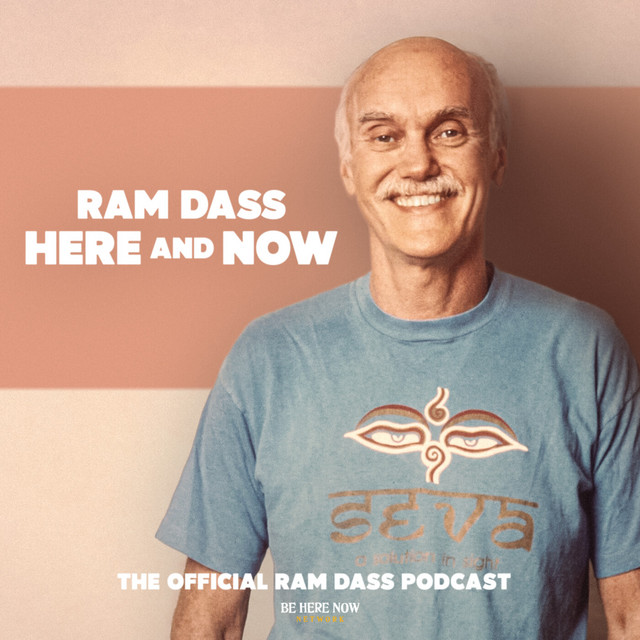

What if everything you thought you knew about compassion was wrong? In a transformative lecture from 1983 at the Omega Institute, spiritual teacher Ram Dass challenged conventional wisdom about how we respond to the suffering that surrounds us every day. Drawing from the Buddha's teachings, his encounters with the enigmatic Trungpa Rinpoche, and the gentle wisdom of Wavy Gravy, Ram Dass revealed what he called "the secret of compassion"—and it's not what most of us expect.
Beyond Good Intentions: The Trap of "Doing Something"
We live in a world saturated with suffering. Turn on the news, scroll through social media, or simply walk down the street with open eyes, and the pain is undeniable. Ram Dass identified the most common responses to this reality: denial (looking away), pity (feeling sorry from a distance), cynicism (becoming hardened), or the seemingly noble urge to "do something about it."
But here's where Ram Dass's insight becomes radical. Even our well-intentioned desire to fix, help, or solve suffering can become another form of spiritual bypassing—a way of avoiding the deeper work of truly seeing and being with what is.
The Buddha's Map: Understanding the Four Noble Truths
Ram Dass returned to the foundational wisdom of Buddhism's Four Noble Truths as a roadmap for understanding suffering. The first truth acknowledges that suffering exists—not as a mistake or something to be immediately eliminated, but as an inherent part of the human experience. This acknowledgment isn't pessimistic; it's realistic and, ultimately, liberating.
The profound shift occurs when we stop fighting against the reality of suffering and start investigating our relationship to it. This doesn't mean becoming passive or indifferent. Instead, it means developing what Ram Dass called the capacity to "embrace darkness into light."
Being Nobody: The Freedom Behind Form
One of the most challenging concepts Ram Dass explored is the idea of "being nobody." In our identity-obsessed culture, this sounds terrifying. We spend our lives building and defending our sense of self—our roles, achievements, beliefs, and personas. But Ram Dass suggested that our deepest suffering comes from over-identifying with these temporary forms.
"We aren't who we think we are," he taught. "We exist behind form." This isn't nihilism; it's pointing to something far more vast and free than our limited self-concepts. When we loosen our grip on being "somebody"—the helper, the victim, the one who has it all figured out—we create space for genuine compassion to arise naturally.
The Dance of Wisdom and Compassion
Perhaps the most memorable part of Ram Dass's lecture involved his recollections of the "rascally" Trungpa Rinpoche, the controversial Tibetan meditation master known for his unconventional teaching methods. Ram Dass shared stories of their early encounters and a particularly illuminating dialogue between Trungpa and Wavy Gravy about how to respond to suffering.
These two figures—Trungpa with his fierce, uncompromising wisdom, and Wavy Gravy with his gentle, service-oriented approach—represented what Ram Dass called "two parts of the same dance." One emphasized cutting through illusion and attachment, while the other embodied loving service. Both paths were valid expressions of awakened compassion.
This insight is crucial for anyone struggling with how to respond to the world's pain. There isn't one right way to express compassion. Some are called to fierce wisdom that challenges and awakens. Others are called to gentle service that nurtures and heals. The key is responding from presence rather than reactivity.
The Secret Revealed: Embracing Rather Than Fixing
So what is the secret of compassion that Ram Dass discovered? It's the ability to embrace suffering into yourself without being destroyed by it. It's learning to acknowledge and allow what is, rather than immediately rushing to change it. This doesn't mean becoming passive—quite the opposite.
As Ram Dass explained: "Part of the secret of compassion is being able to embrace darkness into light. It's being able to embrace suffering into yourself. It's being able to acknowledge and allow. And then, the impeccable warrior hears what to do about it."
The "impeccable warrior" doesn't act from ego, fear, or the need to be seen as good. They respond from a place of deep listening and presence. Sometimes this means taking action. Sometimes it means bearing witness. Sometimes it means simply being present with someone in their pain without trying to fix anything.
Practical Wisdom for Modern Times
This teaching feels especially relevant in our current moment of global challenges, social media overwhelm, and widespread anxiety about the future. Ram Dass's approach offers a middle path between spiritual bypassing ("everything happens for a reason") and activist burnout ("I must fix everything").
The invitation is to develop what we might call "compassionate presence"—the ability to meet suffering with an open heart and clear mind, responding wisely rather than reactively. This requires ongoing spiritual practice, community support, and the humility to keep learning.
In a world that often feels fractured and overwhelming, Ram Dass's teaching reminds us that our greatest gift might not be having all the answers, but rather our willingness to show up fully to the questions that life presents. The secret of compassion, it turns out, is not a technique to master but a way of being to embody.