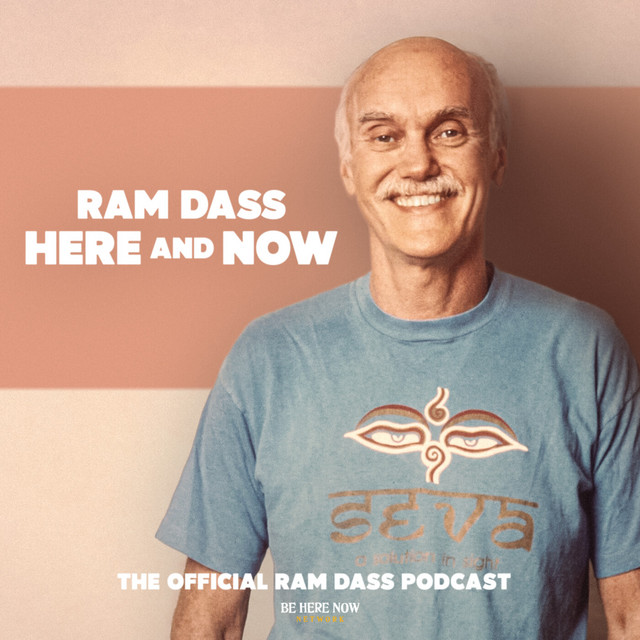

In 1975, at a talk in Florida, Ram Dass delivered what might be one of his most challenging teachings—one that cuts to the heart of every spiritual seeker's dilemma. How do we pursue enlightenment without abandoning our humanity? How do we keep one foot in heaven and one on earth without stumbling into spiritual bypassing or worldly attachment?
This isn't just philosophical musing. It's the central tension that defines authentic spiritual practice in our modern world.
The Moment of Ultimate Choice
Ram Dass describes a pivotal moment that comes to dedicated practitioners—a choice point where the soul can either "fully merge back into God or return into form." This isn't metaphorical; it's a real crossroads where the pull toward formless consciousness becomes so strong that remaining embodied requires conscious decision.
"That moment," he explains, "you have choice. Choice to give up the form, go into the formless. Or, choice to play in the formless, but come back into the form."
But here's the radical part: choosing to return isn't spiritual failure—it's conscious service. It's recognizing that our embodied existence serves a purpose beyond personal liberation.
The Paradox of Perfect Imperfection
One of Ram Dass's most profound insights involves seeing "the perfection of the universe, including all of the suffering." This doesn't mean becoming callous to pain or injustice. Instead, it means developing what Buddhists call "the eye of wisdom"—the ability to hold cosmic perspective while remaining intimately engaged with human reality.
This perspective transforms how we understand our role on Earth. We're not here to fix everything or save everyone. We're here to be "instruments of the Dharma"—living statements that offer truth to those ready to receive it. As Ram Dass puts it: "You are a statement that will enlighten those who are ready to be enlightened. That is your only function, it's the only reason you're on Earth."
The Trap of Spiritual Escapism
Ram Dass doesn't shy away from calling out a common spiritual pitfall: "You get so fascinated with God, with enlightenment, with the wisdom of the ages. And in your zeal to do that, it's very easy to forget. To forget humanity. To forget politics. To forget human concerns. To overlook the daily stuff around you."
This warning feels especially relevant today, when spiritual practices can become elaborate forms of self-improvement rather than genuine transformation. The pull toward transcendence is real and necessary, but when it becomes an escape from engagement, it loses its transformative power.
True spirituality doesn't lift us out of the world—it changes how we move through it.
Service as Mutual Liberation
Perhaps most importantly, Ram Dass reframes the entire concept of service. Authentic spiritual service doesn't arise from a savior complex or the need to help others. It emerges from "the desire to find freedom for ourselves and others" simultaneously.
This subtle shift changes everything. Instead of serving from a position of having something others lack, we serve from recognition of our interconnectedness. Your liberation and mine aren't separate projects—they're facets of the same awakening.
This understanding transforms daily interactions into opportunities for mutual awakening. Every conversation becomes a chance to "be a statement" of whatever truth we've realized, not through preaching but through presence.
Finding Your Balance Point
So how do we practically navigate this tension between divine pull and human responsibility? Ram Dass suggests it's about developing the capacity to hold both simultaneously—maintaining awareness of the absolute while engaging skillfully with the relative.
This might look like:
- Maintaining a meditation practice while staying informed about social issues
- Seeking inner peace while acknowledging outer chaos
- Cultivating detachment while remaining compassionate
- Pursuing personal growth while serving collective healing
The key is recognizing that these aren't contradictory impulses—they're complementary aspects of mature spiritual development.
The Courage to Stay Embodied
In a world that often feels overwhelming, the pull toward transcendence can feel like relief. But Ram Dass suggests that sometimes the most courageous spiritual choice is to stay engaged—to return to form not because we're attached, but because our presence serves something larger than personal comfort.
This requires what we might call "enlightened endurance"—the willingness to remain present to both beauty and suffering, clarity and confusion, knowing and unknowing.
It's not about perfecting this balance—it's about showing up to the dance between heaven and earth with increasing skill, compassion, and humor. After all, as Ram Dass reminds us, we're all just walking each other home, one conscious choice at a time.