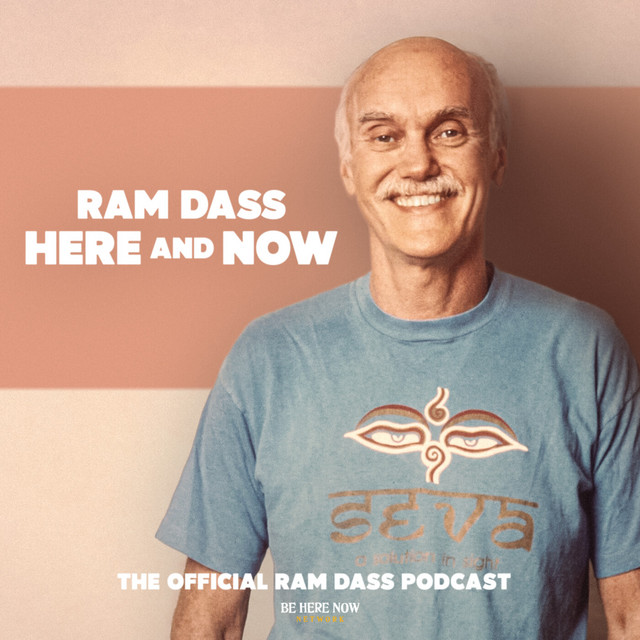

In a world that often feels chaotic and unpredictable, how do we find our center? How do we move beyond the constant chatter of our egos to touch something deeper, more authentic, and infinitely more joyful? These are the profound questions explored in a remarkable teaching from Ram Dass, recorded at Spirit Rock Meditation Center in July 2000, where sacred wisdom meets the transformative power of devotional music.
Embracing Shiva: The Divine Force of Change
Ram Dass begins this journey by introducing us to Shiva, the Hindu deity who governs transformation and change. Rather than viewing change as something to resist or fear, Ram Dass invites us to see it as a sacred force—one that can liberate us from the limiting confines of ego identification.
"We're constantly changing," Ram Dass explains, "but we're usually identified with our egos, which want everything to stay the same." This fundamental tension between our ego's desire for control and life's natural flow of transformation becomes the gateway to spiritual growth. The key lies in shifting our self-concept from identification with our small, separate selves to recognition of our soul nature.
The Chocolate-Covered Cherry Wisdom
Perhaps one of the most endearing and accessible teachings from this session comes through Ram Dass's metaphor of chocolate-covered cherries. "You know those cherries, chocolate-covered cherries?" he asks. "They're like hard on the outside, but they're soft and yum, yum, yum inside. We are just chocolate-covered cherries. That's all we are."
This simple yet profound analogy captures something essential about the human experience. We all develop protective shells—our defenses, our personalities, our carefully constructed identities. But beneath these hardened exteriors lies something infinitely sweet and joyful: our authentic essence. That "yum-yum place," as Ram Dass calls it, is where we truly meet each other, beyond the masks and pretenses.
Kirtan: The Path to Heart Opening
Devotional chanting, or kirtan, emerges in this teaching not as mere musical performance, but as a powerful technology for transformation. When Grammy-nominated artist Jai Uttal takes over the session, he brings nearly five decades of experience in leading people into this sacred practice.
Jai explains the chant they'll be using: "Sita Ram, Sita Ram, Sita Ram, Jai Sita Ram." Each word carries deep meaning—Sita representing the infinite Goddess, Ram the infinite God, and Jai expressing praise or victory. But the real magic isn't in understanding the Sanskrit; it's in allowing the vibrations to work on us at levels deeper than the mind.
"Kirtan creates a safe environment for people to open their hearts and voices," Jai shares. In a culture where many of us have learned to keep our hearts protected and our voices small, this practice offers a radical invitation to vulnerability and authentic expression.
Merging with the Beloved: Love Beyond Physical Form
One of the most moving aspects of Ram Dass's teaching centers on his relationship with his guru, Neem Karoli Baba (affectionately called Maharaj-ji). After his teacher's physical death, Ram Dass discovered that their connection didn't end—it transformed. This personal experience becomes a teaching about the nature of love itself.
"My relationship with my guru evolved after Neem Karoli Baba left his body," Ram Dass shares. This evolution points to a profound spiritual truth: our deepest connections transcend physical form. Through practices like kirtan, meditation, and devotion, we can cultivate relationships with wisdom, love, and grace that aren't dependent on physical presence.
This concept of "merging with the Beloved" isn't limited to guru-disciple relationships. It speaks to our capacity to connect with the divine aspects of life—whether we call it God, consciousness, love, or simply that yum-yum place within ourselves and others.
The Practice of Unconditional Love
At the heart of Ram Dass's teachings lies the practice of Bhakti Yoga—the path of devotional love. This isn't sentimental or romantic love, but something far more radical: unconditional acceptance and connection with what is.
Through bhakti practice, we learn to love not just when things are going our way, but especially when they're not. We practice loving our difficult emotions, our challenging relationships, and even our own resistance to growth. This unconditional love becomes the bridge between our ego-identification and soul-recognition.
Creating Sacred Community
What makes this particular teaching so special isn't just the wisdom shared, but the community created through the shared experience of kirtan. When people come together to chant, to open their hearts, and to meet each other in that yum-yum place, something magical happens. Individual boundaries soften, and we remember our fundamental interconnectedness.
This sense of sacred community becomes especially important in our increasingly isolated world. The Ram Dass Fellowship continues this tradition, offering regular gatherings where people can explore these teachings together, sharing insights and supporting each other's spiritual growth.
Practical Magic for Daily Life
While these teachings might seem lofty or abstract, they offer surprisingly practical guidance for navigating daily challenges. When we remember that we're all chocolate-covered cherries, it becomes easier to have compassion for the difficult people in our lives—including ourselves. When we understand change as sacred rather than threatening, we can move through life's transitions with more grace and less resistance.
The practice of kirtan, too, doesn't require formal training or perfect pitch. It simply requires willingness to let our hearts sing, whether that's through traditional chanting, humming in the car, or any form of expression that connects us to joy and devotion.
As Ram Dass reminds us, we all carry within us that place of sweetness and joy. The spiritual path isn't about becoming someone different—it's about remembering and accessing what's already there, waiting patiently beneath our protective shells, ready to transform not just our own lives, but every life we touch.