
Red River is a single, one track released on 27 March 2026, and the details below come only from what is documented about it and about Ayla Schafer. I haven't described sounds I can't verify. Where this guide speaks about the music itself, it speaks through the artist's established approach.
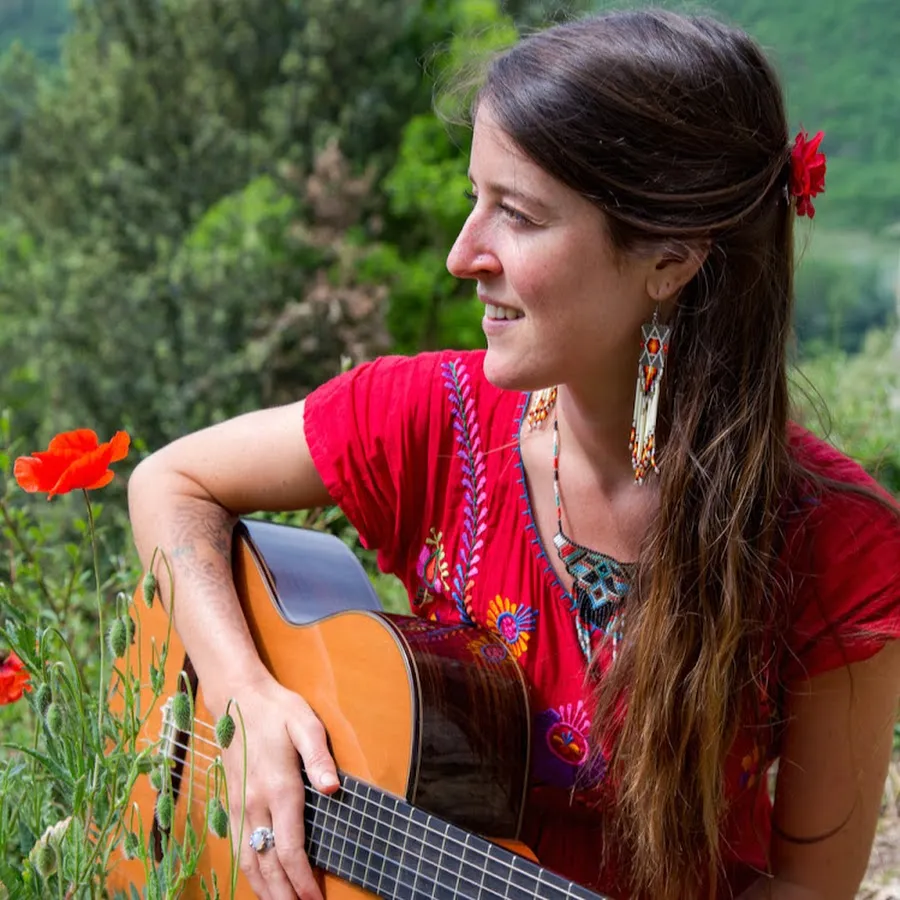
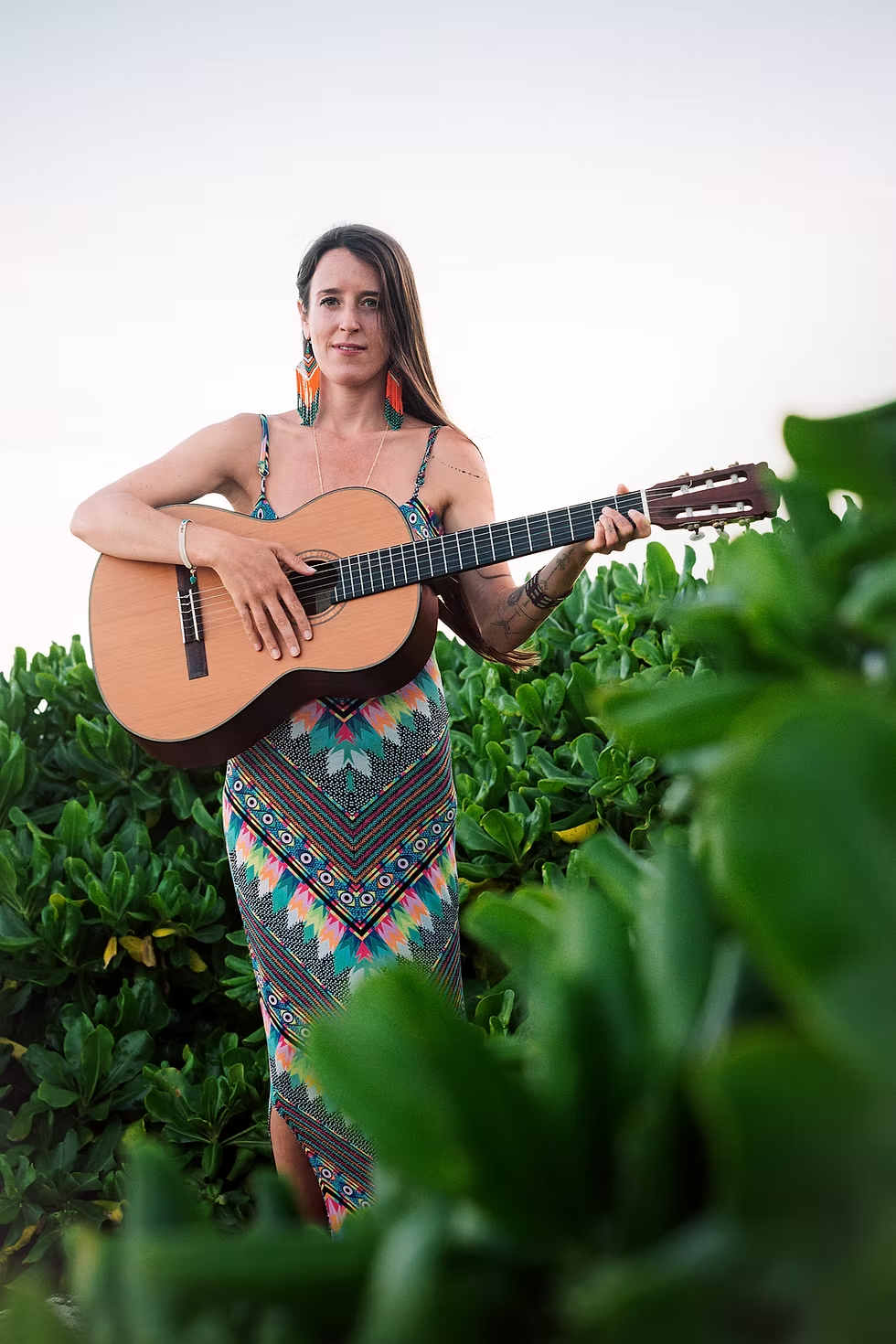
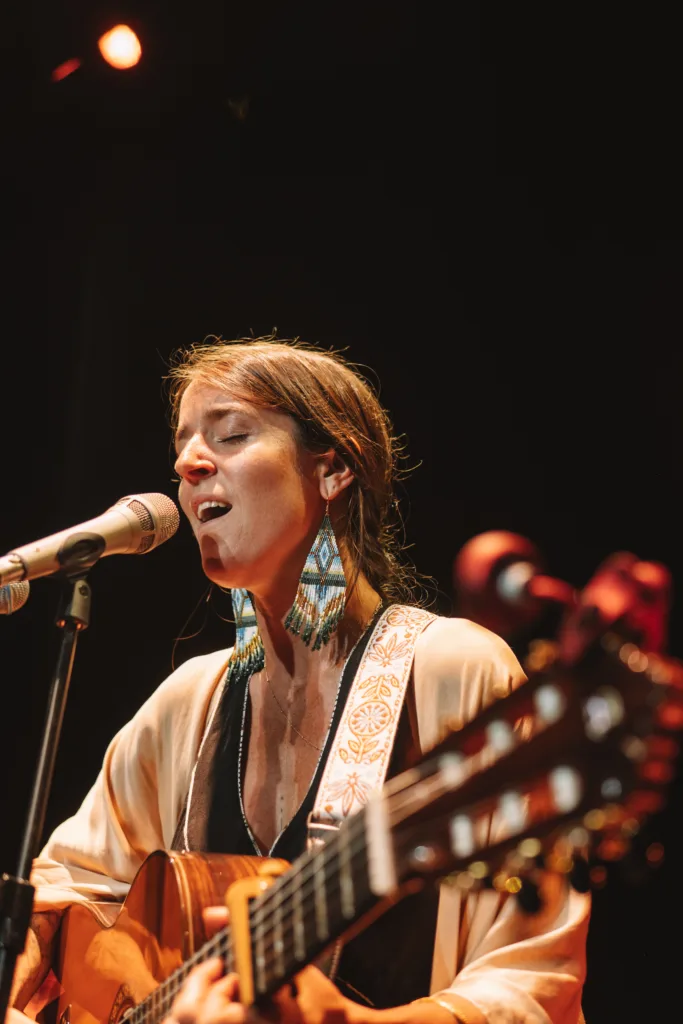
Ayla Schafer is a multilingual world folk singer-songwriter and ceremonial musician, described as a "Voice of the Earth." She lives among the wild lands of Dartmoor and is a mother of two. She began performing at sixteen and gained experience across the UK festival scene. A turning point came in 2010, when she travelled through South America. The years away from home shaped her writing, and she learned from various indigenous traditions about the healing power of song.
Red River arrives in 2026 as a single rather than a full-length album. It works best as a focused moment in that long arc: one song, one mood, one invitation. A single gives you nothing to skip and nothing to sequence, only one piece of her work to sit with.
Her catalogue is built around world folk and what she calls medicinal song, with a poetic repertoire sung in Spanish, English and Proto-Celtic, the reconstructed ancestral language of the Bronze Age. Her songs are said to carry memory, remembrance and power, holding "the beauty, shadow and rawness of human experience." The voice is the centre of that work.
The title suggests flowing water and the colour of earth or blood, and it fits the earth-conscious imagery that runs through her writing. Beyond that, I won't claim particulars of instrumentation, tempo or language for this track. Listen first for which of her tongues the song arrives in, how the voice is placed, and whether the pacing moves like a current or pools like a slow bend in the river.
"Red River"
There is only one track, so there is nothing to rank. It is the whole release, and it is where her stated aims are most concentrated: reconnecting listeners with themselves, with the earth and with what she calls "the quiet power of presence."
What to listen for:
- The voice as carrier of memory. Her songs are framed around remembrance, so notice what the phrasing seems to hold onto and what it lets go.
- Shadow alongside beauty. Her work doesn't smooth over rawness. A river that runs red suggests something more than pastoral calm.
- Language as texture. If the song uses Spanish, English or Proto-Celtic, notice how the sound of the words works even where you can't follow the meaning.
Her work sits in the world folk and ceremonial song space, where music is closer to practice than entertainment. Her bio points to learning from various indigenous traditions about song's healing power, but it names no specific teacher, lineage or school, and this guide won't assign one. She is not a kirtan or bhakti artist in any documented sense. Her territory is a contemporary folk voice rooted in place, with Dartmoor, ancestral language and earth consciousness as recurring touchstones.
That makes Red River a fit for listeners who care about ancestral and land-based song. Its reach into Proto-Celtic gives it an unusual angle: it listens backward to the Bronze Age while being written now.
This single is for listeners at a threshold, in a season of remembering, grieving, parenting, relocating or returning to something they've neglected. It also suits anyone who finds the "healing song" idea more convincing when it arrives with shadow than when it arrives only with light.
It will suit you if you:
- listen to folk for its poetry and atmosphere more than for hooks
- are drawn to songs in other or ancient languages, where feeling comes before translation
- practise somewhere quiet, such as ceremony, gentle movement or reflective journaling, and want a song that supports that without taking over
- are curious about earth-centred music from the UK
If you want rhythmic drive or a big sing-along chorus, it may feel slower to open than you'd like. Give it a few listens before deciding.
Take it alone, in the evening, and use headphones. Close attention to a single voice rewards that kind of setting, and the nuances of vocal tone, breath and language are easier to catch there.
1. First pass: Do nothing else. Don't read lyrics or check the credits. Notice only where your body responds. 2. Second pass: Follow the language. If you can find lyrics through official channels, read them while it plays, and listen for where meaning and sound pull apart or meet. 3. Third pass: Take it outdoors if you can, near water or open ground. The song's imagery is of the land, and it may sound different there.
Then sit in the quiet for a minute after it ends. Her stated aim is presence, and the silence afterward is part of the listening.
You can find the single on Spotify, where it is listed under the title Red River.