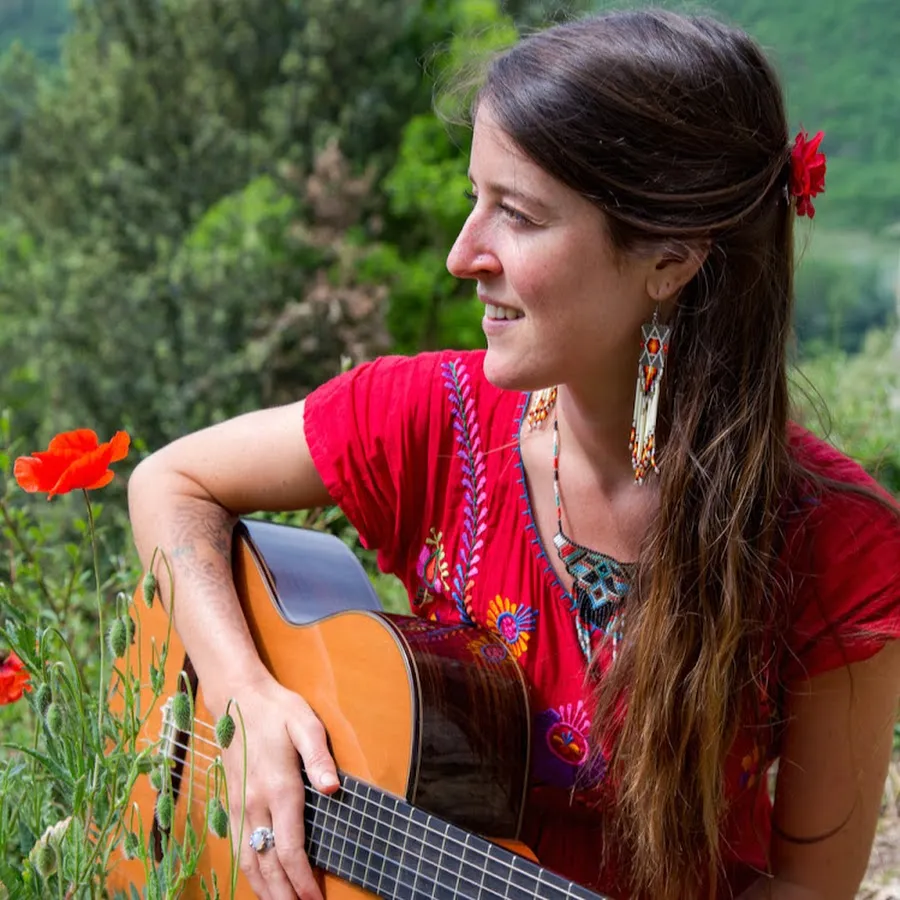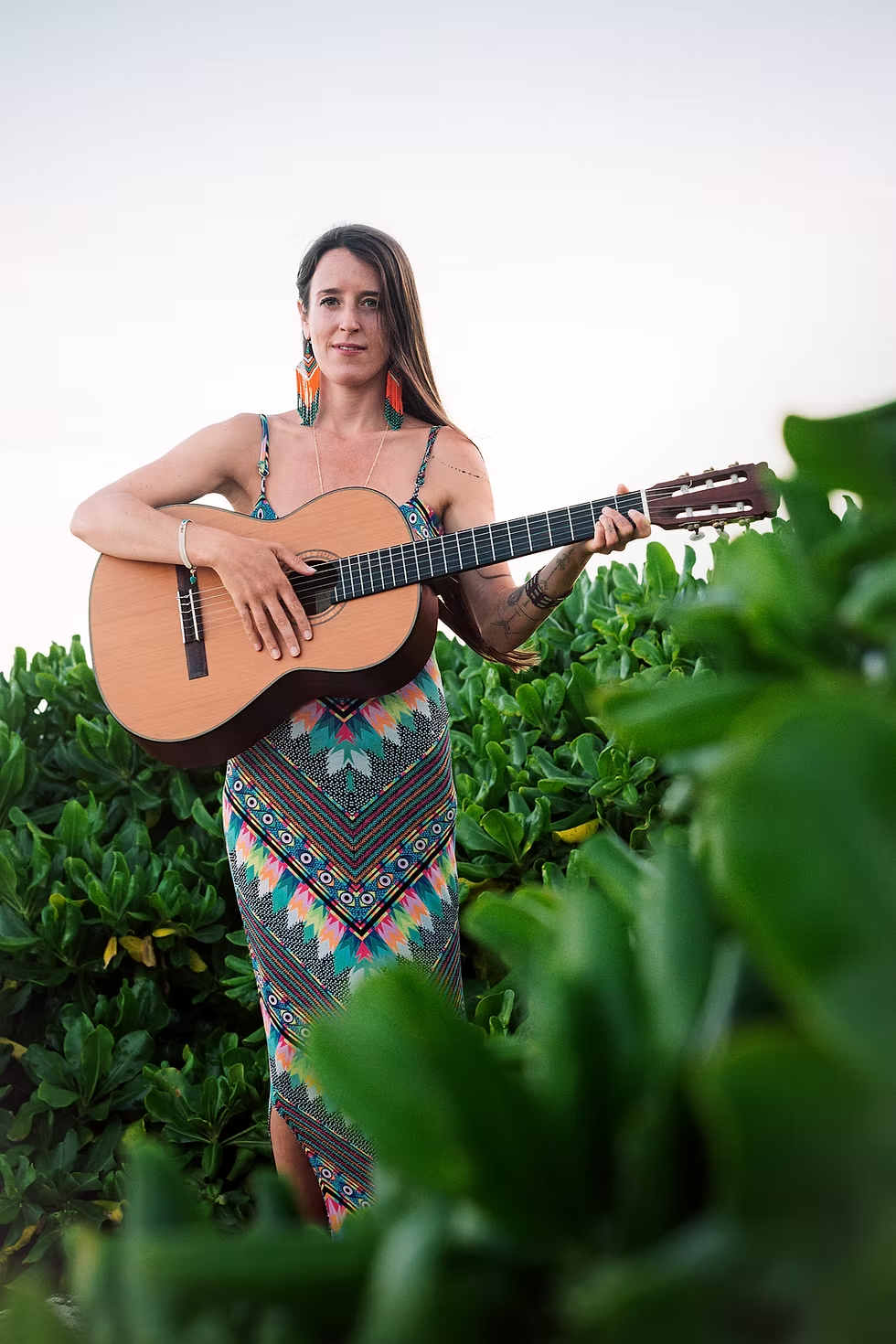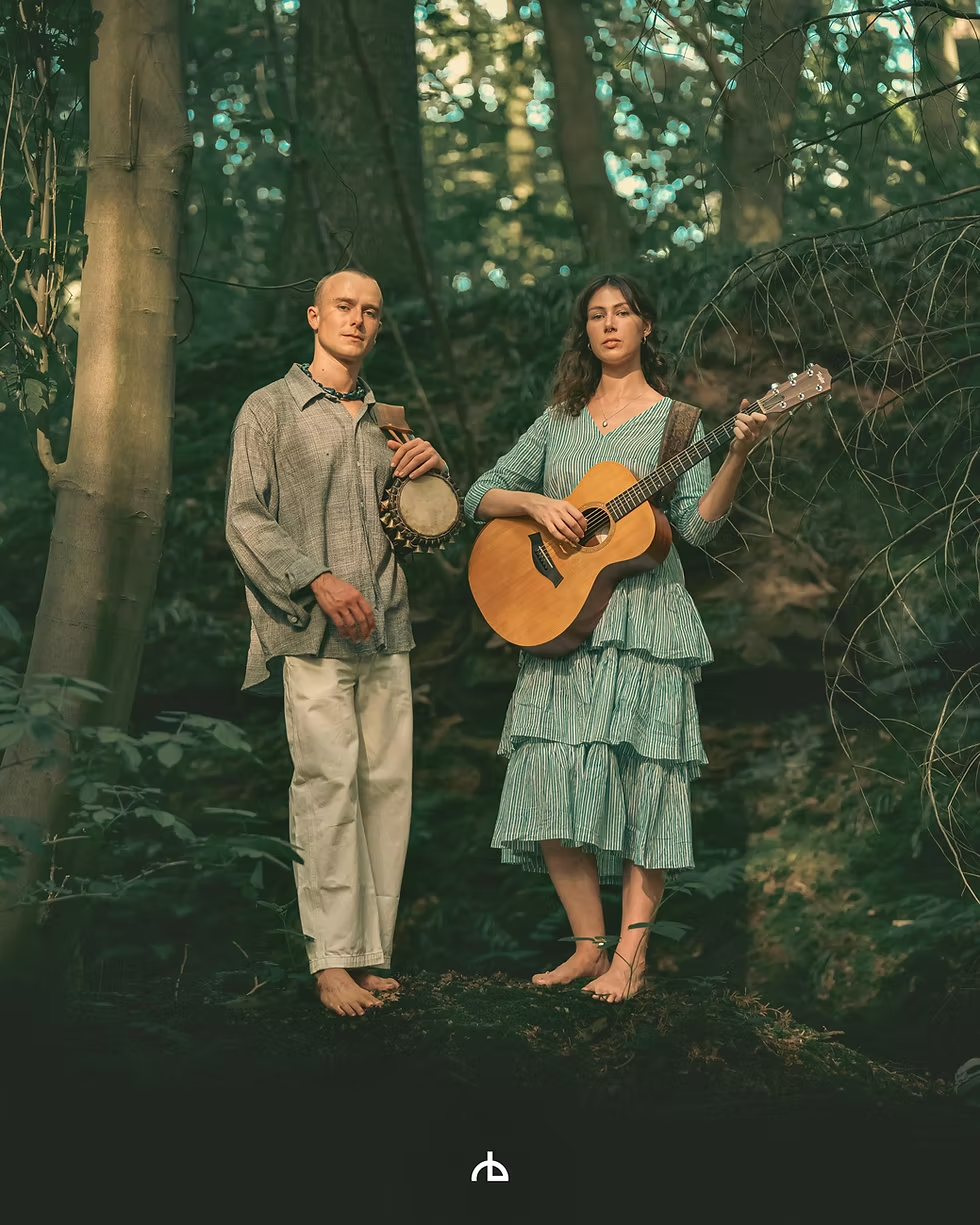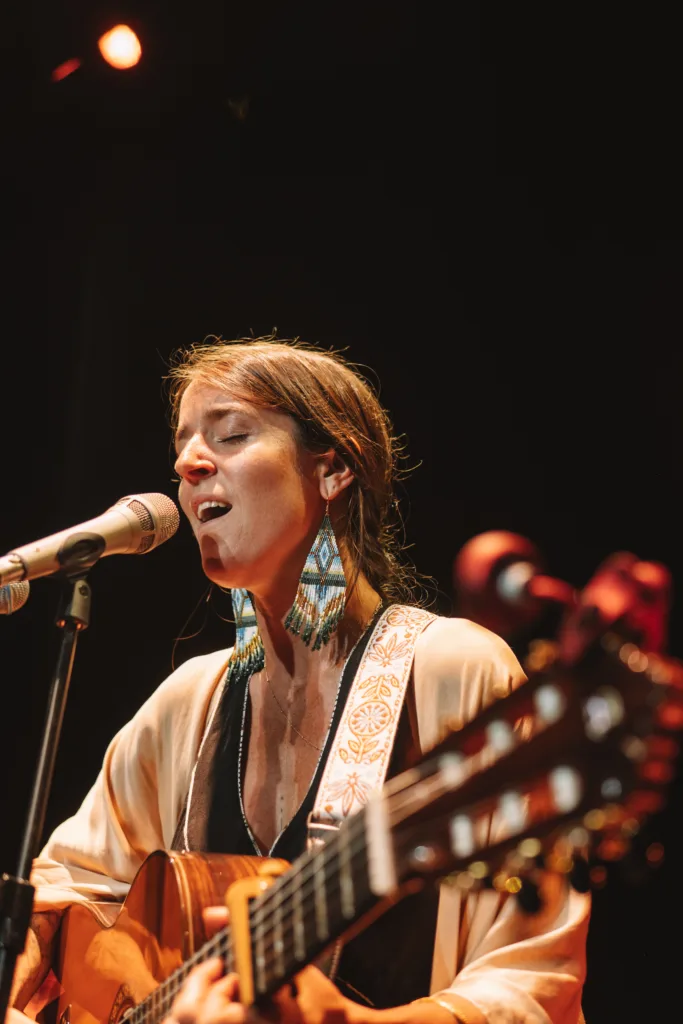

Viento de Atacama (Nirvan Remix) is a single, one track released on 17 July 2026. It is a small object in a body of work that is anything but small. Ayla Schafer describes herself as a multilingual "world folk" singer-songwriter and ceremonial musician, a "Voice of the Earth" who lives on Dartmoor and writes in Spanish, English and Proto-Celtic. The title's Spanish and its reference to the Atacama connect naturally to the South American journey that, by her bio, became a turning point in 2010 and shaped her writing for years afterward.
A remix also marks a particular moment in an artist's arc. It means an existing song is being handed to another hand and heard in a new light. The title credits the remix to Nirvan, and that is the only collaborator detail available here. Nothing further is known about the remix's making, so this guide does not guess at it.
I'm not going to pretend to describe every sonic detail of a track the facts don't spell out. Her bio does give a clear picture of the world this song comes from, so the guide offers things to listen for rather than certainties.
Start with the voice. Her music is built around song as memory and medicine, with a poetic repertoire that moves between languages. Ask whether the Spanish lyric sits forward in the mix or has been woven into texture. Remixes often reshape that balance, turning a sung line into something closer to an atmosphere.
Then listen to the pacing. A remix sets the song's gravity differently from the original. Notice whether the track stretches out and breathes or gathers momentum, and where the voice enters and recedes. Her bio speaks of "beauty, shadow and rawness," so listen for that tension between lightness and weight, and for whether the remix keeps the rawness or softens it.
With one track on the release, the choice is easy.
"Viento de Atacama (Nirvan Remix)." The title, "Wind of Atacama," promises air, space and open land. That fits an artist whose work invites listeners to "reconnect with themselves, the earth and the quiet power of presence." What makes a track like this land is how it handles that promise. The wind may be a literal presence in the sound or a feeling in the pacing, and either way it offers a way into a song that carries a sense of place. Listen for the moments where the voice and the remix's treatment meet, because that is where this version is its own thing and not a copy of the original.
The track belongs most comfortably to world folk and ceremonial song, the territory Schafer claims for herself. Her work carries ancestral and earth-centered themes, and she draws on what she learned from various indigenous traditions about the healing power of song. A remix adds a second lineage, that of contemporary electronic and re-imagined music, where a song travels from its original setting into new rooms and new ears.
It would be a stretch to file this single under bhakti or kirtan. Nothing in her bio places her in those lineages, and the track should be heard on its own terms. Call-and-response devotional chanting is a different practice from what this single appears to offer, and the single's own framing is earth, memory and presence.
This single will matter most to listeners already drawn to Schafer's world: people who find meaning in song that speaks of land, ancestry and memory, and who don't mind crossing languages without a translation in hand. It also suits listeners who like hearing a familiar song through new production, where the pleasure lies in recognition and difference at once.
Think of someone in a transitional moment, perhaps after travel or a move, in a season of reflection, or at a point when they want to feel grounded again. The theme of presence in her work suits a listener who wants to slow down more than one who wants a lift in energy. A newcomer can start here as a gentle, short introduction, though the original song and her wider catalogue will give fuller context.
Give it the full length of the track and nothing else. Use headphones, since a remix's care often lives in the spatial detail: where a sound sits in the stereo field, how a note decays, what happens in the quiet between phrases. Evening is a natural fit, with the lights low and the phone out of reach.
Listen first without reading into the lyrics. Let the sound of the Spanish settle as texture, then replay with attention to the words if you speak the language or want to look them up. A third pass is worth making with your eyes closed, following only the sense of movement, the wind the title promises. If you keep a ritual of any kind, such as a candle, a walk at dusk or a few minutes of stillness before sleep, this is a short enough piece to fold into it without ceremony.