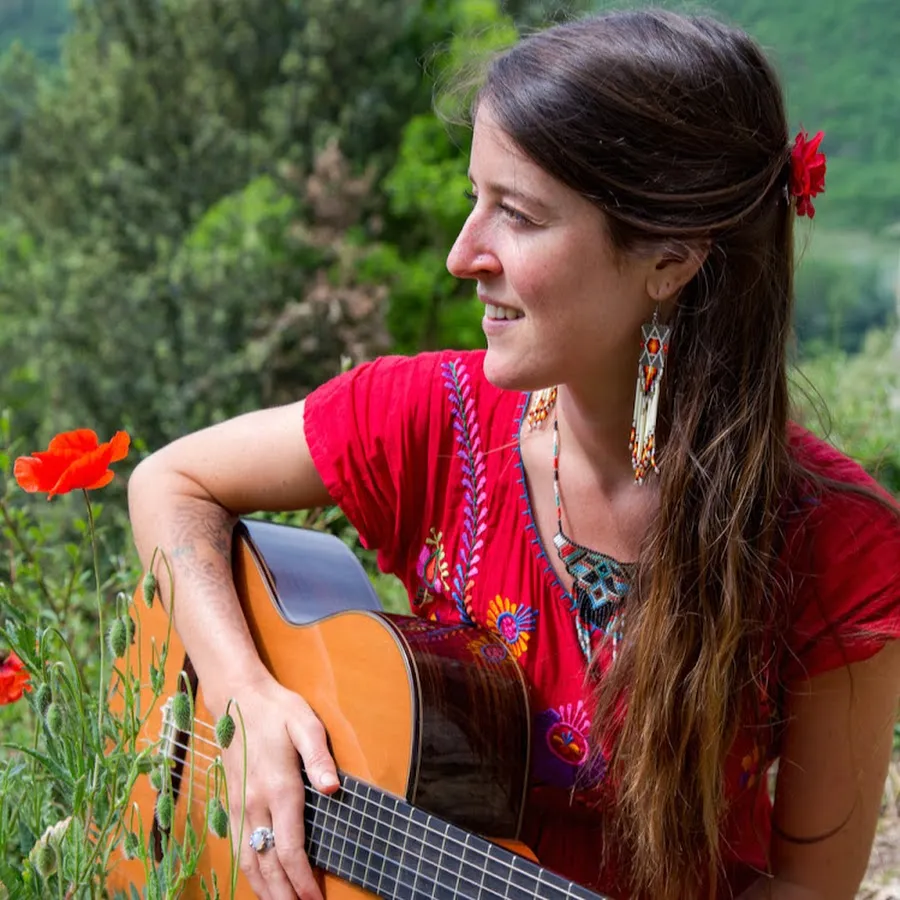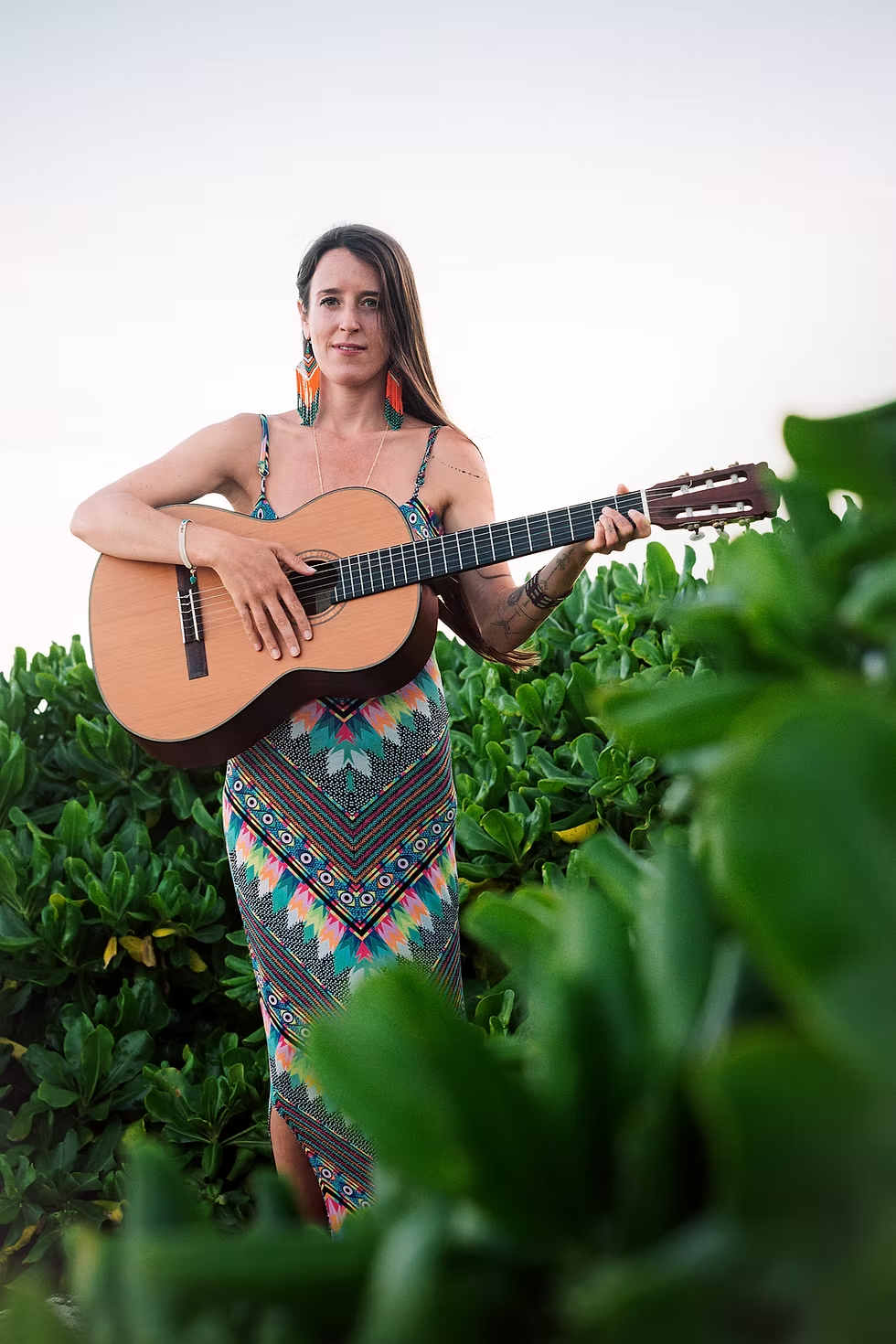

She who whispers is a single, one track released on 6 February 2026, so it works as a short statement rather than a full album. Ayla Schafer is a multilingual world folk singer-songwriter and ceremonial musician who lives among the wild lands of Dartmoor. She began performing at sixteen and gained experience across the UK festival scene. A journey through South America in 2010 became a turning point, and the years away from home shaped her writing. She explored the inner landscape and learned from various indigenous traditions about the healing power of song.
Against that background, a single is a useful way in. It offers one focused piece from a songwriter whose body of work spans Spanish, English and Proto-Celtic, the reconstructed ancestral language of the Bronze Age. This is a release to approach as a doorway into her world rather than a full survey of it.
The release materials for this single do not list its instrumentation, personnel or running time, so this guide won't pretend to describe an arrangement note by note. What can be said comes from how Schafer describes her work: world folk and medicinal song, with poetic lyrics and songs that carry memory, remembrance and power. Her voice is the center of that practice, and she has been called a "Voice of the Earth."
The title points toward a quiet register. A song called "She who whispers" invites close attention rather than volume. Listen for how the voice is placed, how much space surrounds it, and whether the language is one you understand. With a repertoire that moves between Spanish, English and Proto-Celtic, part of the experience may be hearing sound and meaning separate, with the grain of the voice carrying what the words do not.
There is only one, and it is the whole point: "She who whispers."
What makes a single like this land is concentration. With no sequencing, no interludes and no running order to navigate, the song carries the full weight of Schafer's intentions. Her stated aim is for songs to invite listeners to reconnect with themselves, the earth and the quiet power of presence. A one-track release suits that aim, since there is nothing to skip toward and nothing to wait for. You can listen to it again and again, noticing something different each time, as you would with a mantra or a lullaby.
Schafer's own description of her work places it in world folk and medicinal song, shaped by ceremonial practice. She has spoken of learning from various indigenous traditions about the healing power of song, though I won't name any particular lineage or teacher, because the available facts don't. The honest framing is that she is a songwriter drawing on many wells, with a commitment to earth consciousness and ancestral wisdom, rather than a representative of one codified devotional school.
That distinction matters if you come to the song expecting call-and-response kirtan or a bhakti devotional form. Nothing in the facts here says it belongs to those traditions. It is better understood as contemporary folk song with a ceremonial heart, one that holds what Schafer calls the beauty, shadow and rawness of human experience.
This single is likely to reach listeners who are drawn to songs as a form of attention: people in a period of transition, grief or remembering, who want music that does not hurry them. Anyone who finds comfort in voice-led music, in ancestral themes or in the natural world will find the song's premise familiar. It may also suit people who practice yoga, breathwork or other contemplative disciplines and want a short piece to begin or close a session, though Schafer herself, as a mother of two living on Dartmoor, writes from lived experience rather than from a wellness template.
Listeners who prefer high-energy production or rhythmic momentum may find that the whispered premise asks for patience. That is not a flaw. It is the invitation.
Give it a quiet room and an unhurried evening. Headphones are the best choice for a piece named for a whisper, because they let small details of breath and texture come forward that speakers can flatten. Listen first without reading the lyrics, if you can, and simply notice what the voice does. Then listen again with a stillness practice in mind: a few minutes of sitting, a candle, a walk afterward in whatever green space you have.
Since it is a single, you can afford to repeat it three or four times in a row. The first listen is for orientation, the second for the voice, and by the third you may find the song has settled into the room with you. If you are curious about where it came from, pair it with the rest of Schafer's catalogue and listen for the Spanish, English and Proto-Celtic threads that run through her work.
She who whispers is small by design. Its worth lies in what it asks of you: to slow down, lean in and listen.