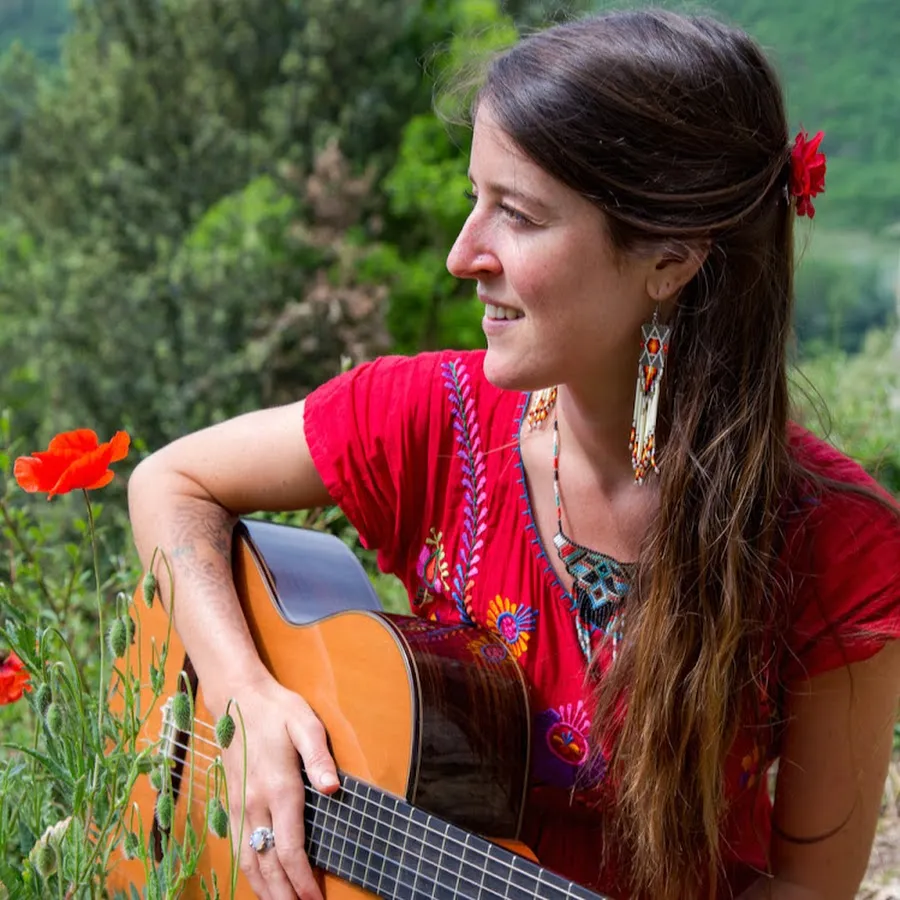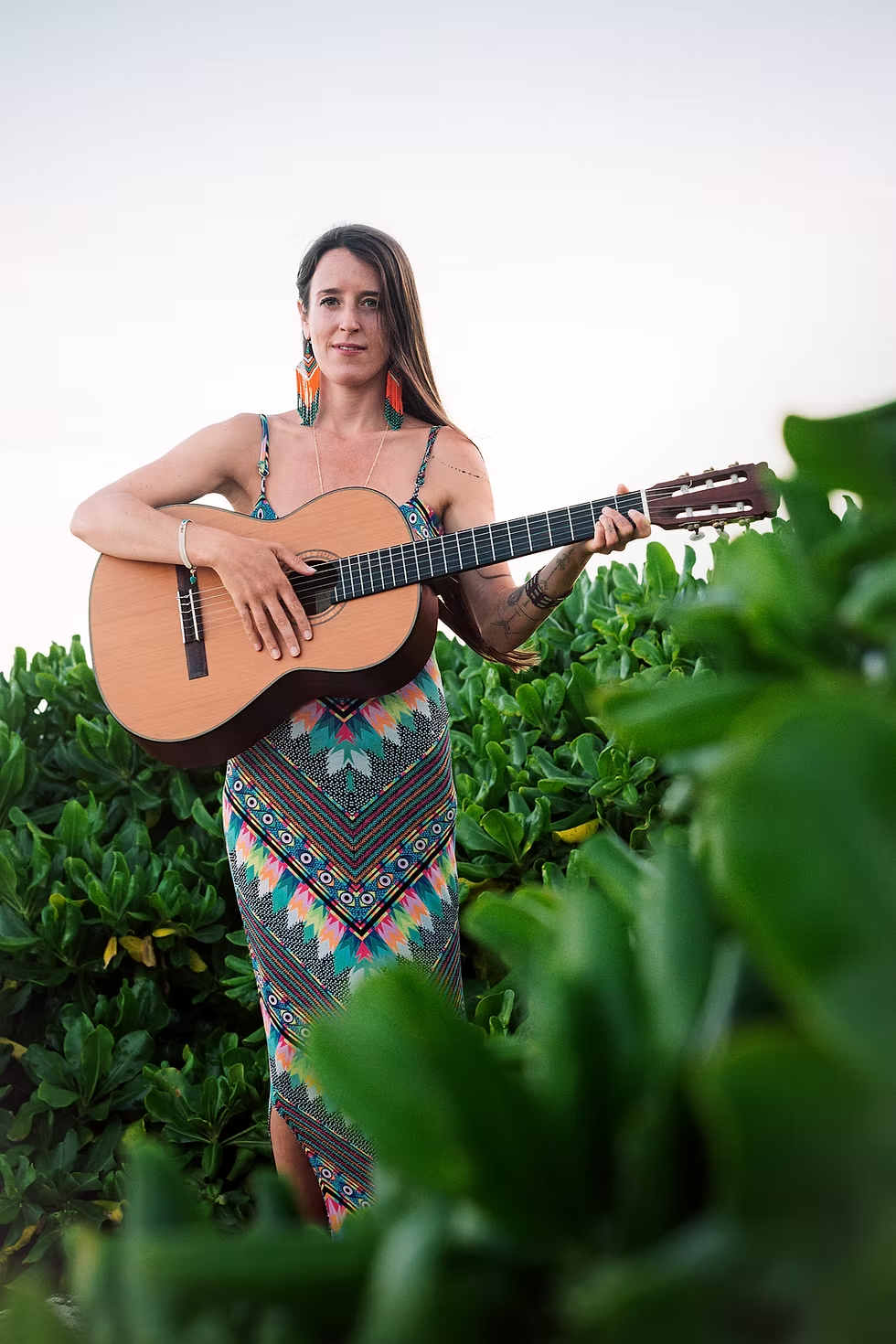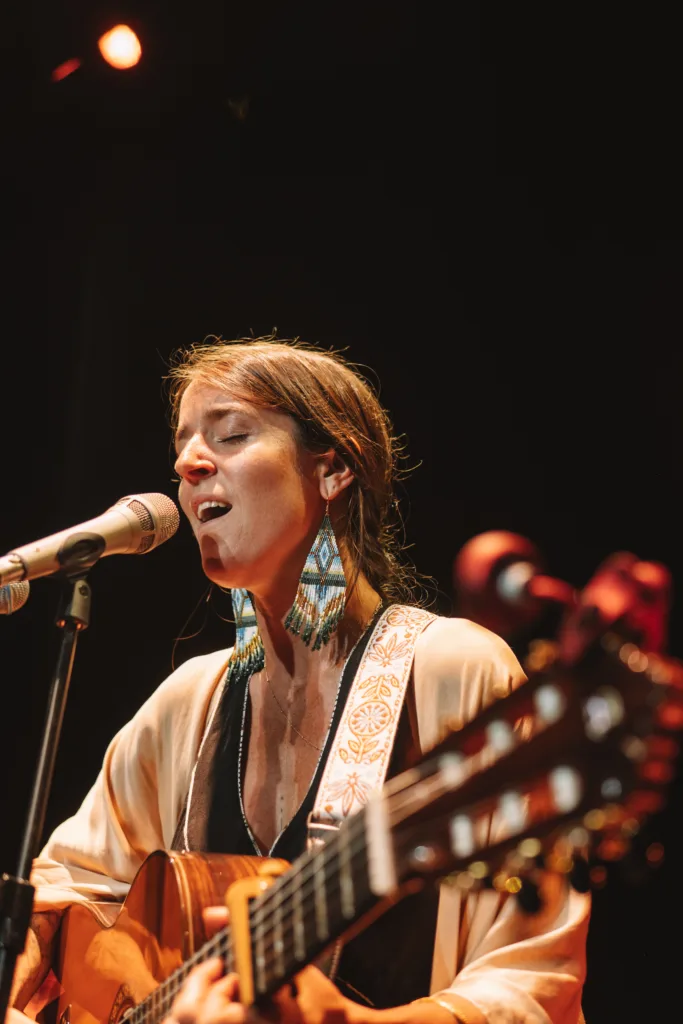

"Women of the Waters" is a single, one track released on 29 May 2026. It is a compact entry point into the world of Ayla Schafer, a multilingual world folk singer-songwriter and ceremonial musician, acclaimed as a "Voice of the Earth." She lives among the ancient wild lands of Dartmoor and is a mother of two. Her songs carry memory, remembrance and power, and they invite listeners back toward themselves, the earth and what she frames as the quiet power of presence.
A single asks for a different kind of attention than an album. It is a single gesture, not a sequence. For a songwriter whose work draws on years of travel and listening, that focus suits the material. A turning point came in 2010, when she travelled through South America. The years away from home shaped her writing. She explored the inner landscape and learned from various indigenous traditions about the healing power of song. Her compositions now hold the beauty, shadow and rawness of human experience, alongside a commitment to earth consciousness and ancestral wisdom. Her performing life began at sixteen, and she gained experience across the UK festival scene. This release arrives out of that long apprenticeship.
The best guide to what to expect is the shape of her repertoire. She describes her music as weaving world folk and medicinal song. Her poetic repertoire is sung in Spanish, English and Proto-Celtic, the reconstructed ancestral language of the Bronze Age. That multilingual range is central to her identity as a writer. A listener should be ready for a voice that treats language as inheritance as well as meaning, where the sound of a word may carry as much as its translation.
The title points the same way. Water is a long-standing symbol of memory, flow and the feminine, and the phrase "Women of the Waters" suggests song as a kind of gathering or invocation. I won't pretend to describe specific instrumentation, tempo or arrangement beyond what is documented. Her work is rooted in folk and ceremonial practice, and her stated aim is presence, so it is reasonable to approach the track as music meant to be felt as much as analyzed. Let the voice lead, and notice where the language shifts, where the phrasing lingers, and where the song leaves room for silence.
"Women of the Waters"
There is only one track here, and it carries the release's name. What makes it worth your time is the combination of elements the bio places at the center of her work: remembrance, ancestral wisdom and an earth-facing sensibility, delivered by a singer who has spent years learning how song can heal. If the track includes lines in Spanish, English or Proto-Celtic, they will bring a different texture of memory. Listen first for the voice itself, then for how the song builds a feeling of place. A Dartmoor-based writer working with a Bronze Age-rooted language is not an everyday pairing, and it gives the piece an unusual sense of depth in time.
This single belongs most naturally to the world folk and medicinal song current, music understood as a tool for restoration as much as entertainment. Schafer's own account of her learning, from various indigenous traditions about the healing power of song, places her in a lineage of listening and exchange. The bio does not tie her to a named teacher, school or devotional order, and it would be a mistake to file this release under bhakti or kirtan simply because it is spiritual in spirit. Its closest relatives are the ceremonial singer-songwriter tradition and the wider world of folk music that treats the land and ancestors as living presences. Her role as a ceremonial musician and voice workshop facilitator also suggests the song comes from a practice of gathering people around voice, not only from the studio.
This single will resonate most with listeners already drawn to music that honors ancestry, landscape and the feminine. It suits someone in a threshold moment: a change of season, a loss, a return to the body, or a pull toward nature after too much screen time. Parents, especially mothers, may find an echo in the way her motherhood and her wild-land home sit alongside the music. It is also well suited to anyone curious about reconstructed and ancestral languages, since Proto-Celtic is a rare presence in contemporary song. Listeners who want propulsive, hook-driven pop will probably find it asks for more patience than they want to give.
Give the song a full, undistracted playthrough in the evening, when the day's noise has settled. Headphones will help you catch the details of the voice, such as breath, vowel shape and the moment one language gives way to another. Sit near a window or step outside beforehand if you can, since the music is oriented toward the earth. Treat the first listen as a ritual of arrival: no skipping, no multitasking. On the second pass, close your eyes and follow the imagery of water. Then sit for a minute in the quiet after the last note. For a single, that pause is part of the piece, and it is where her emphasis on presence is easiest to feel.