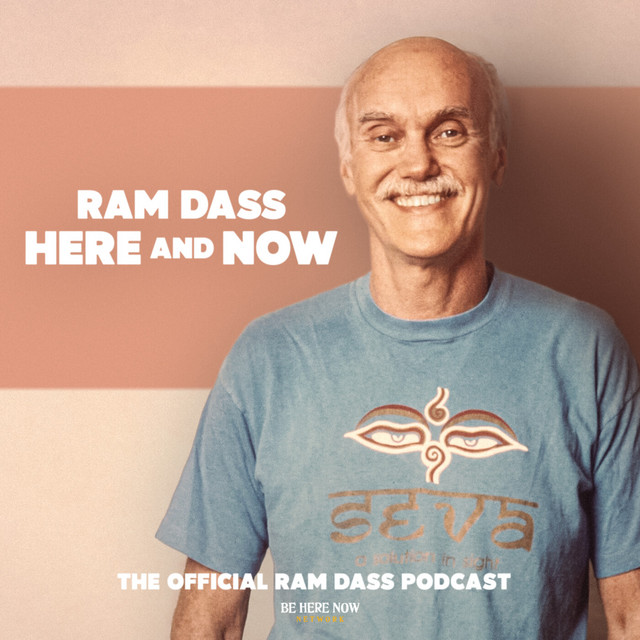

In an era marked by polarization and division, the spiritual teachings of Ram Dass feel more urgent than ever. The recent release of There Is No Other, a new collection of teachings from Ram Dass's lectures, arrives at a moment when humanity desperately needs reminders of our fundamental interconnectedness.
In a special episode of the Here & Now podcast, Parvati and Raghu Markus—longtime companions of Ram Dass—guide listeners through key excerpts from this powerful new book, revealing how these timeless teachings speak directly to our current moment of social and spiritual fragmentation.
The Illusion of 'Us Versus Them'
One of the most striking themes explored in the episode centers on Ram Dass's examination of the "us versus them" mentality that pervades modern discourse. But Ram Dass challenges us to dig deeper: Who exactly is "us"? Who is "them"? These seemingly simple questions reveal the arbitrary nature of the divisions we create.
As Parvati and Raghu reflect on these teachings, they emphasize how this mindset forms the central thesis of There Is No Other. The book's very title suggests a radical reorientation of perspective—one that recognizes the fundamental unity underlying apparent diversity. In a world increasingly defined by tribal thinking, Ram Dass invites us to expand our circle of identification until it encompasses all of existence.
Balancing Heart and Mind
Perhaps one of the most profound insights shared in the episode comes from Ram Dass's teaching on the delicate balance between heart and mind. Too often, he suggests, we allow our analytical minds to dominate our experience, cutting ourselves off from the wisdom of the heart.
"So the mind, if it gets too strong, out of balance with the heart, shuts down all the information that the heart can give," Ram Dass explains in one of the featured clips. "It cuts you off from your wisdom, really. You don't even see all the stuff."
This teaching feels particularly relevant in our information-saturated age, where rational analysis often trumps intuitive knowing. Ram Dass reminds us that we exist simultaneously on multiple planes of reality, but our overactive minds limit which realities we recognize as valid. The heart, with its capacity for direct knowing and unconditional love, offers access to dimensions of experience that pure rationality cannot touch.
Raghu and Parvati discuss how There Is No Other serves as a guidebook for walking the path toward harmony and wholeness—a integration of our intellectual and emotional capacities that allows us to perceive reality more completely.
God, Guru, Self: The Unity of All Existence
Drawing from the teachings of the great sage Ramana Maharshi, Ram Dass explores the concept of "God, Guru, Self"—three aspects that ultimately point to the same underlying reality. This teaching suggests that the divine presence we seek externally, the wisdom we receive from teachers, and our own deepest essence are not separate phenomena but different faces of one ultimate truth.
This perspective offers a radical antidote to the spiritual materialism that can creep into even well-intentioned seekers. Rather than treating enlightenment as something to be acquired or teachers as separate from ourselves, Ram Dass points toward a recognition that the Spirit we seek is already everywhere—including within our own being.
For Parvati and Raghu, this teaching represents one of the book's most important contributions to our current historical moment, when many people feel disconnected from traditional sources of meaning and wisdom.
Becoming an Environment of Love
The episode concludes with perhaps Ram Dass's most transformative teaching: the path of love that ultimately transforms us into "an environment, a vibratory rate." This isn't love as mere emotion or sentiment, but love as a fundamental way of being in the world.
When we truly embark on the path of love, Ram Dass suggests, we don't just feel love or act lovingly—we become love itself. We transform into a living expression of the very quality we once sought to cultivate. This represents the ultimate dissolution of the subject-object duality that keeps us feeling separate from others and from the divine.
Ancient Wisdom for Modern Times
There Is No Other arrives at a time when division seems to define our social landscape. Political polarization, cultural conflicts, and ideological battles dominate headlines and social media feeds. Against this backdrop, Ram Dass's teachings offer something increasingly rare: a vision of fundamental unity that doesn't require agreement on surface issues.
The book doesn't ask us to ignore differences or pretend that conflicts don't exist. Instead, it invites us to recognize a deeper level of reality where separation is revealed as illusion. This isn't naive optimism but hard-won wisdom from someone who spent decades exploring the furthest reaches of consciousness and human potential.
As we navigate an increasingly complex world, Ram Dass's reminder that "there is no other" offers both challenge and comfort. The challenge lies in expanding our sense of identity beyond our familiar tribal boundaries. The comfort comes from recognizing that we were never truly alone—that the love and connection we seek has always been our deepest nature.
In sharing these teachings through both the podcast and the new book, Parvati and Raghu continue Ram Dass's mission of making ancient wisdom accessible to contemporary seekers. Their reflections remind us that spiritual teachings aren't museum pieces but living truths that can transform how we relate to ourselves, each other, and the world around us.