EnduranceFinder
All Races
Every discipline, every distance
Marathons
26.2 miles of glory
Triathlons
Swim, bike, run
Cycling
Gran fondos & road races
Trail Running
Off-road & mountain races
Ultras
Beyond the marathon distance
Virtual Races
Race from anywhere
Popular Destinations
New YorkBostonChicagoLondonTokyoCape Town
Glossary
Endurance terms & definitions
Elite Athletes
Pro athlete profiles
Training Tips
Plans, workouts & coaching
Race Guides
Course previews & strategy
Gear Reviews
Shoes, bikes & race-day kit
Athlete Stories
Community race reports
Wisdom
Words from endurance legends
AI Discovery
How AI powers your experience
Blog
Latest from EnduranceFinder

“The marathon can humble you.”

— Bill Rodgers

All RacesEvery discipline, every distance
Marathons26.2 miles of glory
TriathlonsSwim, bike, run
CyclingGran fondos & road races
Trail RunningOff-road & mountain races
UltrasBeyond the marathon distance
Virtual RacesRace from anywhere
Popular Destinations
New YorkBostonChicagoLondonTokyoCape Town
GlossaryEndurance terms & definitions
Elite AthletesPro athlete profiles
Training TipsPlans, workouts & coaching
Race GuidesCourse previews & strategy
Gear ReviewsShoes, bikes & race-day kit
Athlete StoriesCommunity race reports
WisdomWords from endurance legends
AI DiscoveryHow AI powers your experience
BlogLatest from EnduranceFinder
EntrarCadastrarWhy EnduranceFinder?
  • Browse All Races
  • Marathons
  • Half Marathons
  • Triathlons
  • Cycling
  • Ultras
  • Trail Running
  • Swimming
  • Obstacle Races
  • All Categories →
  • Boston
  • Chicago
  • New York City
  • San Francisco
  • Los Angeles
  • Denver / Boulder
  • Austin
  • Seattle
  • Berlin
  • London
  • Todas as cidades →
  • For Race Directors
  • For Timing Companies
  • For Running Clubs
  • For Cycling Organizations
  • For Triathlon Clubs
  • For Trail Race Organizers
  • For Charity Races
  • For OCR & Adventure Races
  • For Swim & Open Water
  • AI Platform
  • Pricing
  • Case Studies
  • Recuperação de carrinho abandonado
  • Precificação dinâmica inteligente
  • Categorias de ingressos
  • Eventos recorrentes
  • Custom Questions
  • Sistema de afiliados
  • Lista de espera / Notificar
  • Scanner de ingressos
  • Widget incorporável
  • Event Syndication
  • Integrations
  • Todos os recursos →
  • About EnduranceFinder
  • Blog
  • AI Discovery
  • Training Guides
  • Race Guides
  • Help Center
  • Contact Us
  • Careers
  • Press
  • Termos de Serviço
  • Política de Privacidade

Races

  • Browse All Races
  • Marathons
  • Half Marathons
  • Triathlons
  • Cycling
  • Ultras
  • Trail Running
  • Swimming
  • Obstacle Races
  • All Categories →

Destinos

  • Boston
  • Chicago
  • New York City
  • San Francisco
  • Los Angeles
  • Denver / Boulder
  • Austin
  • Seattle
  • Berlin
  • London
  • Todas as cidades →

Para Race directors

  • For Race Directors
  • For Timing Companies
  • For Running Clubs
  • For Cycling Organizations
  • For Triathlon Clubs
  • For Trail Race Organizers
  • For Charity Races
  • For OCR & Adventure Races
  • For Swim & Open Water
  • AI Platform
  • Pricing
  • Case Studies

Recursos

  • Recuperação de carrinho abandonado
  • Precificação dinâmica inteligente
  • Categorias de ingressos
  • Eventos recorrentes
  • Custom Questions
  • Sistema de afiliados
  • Lista de espera / Notificar
  • Scanner de ingressos
  • Widget incorporável
  • Event Syndication
  • Integrations
  • Todos os recursos →

Empresa

  • About EnduranceFinder
  • Blog
  • AI Discovery
  • Training Guides
  • Race Guides
  • Help Center
  • Contact Us
  • Careers
  • Press
  • Termos de Serviço
  • Política de Privacidade
EnduranceFinder
© 2026 EnduranceFinder. Todos os direitos reservados.
Inspiration

Music as Spirit Medicine:Touching Souls Through Sound

Xavier Rudd
Xavier Rudd
May 22, 2026
7 min read
Watch · 7
Read · 8 sections

TLDR: What is the medicine of music?

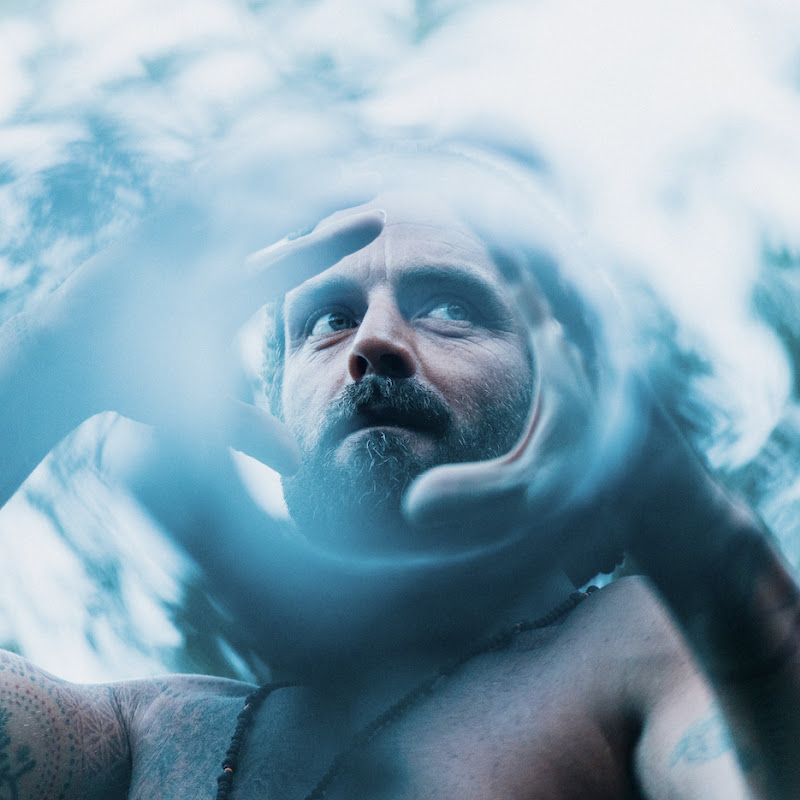
In his live performance of "Breeze" at Forest National in Brussels (November 2025), Xavier Rudd articulates a vision of music as medicine—a vehicle for accessing the spirit world in ways that language alone cannot. Rather than simply performing songs, Rudd positions himself as a host for spiritual connection, a conduit through which audiences can encounter the presence of those they have lost and commune with realms beyond the ordinary. The song "Breeze" becomes a moment of respect and remembrance, embodying Rudd's belief that music carries ancient human knowledge embedded in melody, rhythm, and collective voice.

How does music function as a gateway to the spirit world?

Rudd describes music as possessing an intrinsic "medicine"—a curative and transformative power that operates outside rational language. When he says "there's something about the medicine of music that seems to be able to give us glimpses of being able to access the spirit world in various ways," he is pointing to music's capacity to bypass the thinking mind and reach something deeper: intuition, memory, ancestral knowing. This is not metaphorical for Rudd; it is a lived practice. The spirit world, in his articulation, is not distant or inaccessible but available through sound, vibration, and the act of singing together.

The performance reveals this through structure and invitation. When Rudd brings his son Finojet on stage—"my second son, Fino Jet, opened the show with his beautiful music"—he is not merely showcasing family talent. He is demonstrating continuity: the medicine of music passes from generation to generation, and the spirit world recognizes and honors these lineages. The act of singing together—the collective voice—amplifies the medicine, making it more potent.

What is the meaning of "Breeze" as a ritual act?

"Breeze is a moment to pay respects and call in the ones we've lost," Rudd explains in the video description. The song functions as a ritual, not in a formulaic sense, but as a deliberate invocation. The lyrics paint a series of imagined states—floating, flying, dreaming on green leaves, waking to the sun—that serve as portals. These imaginative journeys are not escapism; they are methods of entering states of consciousness where the boundaries between living and ancestral presence become permeable.

The imagery in the song reinforces this: "Imagine yourself floating away. Imagine the tiniest little pixie people of the ocean into your face. Imagine your feet have never touched the earth. Imagine you were flying above the whole human race. Just gliding above it all." This language mirrors shamanic journeying, a practice across many cultures where practitioners intentionally shift consciousness to access knowledge and presence from other realms. By asking the audience to imagine these states, Rudd invites them into a collective ritual space where the medicine of music can do its work.

What role does imagination play in spiritual connection?

Imagination, in Rudd's vision, is not fantasy or mere thought. It is a faculty of consciousness that allows access to truth unavailable to the rational mind. The repeated invocation—"Imagine that"—is an instruction to use imagination as a tool for spiritual perception. When the audience imagines themselves flying above the whole human race, gliding without effort, they are rehearsing a state of being that transcends limitation. When they imagine "the good people of the world were free," they are calling that future into being through the power of collective intention.

This practice aligns with indigenous and contemplative traditions worldwide that understand imagination as a spiritual sense organ, as real and functional as sight or hearing. Rudd's lyrics do not ask people to believe something; they ask them to feel it through the body and the imagination together: "And you will breathe in the fresh air that you are, and they will inhale you deep into their lungs, and they will exhale you as far as you will go, and you will touch their souls."

How does being a "host" differ from being a performer?

Rudd explicitly states that "being a host for this kind of activity or being part of people's connection to spirit is the most special part of what I do." This reframing—from performer to host—is crucial. A performer seeks to showcase skill or entertain. A host creates space for something larger to move through. The host is a vessel, not the source. This distinction aligns with many shamanic and meditative traditions where the practitioner understands themselves as a channel rather than an originator.

In practice, this means Rudd's role is to prepare the ground, to gather people into resonance, to invoke the presence of ancestors and spirit, and then to allow that presence to move through the music. The applause and cheering recorded in the performance are not primarily responses to technical mastery; they are acknowledgments of presence, felt experiences of connection. The "Woo!" at the end of the performance is the sound of people who have traveled somewhere and returned, transformed by the journey.

What is the relationship between family, music, and ancestral presence?

The prominence of Finojet in the performance is not incidental. Rudd expresses pride—"I'm I guess probably the proudest person in here tonight because my second son, Fino Jet, opened the show with his beautiful music"—and then notes the passage of time: "When I first started coming over here, this boy was tiny. Now he's huge." This observation of growth carries spiritual weight. The medicine of music is not a personal possession; it lives in the lineage. Children inherit not just genetic material but spiritual capacity, the ability to serve as hosts and conduits.

When Rudd sings with his son, he is doing more than performing together. He is enacting the transmission of sacred knowledge, the passing of responsibility for maintaining connection between worlds. The song itself addresses this theme: "And now you're leaving home. You got your business to do. Although as no longer I'm thinking of you. So many times and years while they seem so much less. And we were truly blessed. And time goes on and on." These lyrics acknowledge separation, loss, and the passage of time—themes that come alive when sung between father and son, with the knowledge that one day the son will sing for the next generation.

What is "Yemaya" and why does it anchor the song?

The repeated invocation of "Yemaya, yo"—which appears more than fifteen times in the early sections of the song—anchors the piece in a specific spiritual lineage. Yemaya is an orisha in Yoruba, Santería, and Candomblé traditions: a mother figure, a guardian of the ocean, a protector of women and children, and a connection to ancestral memory. By centering Yemaya, Rudd is not adopting a foreign religion but accessing an archetypal presence recognized across African diaspora spirituality.

The repetition of "Yemaya, yo" serves multiple functions: it is a mantra, a summons, a prayer, and a grounding frequency. Mantras work through repetition and sound vibration, and the "yo" sound is visceral, embodied, earthy. As the audience joins in singing "Yemaya, yo," they are literally vibrating in unison, creating a resonant field. This field becomes the container in which the medicine of music operates, the space where ancestral presence and contemporary gathering meet.

Where to go from here

Rudd's vision of music as spirit medicine invites several avenues for deeper exploration. Those interested in the shamanic dimensions of music might investigate traditions of rhythmic drumming, toning, and call-and-response practices across cultures—from African griots to Siberian shamans to Andean healers. The role of imagination as a spiritual faculty can be explored through visualization practices, guided imagery work, and contemplative traditions that use internal landscape as a method of knowledge.

For musicians and hosts, Rudd's reframing of the performer's role as a host opens questions about intention, preparation, and responsibility. What does it mean to prepare oneself as a vessel? How do ensembles create resonance together? What practices support the conductor or leader in stepping out of ego and into service?

For anyone interested in ancestral connection and grief work, "Breeze" offers a model: music as a legitimate method of staying close to those we have lost, of calling them in, of keeping them present in the living community. This is neither denial nor fixation but a mature relationship with death and continuity, one that many industrial cultures have lost and that Rudd's work helps to restore.
Transcript

[0:02] A family is um

[0:04] so important and I'm

[0:07] I guess

[0:08] probably the proudest person in here

[0:10] tonight because

[0:11] my second son, Fino Jet, opened the show

[0:14] with his beautiful music.

[0:16] >> [cheering]

[0:18] [music]

[0:21] [applause]

[0:26] [applause]

[0:28] >> So, let's get him out here to sing with

[0:29] us on this next song. What do you

[0:30] reckon? Let's all sing together.

[0:35] Give it up for Fino Jet.

[0:37] >> [cheering]

[0:42] [cheering]

[0:43] [applause]

[0:50] [music]

[0:52] [cheering]

[0:58] [cheering]

[1:01] >> When I first started coming over here,

[1:02] this boy was

[1:05] tiny.

[1:07] Now he's huge.

[1:10] Let's sing together.

[1:15] Yemaya, [singing]

[1:18] yo.

[1:19] Yemaya, yo.

[1:20] Yemaya, yo.

[1:30] Yemaya,

[1:32] >> [singing]

[1:32] >> yo.

[1:33] Yemaya, yo.

[1:35] Yemaya, yo.

[1:39] >> [music]

[1:42] >> A new breeze and

[1:43] >> [singing]

[1:46] >> the freshest air

[1:48] that you are

[1:50] and they will inhale you

[1:53] >> [music]

[1:54] >> deep into [singing] their lungs and they

[1:57] will exhale [music]

[1:59] you

[2:01] as far as you will [music and singing]

[2:03] go,

[2:04] and you

[2:08] will

[2:09] touch their [music] souls.

[2:12] Imagine yourself

[2:15] floating

[2:16] away. Imagine the tiniest little pixie

[2:21] people of the ocean into your face.

[2:26] >> [music]

[2:26] >> Imagine your feet

[2:29] have never touched the earth.

[2:32] Imagine you [music] were flying above

[2:34] [singing] the whole human race. Just

[2:36] gliding above it all, and you [music]

[2:40] breathe

[2:42] in

[2:43] the fresh air

[2:45] that you are,

[2:46] and they will [music] inhale you

[2:50] deep [singing] into their lungs, and

[2:53] they

[2:54] >> [music]

[2:54] >> will exhale you

[2:57] as far as you will [music] go,

[3:00] and you

[3:04] will touch their souls. [singing]

[3:09] Imagine you were dreaming

[3:11] on a bed of fresh green leaves, and

[3:14] imagine you were woke to [music] a

[3:16] shining sun. The good people of the

[3:19] world were free.

[3:23] >> [cheering]

[3:23] >> Imagine that.

[3:30] >> [cheering]

[3:35] [cheering]

[3:36] >> And you will breathe

[3:39] in

[3:40] the fresh air

[3:41] >> [music]

[3:42] >> that you are,

[3:43] and they will inhale you

[3:48] deep [music and singing] into their

[3:49] lungs, and they will exhale you

[3:54] as far as you will go.

[3:58] And you

[3:58] >> [singing]

[4:01] [music]

[4:01] >> will touch their souls.

[4:04] You see, you

[4:08] will touch their souls.

[4:10] [music and singing]

[4:13] And now you're leaving home. You got

[4:15] your business [music and singing] to do.

[4:19] Although as no longer I'm thinking

[4:23] of you.

[4:27] So many times and years while they seem

[4:30] so much less.

[4:33] And we [music] were truly

[4:36] blessed.

[4:37] And time [singing] goes on and on.

[4:43] Yeah.

[4:44] Oh, and time goes [music] on

[4:47] and on

[4:48] >> [singing]

[4:49] >> and on.

[4:52] >> [music]

[4:52] >> Sing it.

[4:54] Yeah, my yo.

[4:55] >> [singing]

[4:58] >> Yeah, my yo.

[4:59] Yeah, my yo.

[5:02] >> [music]

[5:07] [music]

[5:08] >> Yeah, my yo.

[5:11] Yeah, my yo.

[5:13] Yeah, my yo.

[5:16] >> [music]

[5:17] [singing]

[5:21] [music]

[5:26] [music]

[5:48] >> Yeah, my yo.

[6:13] >> [music and singing]

[6:20] [music]

[6:24] [music]

[6:30] [music]

[6:37] >> And you will breathe

[6:39] in

[6:41] the freshest air that you are

[6:44] and they will inhale you

[6:47] >> [music]

[6:48] >> deep into their lungs and they will

[6:51] exhale you

[6:54] as far as you will [music] go

[6:57] and you

[7:01] will touch [music and singing] their

[7:03] souls

[7:04] you see you

[7:08] will touch their [singing] souls

[7:11] you see you you you you

[7:15] you [music] will touch their souls

[7:17] [singing]

[7:18] yes you will

[7:29] >> [applause]

[7:33] [applause]

[7:39] [applause]

[7:50] [applause]

[8:02] >> Woo!

Xavier Rudd
AuthorXavier Rudd

Watch more from Xavier Rudd on YouTube.

View profileWebsite
Explore Topics
Music-medicineSpirit-worldAncestral-connectionShamanic-musicRitual-sound

Got Questions?

Frequently Asked Questions

Rudd describes music as possessing an intrinsic healing and spiritual power that operates outside rational language, allowing listeners to access the spirit world and ancestral presence in ways words alone cannot. He positions the musician as a host or vessel through which this medicine moves, rather than as a performer seeking applause.
In Rudd's practice, imagination is not fantasy but a spiritual faculty that allows consciousness to transcend ordinary limitation. By asking audiences to imagine themselves flying, floating, or existing in states beyond the body, he invites them to rehearse and actually inhabit expanded states of being where connection to spirit becomes possible.
Yemaya is an orisha from African diaspora spirituality, recognized as a mother figure and guardian of ancestral memory. The repeated invocation of Yemaya anchors the song in a specific spiritual lineage and creates a resonant frequency that opens the space for ancestral presence and collective healing.
Performing with his son enacts the transmission of sacred knowledge and the passing of spiritual responsibility through generations. It demonstrates that the medicine of music is not personal property but a lineage gift, and that children inherit the capacity to serve as hosts and conduits between worlds.
Breeze functions as an invocation and act of respect for those who have passed. Through repeated imagery, mantric repetition of Yemaya, and guided imagination, the song creates a container in which audiences can shift consciousness and encounter ancestral presence, making it a ritual in the truest sense.
A performer showcases skill or entertains an audience; a host creates space for something larger to move through. Rudd understands himself as a vessel and conduit, not the source of the medicine, which changes the entire orientation and intention of the music-making.

Continue Reading

More on Inspiration

View All
Walking the Tightrope: How to Serve Both Heaven and Earth Without Losing Your Balance
Training

Walking the Tightrope: How to Serve Both Heaven and Earth Without Losing Your Balance

Ram Dass reveals the spiritual challenge of our time: staying connected to divine consciousness while remaining present to human suffering a…

1 min read
Death as Teacher: Ram Dass on Embracing Life's Greatest Mystery
Training

Death as Teacher: Ram Dass on Embracing Life's Greatest Mystery

In a profound 1995 talk, Ram Dass reframes death not as an ending to fear, but as a window of opportunity for awakening and consciousness ex…

1 min read
Dancing Between Detachment and Love: Ram Dass on Spiritual Balance in Times of Crisis
Training

Dancing Between Detachment and Love: Ram Dass on Spiritual Balance in Times of Crisis

How do we remain spiritually centered while fully engaged with the world's suffering? Ram Dass explores the delicate dance between emptiness…

1 min read
The Beautiful Paradox of Becoming Human: Ram Dass on Spirituality and Service
Training

The Beautiful Paradox of Becoming Human: Ram Dass on Spirituality and Service

After 25 years seeking the divine, Ram Dass discovered people thanked him most for simply being human. A profound exploration of Eastern wis…

1 min read

Keep exploring

Continue your journey

More wisdom and gatherings from across the BrightStar directory.

More Articles

Browse the full library of teachings, interviews, and guides.

Back to all articles →

Teachers & Artists

Explore the lineages, musicians, and guides of the conscious world.

Explore artists →

Find an Event

Kirtan, retreats, sound baths, breathwork, festivals — happening soon.

Browse events →
Never miss a raceCreate Free Account
Organize a race?Try the Demo